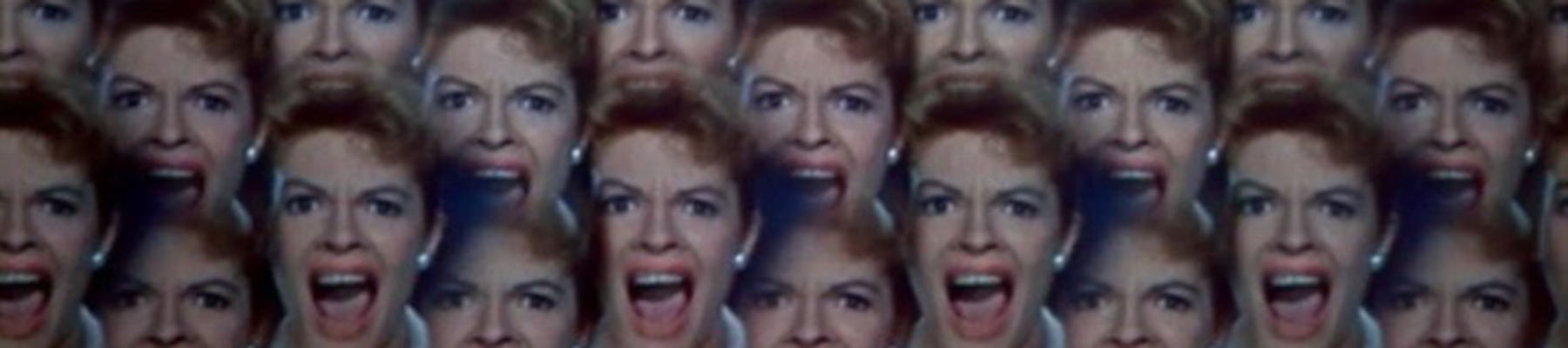
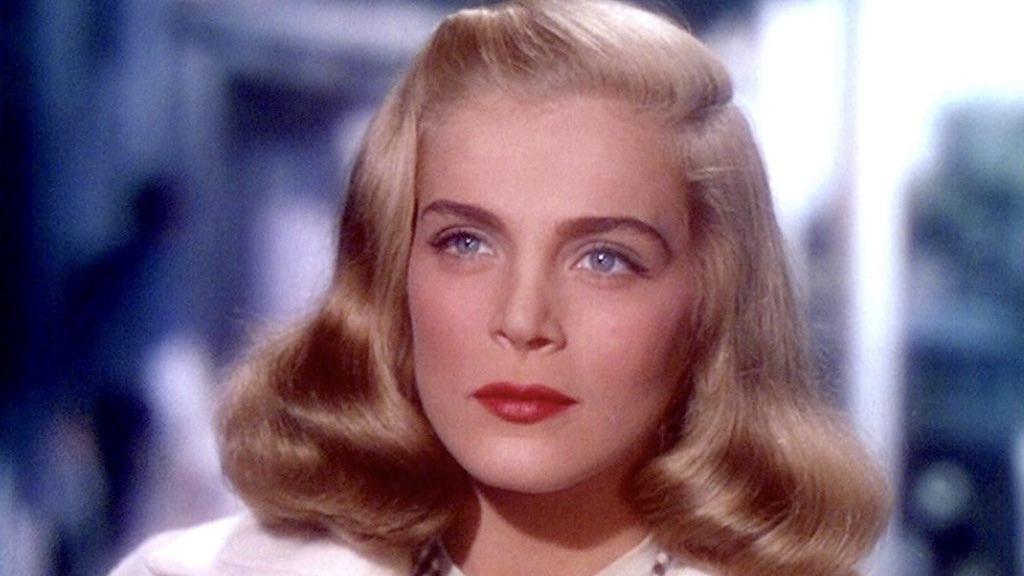
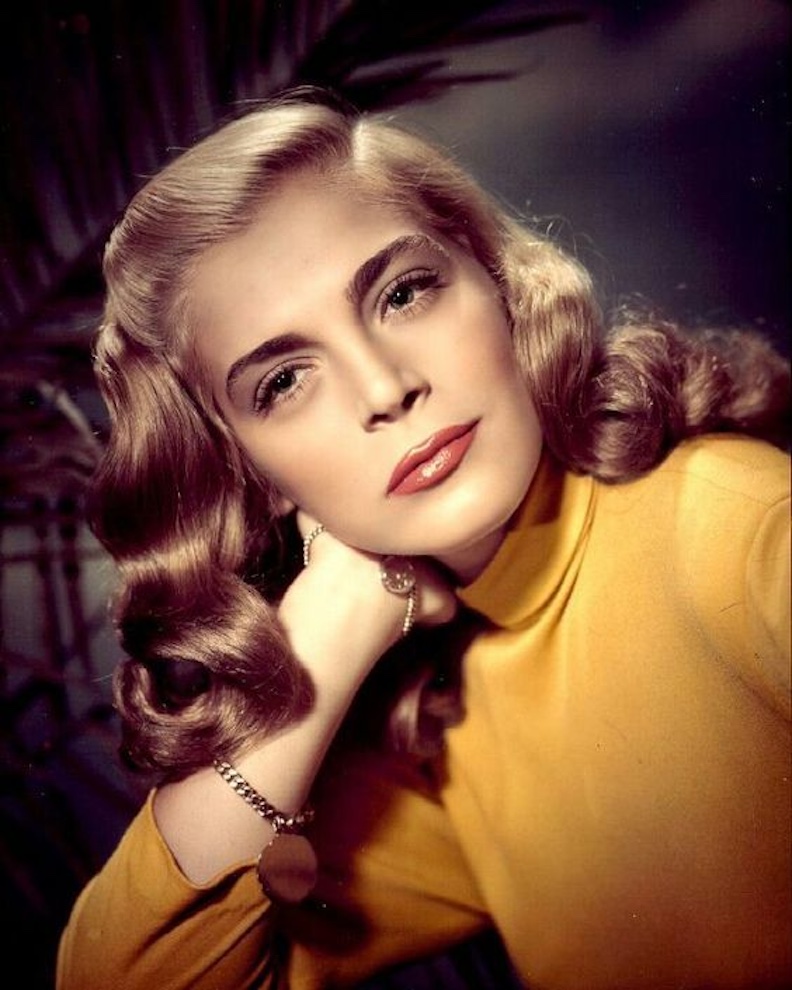
When actress Lizabeth Scott died on Jan. 31, 2015 at 92, the NY Times obituary (beautifully written by Robert D. McFadden) described her as “a sultry blonde with a come-hither voice cut out for the seething romantic and homicidal passions of her Hollywood film noir roles in the late 1940s and early 1950s.” “She had the goods: the luminous eyes and moist lips that belied a heart of stone, the slinky figure, the sculpted cheekbones, the cascading hair and husky voice suitable for torch songs or seductive close-ups.”
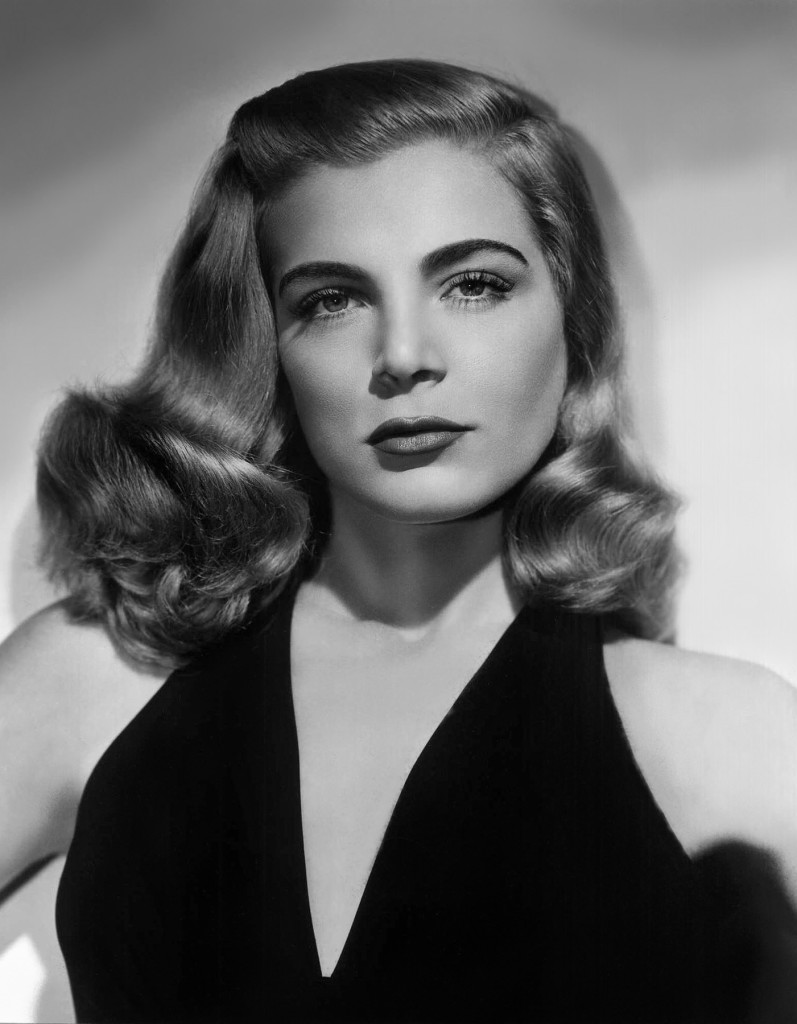
I’ve been slightly obsessed with Lizabeth Scott as of late. Several of her films have recently been upgraded on Blu-ray. And I finished a touching memoir by Todd Hughes: Lunch with Lizabeth, chronicling his friendship with the reclusive actress. Hughes began writing fan letters to Scott, who eventually wrote him back. Over time she reached out to Hughes on the phone and even met for dinner at Musso & Frank in L.A. What I loved about the witty, well-written book was the way it showed a warm, human portrait of the guarded actress during this decades-long friendship.
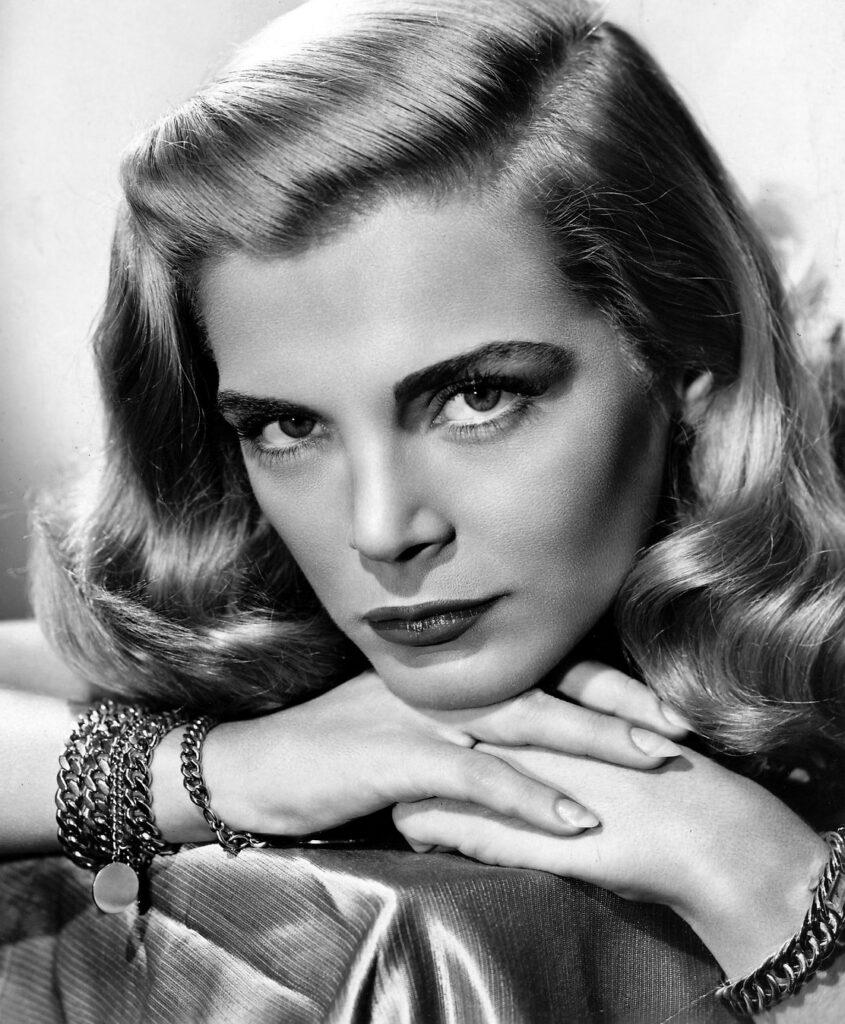
What is so unfortunate is that Lizabeth Scott’s reign in Hollywood only lasted 13 years. What torpedoed her was a scurrilous article in Confidential magazine which snarkily alluded to Scott being a lesbian. “Lizabeth Scott in the Call Girl’s Call Book,” was the headline and Scott sued the magazine which she complained painted her in a “vicious, slanderous and indecent manner.” The legal action that she filed was less about her being gay but the fact the magazine accused her of hiring prostitutes. She won the lawsuit with an undisclosed settlement, but the scandal unfortunately derailed her career. Although, to be honest, the film noir films Scott was so famous for were winding down. Fortunately, Scott invested wisely and was able to live a comfortable private life in Los Angeles.
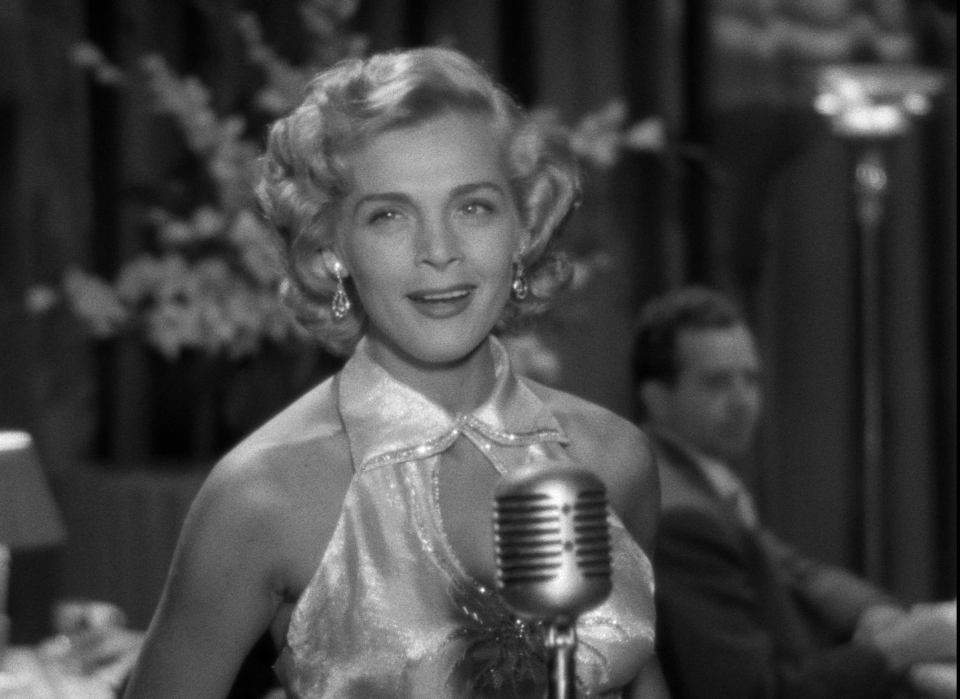
But watching her films again has been exhilarating. If only to fully appreciate Scott’s mesmerizing talent. She’s extraordinary on camera- and not just in femme fatale roles- she has this riveting allure and mystery about her on celluloid. Producer Hal B. Wallis was instrumental in her career- he signed her to a contract in 1944. He recognized the potential in Scott. Wallis had recently left Warner Brothers and created his own independent production company, housed at Paramount. Lizabeth Scott would be his first independent contract player.
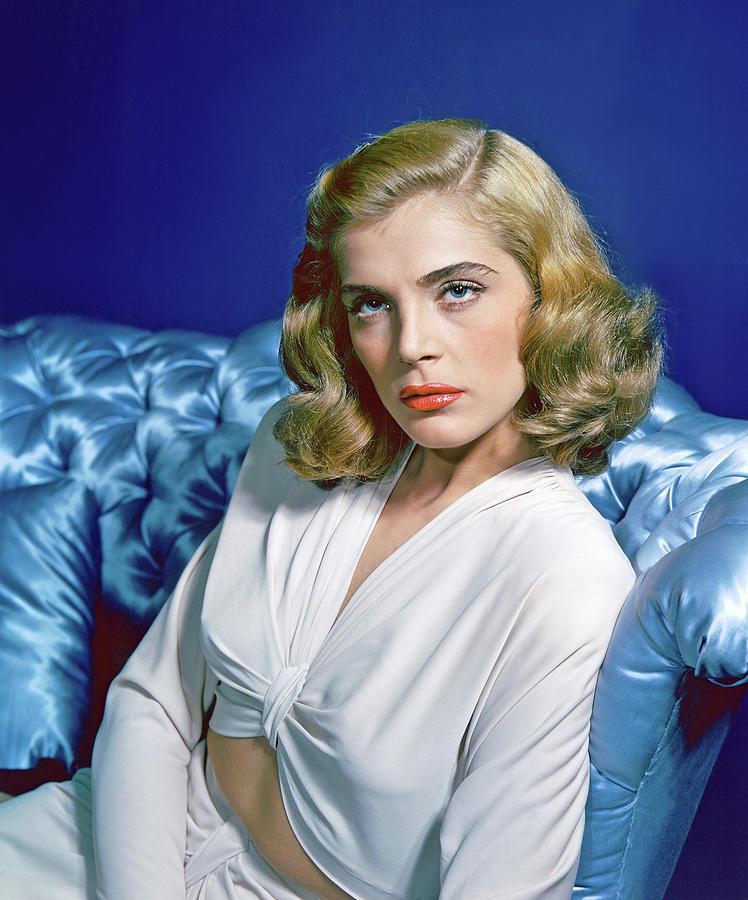
Now I’m not about to critique all of her 22 films. But I will highlight some of the bright spots of her career to prove that she wasn’t, as some critics lumped her, a knock-off of Lauren Bacall or Veronica Lake. She was capable of great range on screen. The more I searched out her films, the more dazzled I became of her all over again. I was always a fan, but after watching movie after movie, I thrilled to realize how unique and fascinating she really was.
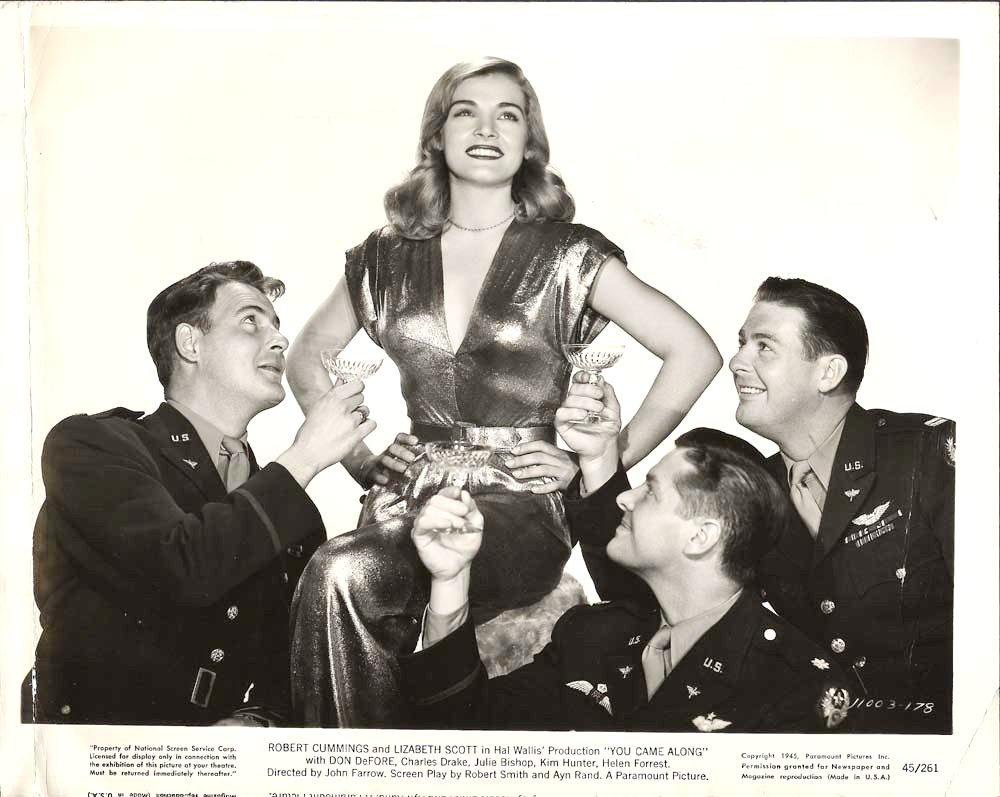
You Came Along (1945) A wartime tearjerker with “Introducing Lizabeth Scott” in the credits. Directed by John Farrow (The Big Clock) with a script by Ayn Rand (The Fountainhead) of all people. Scott plays Ivy Hotchkiss, a public relations specialist for the US Treasury who is hired to babysit three decorated Air Force flyboys for cross country War Bond rallies. The three officers and notorious “wolves” are Bob Collins (Robert Cummings), “Shakespeare” Anders (Don DeFore) and “Handsome” Janoschek (Charles Drake). Ivy is good-natured and wins the men over, who all juggle dates with her as they travel across the States. But her heart is only for Bob (Cummings). Unfortunately, she accidentally discovers he is suffering from a rare blood disease and is living on borrowed time. The title “You Came Along, Out of Nowhere” is “their song” (composed by Johnny Green with lyrics from Edward Heyman). This was a favorite film of Lizabeth Scott, and possibly the closest to the real Scott– she shows her charm, humor, smarts and decency and even gets to sing a torch song at the piano in a bar.
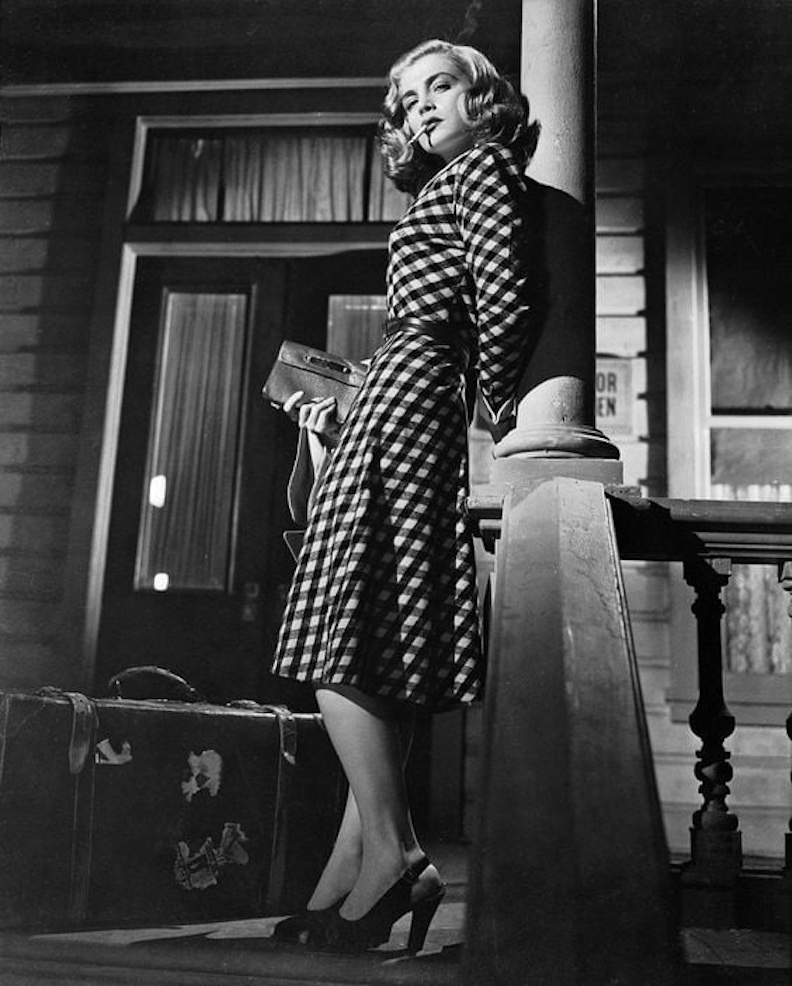
The Strange Love of Martha Ivers (1946) This stunning film noir stars Barbara Stanwyck as a ruthless, wealthy, businesswoman in a loveless marriage to the local drunken DA (Kirk Douglas, in his first role). But a drifter- Sam (Van Heflin), and former childhood sweetheart, shows back in town and sets the wheels into motion for a collision course with fate. Lizabeth Scott plays Toni, who Sam meets outside of a rooming house where she asks him for a cigarette, some matches, and the time. She’s on parole and supposed to catch a bus to her dreaded home town. She purposefully misses the bus and she and Sam fall in love. But waiting in the wings is seductive, untrustworthy Martha and a deadly buried secret from the past. When Barbara Stanwyck finally locks horns with Lizabeth Scott it’s a short but memorable slice of film noir heaven. Lizabeth Scott is wildly sympathetic as the hard luck gal in the film, pining for Sam. She’s been beaten down by life but still desperately hoping for some semblance of happiness. The scene when the DA (Douglas) blackmails her into setting up Sam to get beaten up by thugs is a heartbreaker.
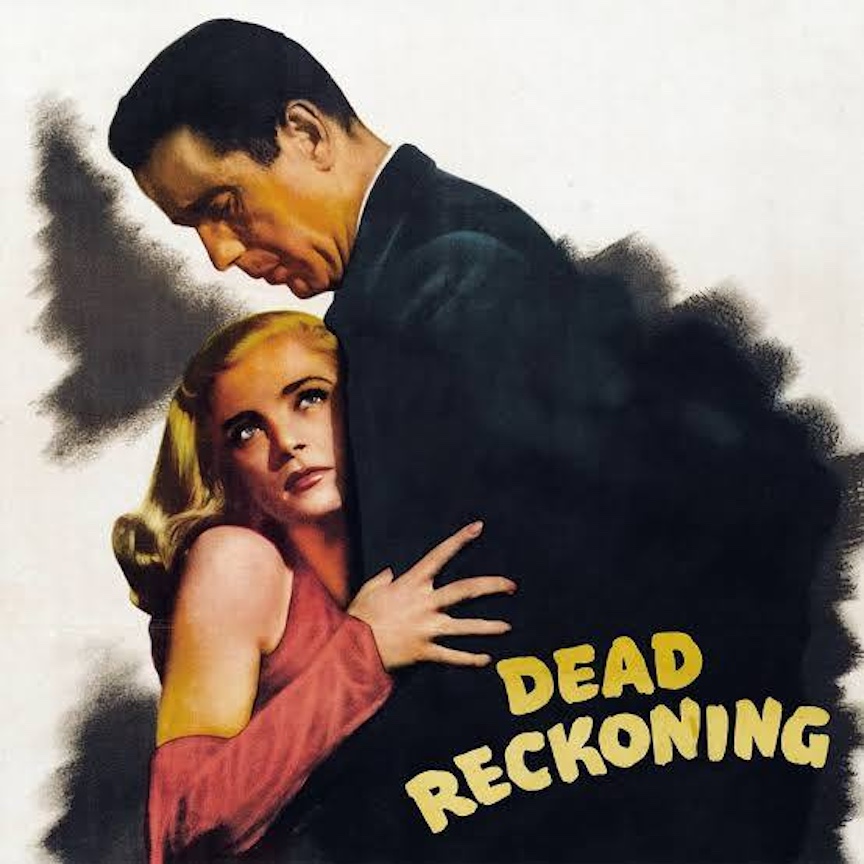
Dead Reckoning (1946) Here Lizabeth Scott gets to play the quintessential femme fatale in this excellent, hard-boiled, post-war noir expertly directed by John Cromwell. Humphrey Bogart plays Captain Rip Murdock, traveling with his paratrooper buddy Johnny Drake (William Prince) by train to Washington for Johnny to receive the Congressional Medal of Honor. Johnny gets spooked and jumps off the train at Philadelphia and Rip follows clues after him to Gulf City, where he discovers Johnny (real name John Joseph Prince) was once indicted for the murder of a rich real estate man, whose wife was a former nightclub singer named Coral Chandler (Lizabeth Scott). Murdock heads to the Sanctuary Club where he sees the gorgeous Coral (Scott at her most beautiful), who is also desperately looking for Johnny. “Maybe she was all right,” he muses to himself, “and maybe Christmas comes in July.” Morris Carnovsky plays the villainous owner of the nightclub in this twisty, brutal thriller. Scott is just duplicitously divine.
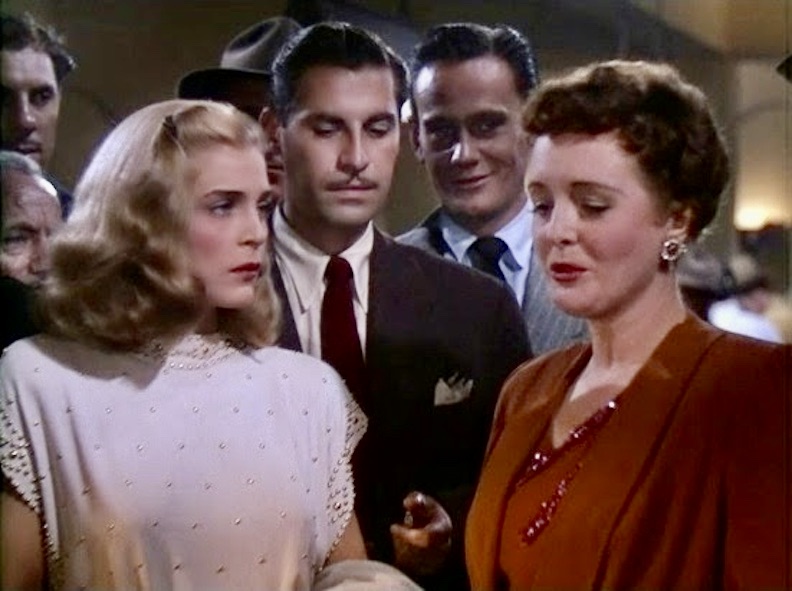
Desert Fury (1947) Truly perverse, Technicolor, desert-noir ripe with so much queer subtext you cannot believe your eyes. Lizabeth Scott plays Paula, the rebellious daughter of Fritzi (Mary Astor), who runs a Nevada gambling casino in a desert town. Tom (Burt Lancaster), former rodeo stud, now turned cop, has the hots for Paula, but she only has eyes for Eddie Bendix (John Hodiak), a gambler and hood vacationing in town. Eddie has a male companion he has lived with for years and years- Johnny, played by Wendell Corey, and when Paula comes between the two men (and probable lovers), it makes for a lethal Freudian stew. Wait until you get to the story of how the two men first met: Eddie was broke and starving and Johnny picked him up in an automat on Times Square, fed him ham and eggs, and took him home. Directed by Lewis Allen (The Uninvited), this is such a weird film- everything in so overwrought and the score by Miklos Rozsa is constantly swelling- you feel like you’ve dropped in the middle of a gay fever dream. Lizabeth Scott looks glorious in Technicolor though.
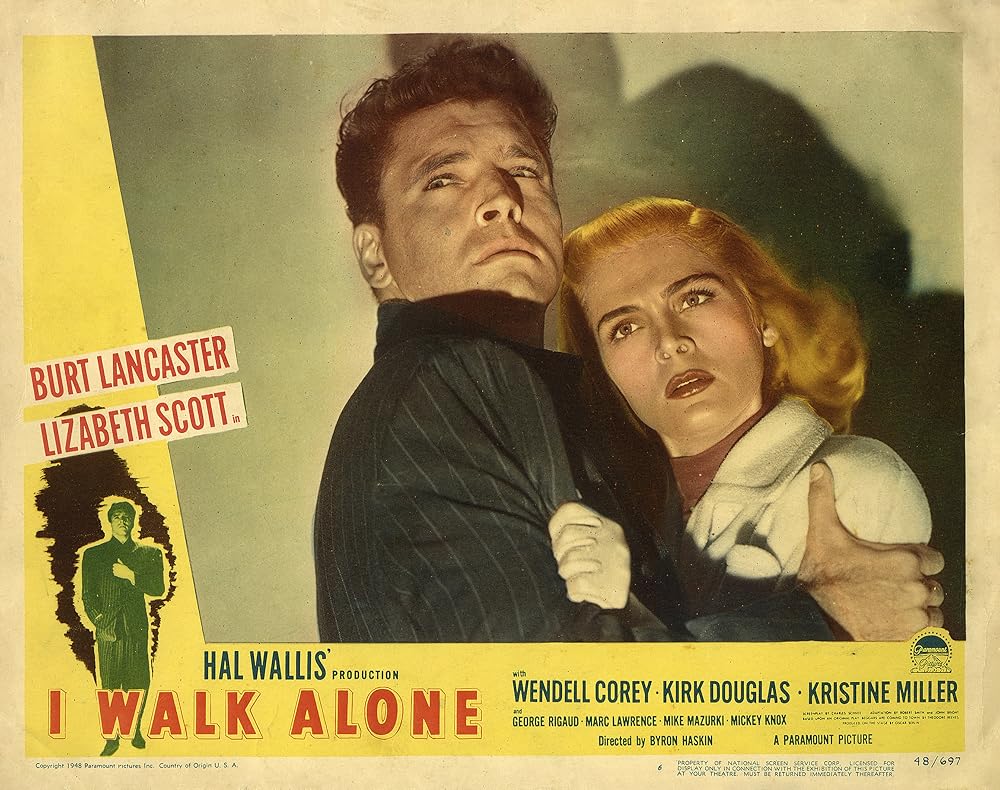
I Walk Alone (1947) I have to admit not knowing this sensational 1947 film noir by director Byron Haskin (The War of the Worlds). Burt Lancaster plays Frankie, who has spent 14 years in jail on a bootlegging/murder charge. He’s back to get his cut from his criminal partner Noll ‘Dink’ Turner (Kirk Douglas), who now owns a swanky nightclub. The sultry Lizabeth Scott plays the sympathetic lounge singer at the club who ‘Dink’ uses to soften Frankie up. There’s a dark romanticism to the film, and moody visuals too, but less cynical than others of the genre. Scott gets to play a good gal in a bad situation.
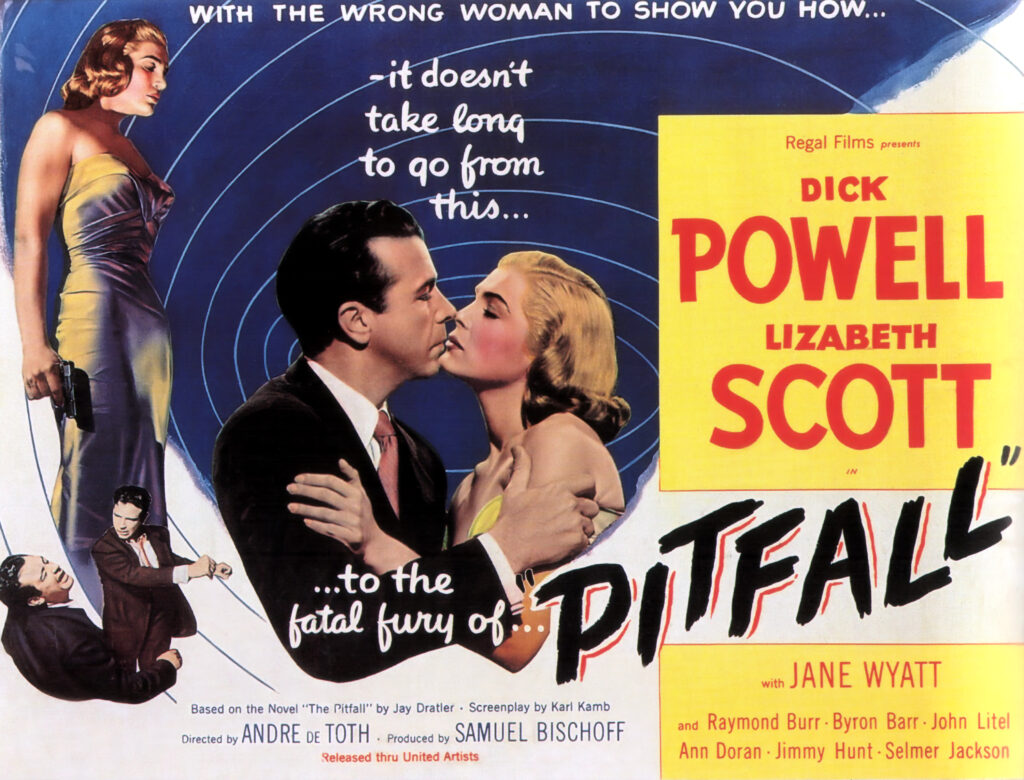
Pitfall (1948) Dick Powell plays John Forbes, working for the Olympic Mutual Insurance company. He’s happily married to Sue (Jane Wyatt) and has a loving son Tommy (Jimmy Hunt/Invaders from Mars). But he feels his life in a rut. While investigating an embezzling case of a jailed man who bought gifts for his girlfriend Mona (Lizabeth Scott), he makes a visit to see Mona to catalogue and take back the loot. They take a last ride in her stolen motorboat (another present from her embezzling boyfriend) and go for a drink. She says to John, “Did you ever notice that if you want to feel out of step with the rest of the world the only thing to do is sit around a cocktail lounge in the afternoon?” The restless John finds himself helplessly falling for her. Raymond Burr plays Mac, a detective assigned to that case who becomes fatally obsessed with Mona, with deadly results for everyone- including John, whose affair with Mona infuriates Mac. It all spins murderously out of control. Your heart really goes out to Mona, who is put in a horrible situation by all the men in her life, especially her psychotic stalker- Mac (Burr). An underrated film noir treat directed by Andre De Toth (House of Wax).
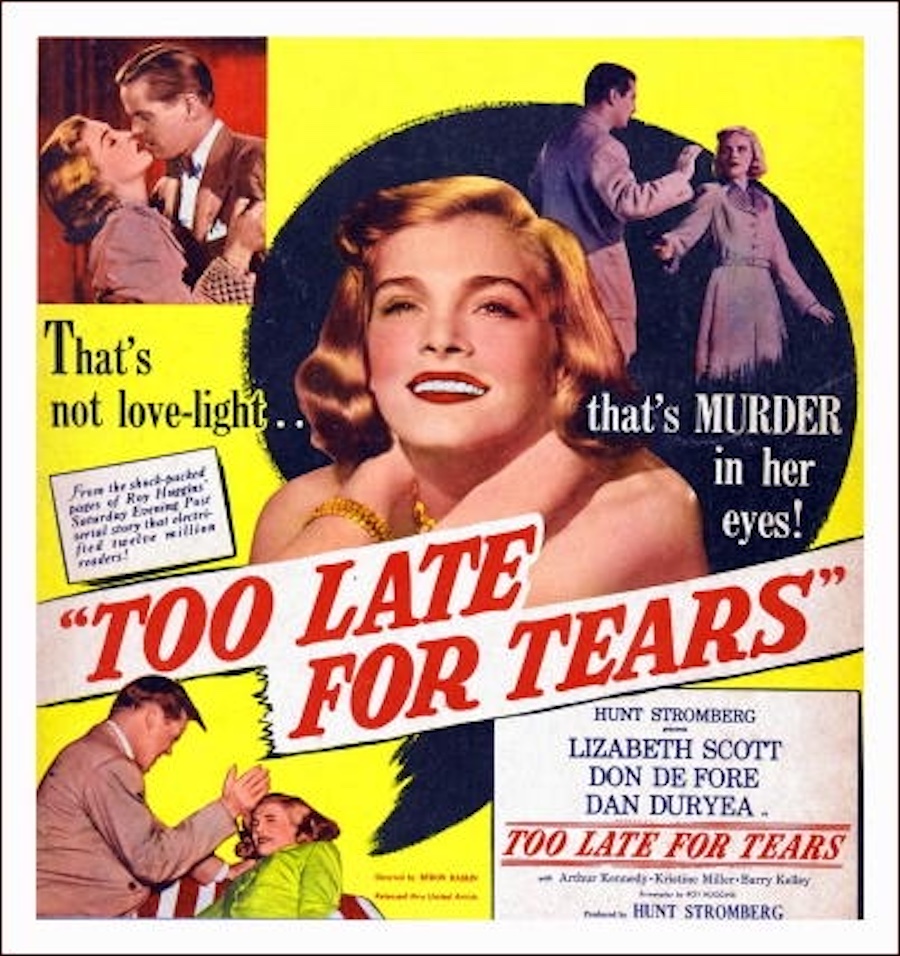
Too Late for Tears (1949) This ferocious 1949 film noir stars Lizabeth Scott in one of her very best roles. She plays Jane Palmer, driving with her husband Alan (Arthur Kennedy) one night when a bag filled with cash is mistakenly thrown in their moving vehicle. There’s close to $60,000 and Alan checks the bag at the train station, trying desperately to talk his wife into handing it over to the police. But Jane is determined to keep the dough- it represents an antidote to all those years of people looking down their noses at her. A stranger- Danny Fuller (Dan Duryea always great at playing malevolent weasels) shows up demanding “his” cash and Jane tries to figure out a way to split the money with him by somehow getting the claim check from her husband. Jane is a woman possessed- the look when she dumps out the bag on the bed and the money spills out is priceless. It’s almost sexual. Even Danny (Dan Duryea) realizes he has met his match with the deranged Jane (Lizabeth Scott), who murders anyone who dares come between her and her cash. There is this great scene later in the film when she reaches for her purse and a man (Don DeFore) asks, “Looking for something?” “My lipstick,” she answers, and he snidely says, “Colt or Smith & Wesson?” Truly Lizabeth Scott’s finest cinematic 102 minutes. This has been lovingly restored by UCLA Film and Television Archive with support from the Film Noir Foundation.
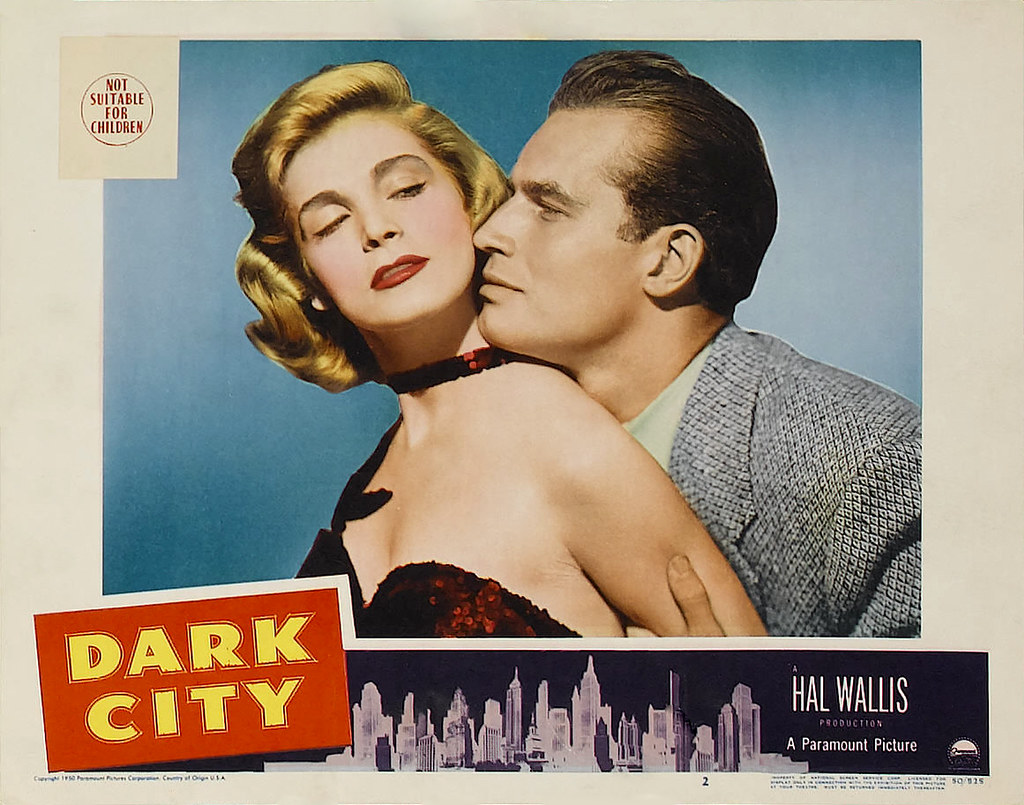
Dark City (1950) Charlton Heston’s film debut as Danny Haley, running a bookie joint with ulcer-plagued Barney (Ed Begley) and sadistic joker Augie (Jack Webb). He’s dating beautiful lounge singer Fran (Lizabeth Scott), who can’t get Danny to emotionally commit to her. One night the guys take serviceman Arthur Winant (Don DeFore) for all his money (including a $5,000 check) at a crooked card game and he hangs himself in his hotel room. That’s when Arthur’s shadowy, psychopathic brother murderously comes after each man involved in the card game. Viveca Lindfors does a nice turn as Arthur’s widow. Excellent direction by William Dieterle, this is a gripping little thriller.
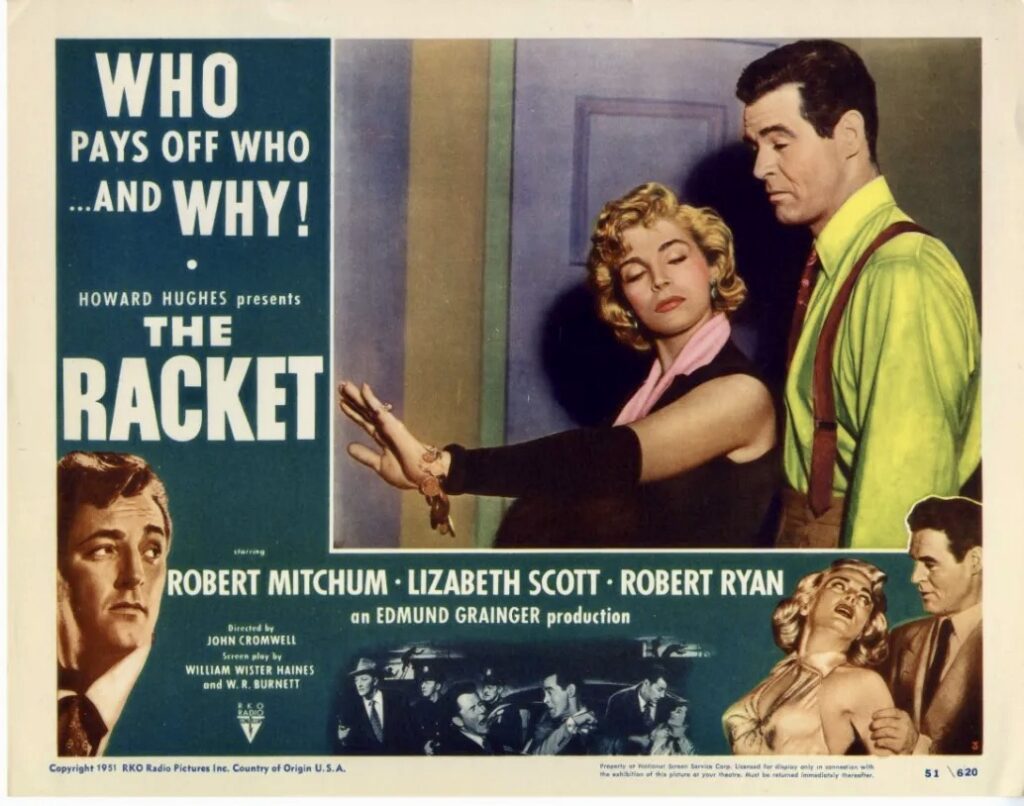
The Racket (1951) A top notch cast elevates this exciting 1951 film noir about a crime syndicate strangling a city by penalizing honest cops and placing corrupt figures into political office. Robert Mitchum plays the decent cop Tom McQuigg, who knows all too well vicious hood Nick Scanlon (a ferocious Robert Ryan). The shadowy “old man” is pulling all the strings in the city and is increasingly angered by Scanlon’s violent old-school tactics (like setting off bombs at the home of McQuigg and gunning after another decent cop (Perry Mason’s William Talman). Lizabeth Scott plays a nightclub singer dating Scanlon’s brother who suffers Nick’s wrath. They always dubbed Lizabeth Scott, who often played a “clip-joint canary” in these type of films, so she put out a record to prove she really could sing (and it’s a great album). Another RKO film fiddled with by Howard Hughes after it was shot.
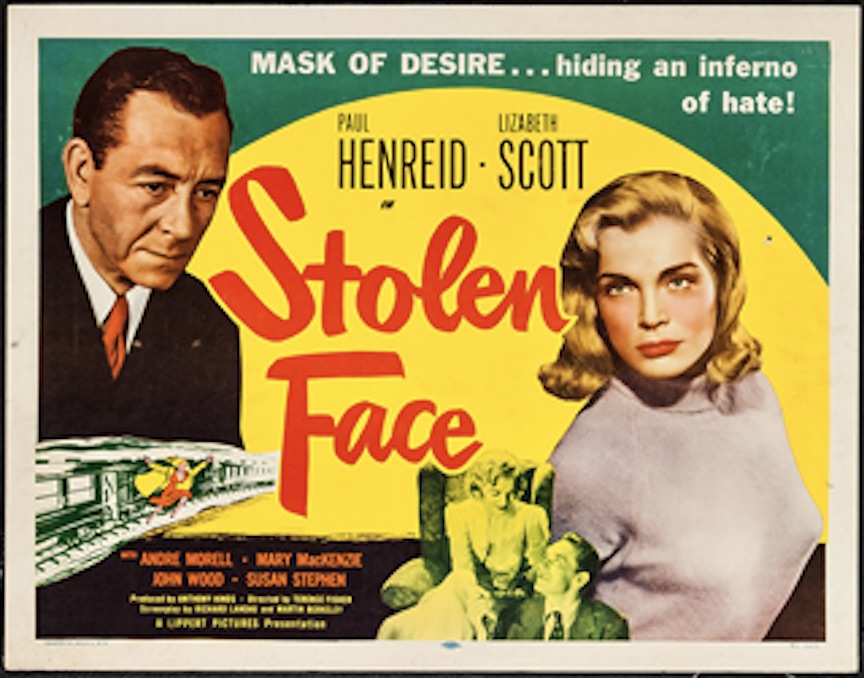
Stolen Face (1952) A strange British film from Hammer Studios directed by the excellent Terence Fisher (Horror of Dracula), where Lizabeth Scott gets to play two women- one good and one rotten. Paul Henreid (Casablanca) plays a London-based plastic surgeon- Dr. Philip Ritter- who goes off to the country for a rest and meets a lovely concert pianist Alice Brent (Lizabeth Scott) at his inn saddled with a bad cold. They fall in love and spend a wonderful week together but she is engaged to someone else and flees in the night. He returns to his practice, despondent, and does surgery on a female prison inmate named Lily with a hideously scarred face, transforming her into an exact replica of Alice. He even marries her, but her criminal tendencies rear up with a vengeance. More Vertigo than My Fair Lady with the doctor’s obsession to transform someone into a past love. It’s fun to hear Lizabeth Scott play a nasty thief with a Cockney accent.
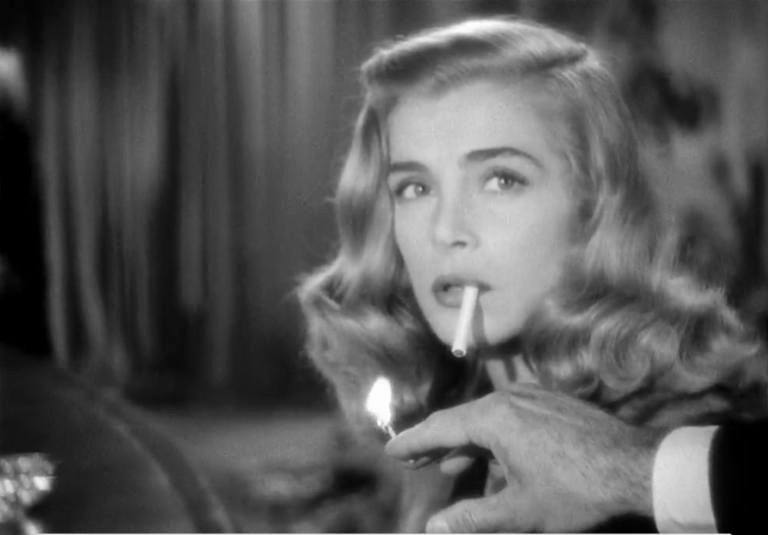
I have to admit now when I think of Lizabeth Scott I will always picture Humphrey Bogart in Dead Reckoning when he first encounters Scott in the film, lighting her cigarette. She looks up at him with that beautiful, sculpted face and opens her mouth and her voice is deep and smoky, with a slight lisp. Bogart sums her up, “Cinderella with a husky voice.” She looks back at him, “Where have we met?” to which he replies, “In another man’s dream.”
I got into this one big time. I’ve got to see Stolen Face.
I got into this big time. I’ve got to see Stolen Face.