I actually am speechless from the Blu-ray releases this month. Talk about May flowers. From a British film version of a fabulous Joe Orton dark comedy; a nightmarish brilliant creep-fest by Marina de Van; a chilling British ventriloquist chiller; a vicious Italian thriller set on a train; a dance-centric “giallo” from Lucio Fulci; a really terrific psychological ghost tale set in an crumbling old whorehouse; a high point in the career of the wildly talented, late, great, Wings Hauser; an environmental horror film by the director of The Manchurian Candidate; a crackling 1950s film noir set on Cape Cod; a fanciful all-star biography of George Gershwin; not to mention Volume Two of “Psychotic Women” rarities and some really offbeat film noirs.
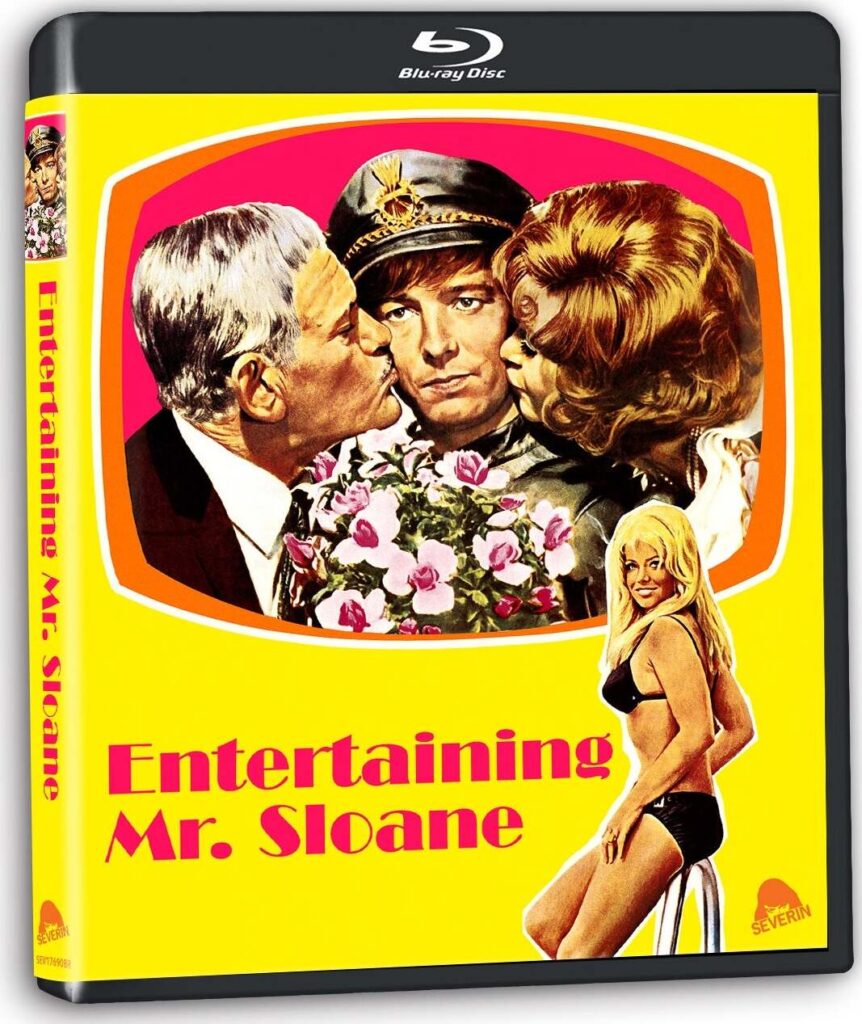
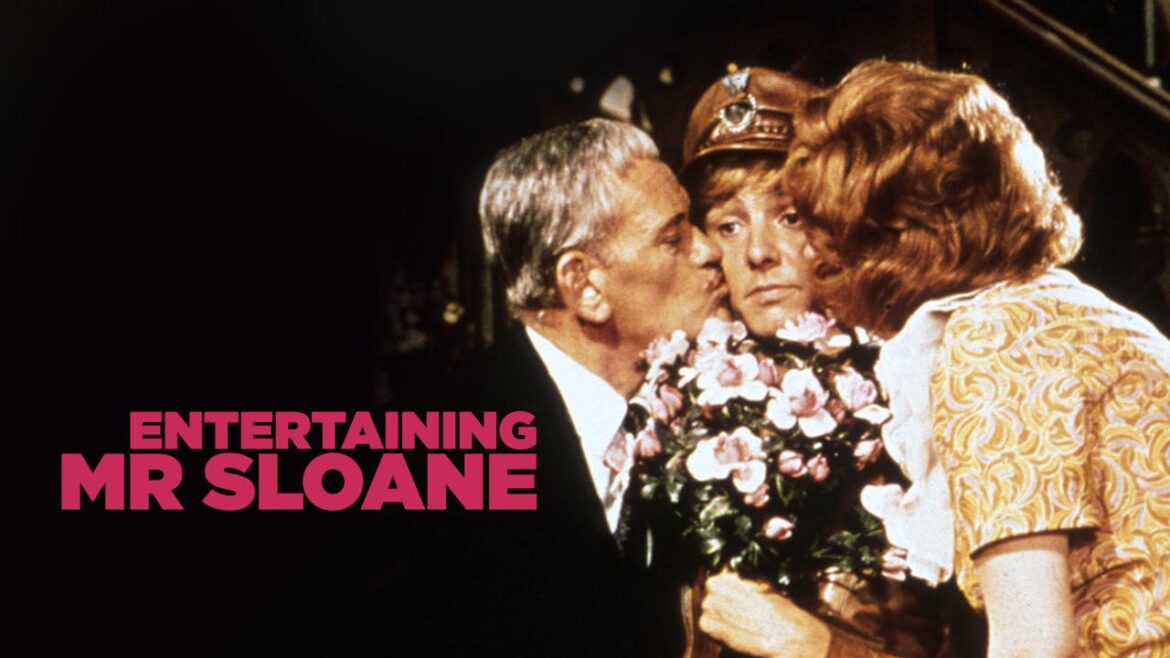
Entertaining Mr. Sloane (Severin) Sardonic British playwright Joe Orton’s landmark black comedy, which horrified critics in London when it premiered in 1964. One review called it a “milk-curdling essay in lower-middle-class nihilism.” I vividly remember seeing the play at the Cherry Lane Theater with a sexy, electrifying Maxwell Caulfield and being blown away by the viciously hilarious dark farce. This film version, directed by Douglas Hickox, stars the wonderful Beryl Reid (The Killing of Sister George) as Kath, a middle-aged landlady who, while visiting the cemetery, meets a sunbathing, mysterious, studly stranger named Sloane (Peter McEnery). Sexually attracted to him she invites him home to live in the house she shares with her near-blind father Kemp (Alan Webb). Kemp takes an instant dislike to Sloane, convinced he was the man who killed his employer. Kath’s brother Ed (Harry Andrews) disapproves of Sloane living with his sister but is instantly smitten with him also and hires Sloane as his leather-clad chauffeur. It’s a wonderfully perverse comedy of lust and lunacy. Special features incudes audio commentary by film historian Nathaniel Thompson and Orton scholar Dr. Emma Parker. There are archival interviews with Peter McEnery and an interview with author John Lahr, who wrote the ultimate biography about Joe Orton– “Prick Up Your Ears.” My favorite extra is “All My Sloanes” about the actors who have played Sloane on stage include great interviews with Malcolm McDowell and Maxwell Caulfield.

House of Psychotic Women: Volume 2 (Severin) I’ll always be eternally grateful for Volume One of this invaluable series for the loony rarity The Driver’s Seat with Elizabeth Taylor. So here we go with round two of female-centric insanity. Butterfly Kiss (1995) Michael Winterbottom’s lesbian-serial-killers-on-the-run film transports that scenario to London, where they drive on the wrong side of the road. Amanda Plummer plays Eunice, a psychotic time bomb who prowls highway gas stations looking for an imaginary girlfriend named Judith, murdering people to let off steam. She hooks up with the dim-witted Miriam (Saskia Reeves) and the two hit the road, leaving a trail of corpses in their wake. Morgiana (1972). Czech director Juraj Herz (The Cremator) creates a baroque, killer fairy tale. A period piece (the costumes and sets are all gorgeously exaggerated) about two sisters (both played by actress Iva Janzurova). Klara is the kind sweet one and Viki is the evil jealous one (with a Siamese cat named Morgiana. Viki goes to a fortune teller and buys a vial of poison which she slips into her sister’s water. As Klara gets sicker the fortune teller comes back with blackmail in mind. There are introductions to each film by Kier-Lan Janisse (author of the fascinating film book- The House of Psychotic Women). The Savage Eye (1959) A fiercely original docu-fantasy, of sorts, about Judith (Barbara Baxley) who navigates her lonely first year of divorce in Los Angeles. With the voice of Gary Merrill as “poet” in conversation with Judith. “Judith X. What is the X for?” “X-Mcguire. I’m divorced.” “Alone traveler?” “Alone. Because the touch of human skin makes me sick.” Judith replies. With a myriad of random shots of Los Angeles by many cinematographers including Haskell Wexler (Medium Cool). “Half the women in the house live on bourbon, cottage cheese and alimony,” Judith muses about where she lives. A moody, sad, strange, incredibly unique film. Directed by blacklisted screenwriter Ben Maddow, Oscar-nominated writer Sidney Meyers and director Joseph Strick (Ulysses). The Glass Ceiling (1971) An early film by Eloy de la Iglesia (right before Cannibal Man) about Marta (Carmen Sevilla), left alone in an apartment complex by her husband, always away on business, who begins to fixate on the idea that the upstairs neighbor Julia (the gorgeous Patty Shepard) has murdered her husband. Her only confident is her landlord- the hunky sculptor downstairs- Ricardo (Dean Selmier). Meanwhile someone is secretly snapping photos of her from afar. This ties in to the voyeuristic themes in Iglesias’ Cannibal Man. A wonderful, defiantly ambiguous thriller. There is a sensational extra “Connected at the Soul” where Patty Shepard is remembered by her sister, actress Judith Chapman (The Young and the Restless), that is incredibly moving.

In My Skin (Severin) Cringe-inducing but nightmarishly brilliant 2002 film, directed, written, and starring Marina de Van (who co-starred in Francois Ozon’s See the Sea and Sitcom and co-wrote Under the Sand and 8 Women), about a woman who gashes her leg badly at a party and finds the accident triggers in her escalating urges to further cut into herself. This mania reaches frightening intensity as the pressures of work cause her to hole up in hotels to give in to bouts of self-mutilation. Flirting with David Cronenberg’s body politics, the film successfully conveys the obsessive mania this woman undergoes. The movie might not have the most satisfying of payoffs, but it’s a fiercely unique, disquieting, film experience. You may have your coat over your head during some scenes but you won’t soon forget it. This two-disc set includes a 4K UHD version plus the Blu-ray. Also, hours of extras! Commentary by the writer/director/star Marina de Van, commentary by Fantasia International Film Festival programmer Justine Smith, video essays and several short films by de Van and others relating to the subject matter.

Night Train Murders (Severin) (1975) Two gal-pals (also cousins) traveling on a train from Germany to Italy over the Christmas holiday are assaulted by three fiends in this ultra-unpleasant Aldo Lado film that was re-titled Second House on The Left in America. This movie is really soul-sucking on some levels, but, God forgive me, I love having it on 4K UHD with plenty of audio options. Not to be confused with Terror Express (1980), another similar Italian shocker about a group of disreputable characters on a train held hostage by three violent perverts who torture the travelers and sexually assault a pretty prostitute and another defenseless younger woman. In Night Train Murders two male hoodlums- Blackie (Flavio Bucci/Suspiria) and Curly (Gianfranco De Grassi/The Church)- are fleeing the police and hop on a moving train where they run into the two young girls- Lisa (Laura D’Angelo) and Margaret (Irene Miracle/Inferno). They also meet a cool, well-dressed, mysterious woman (Macha Meril– who played the psychic in Deep Red), who turns out to be just as depraved as the two hoods. What follows is a night of sadism, sexual abuse and murder. The lyrical score is by Ennio Morricone. The film looks pretty spectacular in 4K and the 2-disc Blu-ray comes with audio commentary by director Aldo Lado, an interview with actress Macha Meril, Irene Miracle and actor Gianfranco De Grassi. Plus, an excellent video essay by Kat Ellinger. A real subversive treat.
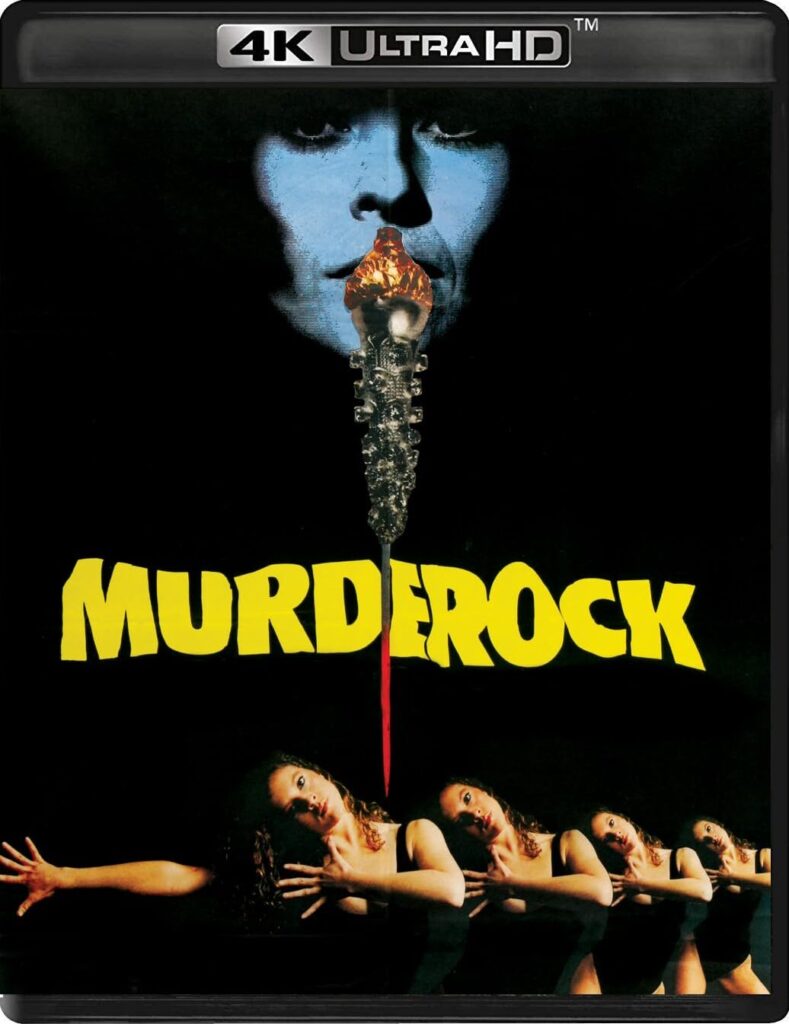
Murderock (Vinegar Syndrome) (aka Murder-Rock: Dancing Death) This 1984 film by Lucio Fulci, set in New York, is certainly less graphic than Fulci’s The New York Ripper. It’s a “giallo” set at the “Arts for Living Center” dance school where many of the break-out female dancers are systematically chloroformed and killed with a jewel-encrusted hat pit. The music by Keith Emerson is beyond horrible, as is the Flashdance-like aerobic musical numbers. (In some places this film was known as Slashdance). Ray Lovelock plays a once-prosperous male model fallen on hard times, living in a seedy Times Square hotel and drinking heavily. He is made to look like the main suspect through most of the movie. They genuinely did some location work in New York and it’s cool to see Lovelock driving by the Broadway theater showing Dreamgirls. This movie gets a bad rap from cult fans, and while it’s certainly nowhere near the dark genius of Fulci’s The Beyond and The House by the Cemetery, it’s stylish and silly fun. The extras include interviews with actor Al Cliver who discusses the difference between working with Lucio Fulci and Joe D’Amato; an interview with actor Robert Gligorov, who discusses his career and a funny anecdote about working with a difficult Helmut Berger on a mini-series; plus, the lovely, red-haired Silvia Casagni, who also played in Fulci’s The House by the Cemetery.

The Nesting (Vinegar Syndrome) I have always loved this strange little 1981 chiller about a Manhattan writer (Robin Groves) suffering from agoraphobia who rents a remote, decrepit octagonal mansion upstate (that she accidentally stumbles on and feels a weird “déjà vu” sense of familiarity to). She rents the place for the summer to write and starts to have vivid dreams, then hears 40s big band music playing, and starts seeing specters on the stairs. Eventually she realizes she is in a very haunted place- which was once a former whorehouse and filled with the angry spirits of murdered prostitutes. The great Gloria Grahame plays the ghostly madam. Directed by Armand Weston, whose early work was in adult films. Sadly, he died shortly after the film was released. The film looks absolutely incredible in 4K UHD, and the extras are sensational. Robin Groves delightfully describes working on the film, as does poet Michael David Lally who plays John Carradine’s son in the film. Stephen Thrower (Nightmare USA) does a great overview of this unique horror film in an extra called “The Sating of Desire.” Plus, “The Nesting Outtakes: Preserving Armand Weston’s Gothic Horror,” a featurette produced by Vinegar Syndrome.

Devil Doll/Curse of the Voodoo (Vinegar Syndrome) Devil Doll (1964) There have been several creepy ventriloquist films from The Great Gabbo to Dead of Night to Magic to Dead Silence, but this above-average British horror tale is one of the very best. It’s about a ventriloquist/hypnotist called the “Great Vorelli” (a terrific Bryant Haliday), with an actual living doll named “Hugo” that he is forced to lock in a cage after performances. Really atmospheric and eerie- with a great twist ending. To see the demonic-looking dummy walking on his own with an upraised knife is truly disturbing. This looks absolutely gorgeous on Blu-ray and it’s the complete, original, uncut version with all the “nude” Continental footage. Curse of the Voodoo (1965) A voice states ominously over stock footage, “Africa, where primitive tribes still practice evil religions which weave a dark web of death around all who sin against their gods.” Bryant Haliday is a big game hunter who kills a sacred lion and is cursed by a chief of a tribe that worships “Simba.” When he gets back to London he suffers hallucinations, fevers, and violent nightmares in this low rent British yawner.
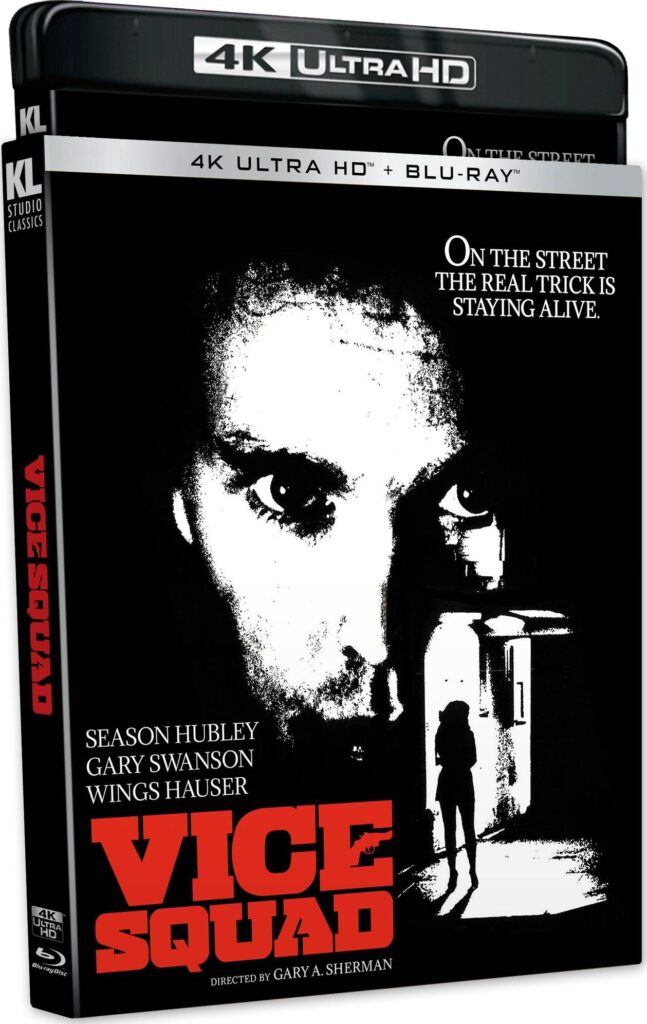
Vice Squad (Kino Lorber) Season Hubley plays a suburban mother who has a secret life as a Hollywood Boulevard prostitute named “Princess.” When a fellow call girl is beaten to death by her sadistic pimp Ramrod (an outrageously scary Wings Hauser), Princess wears a wire to entrap Ramrod. Unfortunately, he escapes from the police and comes after her with a vengeance. Director Gary Sherman grinds our noses in the street sleaze, even the theme song (sung by Wings Hauser) is about the “neon slime.” God, is it a blast! I saw this on Times Square countless times in 1982 and the grindhouse crowds would go insane. Wings Hauser is just phenomenal- but so is Season Hubley, who deserved a better career. This 3-disc set is a 4k UHD scan from the original negative plus Blu-ray and the extras are incredible with multiple interviews with cast and crew and several audio commentaries.

Prophecy (Kino Lorber) Who could imagine the director of The Manchurian Candidate (John Frankenheimer) would make an environmental horror movie? But he did in 1979, telling the tale about a log company, whose toxic waste creates a mutant, bear-like monster who roams and kills in the forests of Maine. Ridiculed at the time, I think it’s time to re-evaluate this visually moody thriller (especially with the glorious new 4k UHD digitally restored edition), which is often ludicrously entertaining. Starring Robert Foxworth and a frequently freaked-out Talia Shire, there are a few scenes that really are goofy and memorable- like a gory, sleeping bag sequence that might make you re-think camping forever.
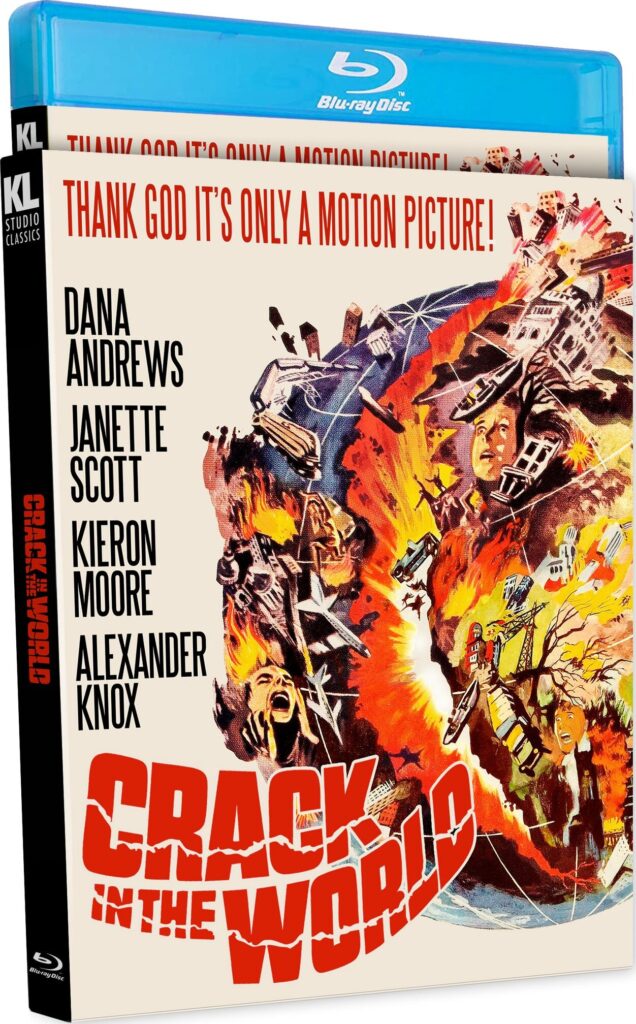
Crack in the World (Kino Lorber) “Thank God It’s Only a Motion Picture!” screamed the ads for this terrific 1965 sci-fi disaster movie. Dana Andrews plays a (secretly dying) scientist in charge of an underground project trying to break through the earth’s core to use the magma center as an energy source. Unfortunately, his explosives cause devastating cracks in the earth’s core that threaten to destroy the world. Janette Scott (Day of the Triffids) plays his loyal wife and fellow scientist. Kieron Moore plays a scientist that predicts disaster and attempts to rectify the apocalyptic outcome. With excellent art direction and special effects by Eugene Lourie (The Beast from 20,000 Fathoms).
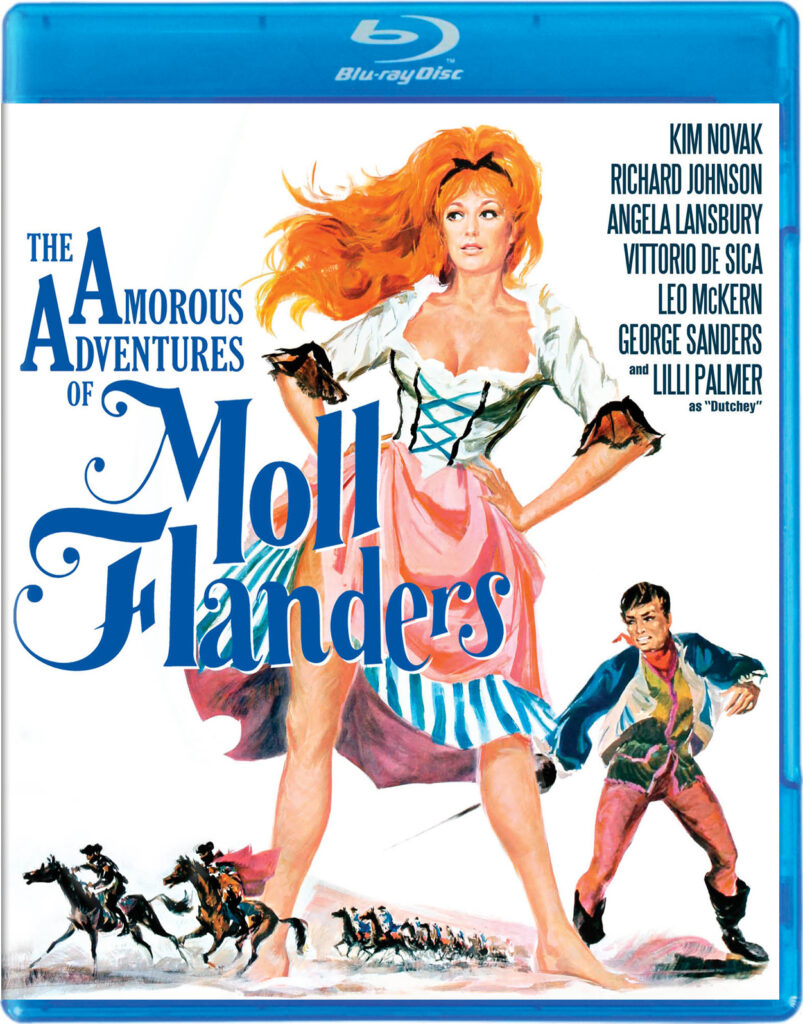
The Amorous Adventures of Moll Flanders (Kino Lorber) When was the last time you used “ribald” in a sentence? I thought so. But that is the mood for this bawdy 1965 comedy about the misadventures of Moll Flanders (Kim Novak), an orphan turned adventuress in merry old England. Director Terence Young (Dr. No) tries to harness the zany sexiness that made Tom Jones such a hit in 1963 as Moll is chased by rogues and horny old rakes. She ends up in London working for impoverished “nobility” (Angela Lansbury and Vittorio De Sica), she even marries a decadent nobleman with gout (George Sanders). But her heart remains with a highway bandit (Richard Johnson– who Novak would marry shortly afterwards). A lighthearted romp, with plenty of fun co-stars like Hugh Griffith and Lily Palmer, not to mention a ravishing Kim Novak in tight corsets.
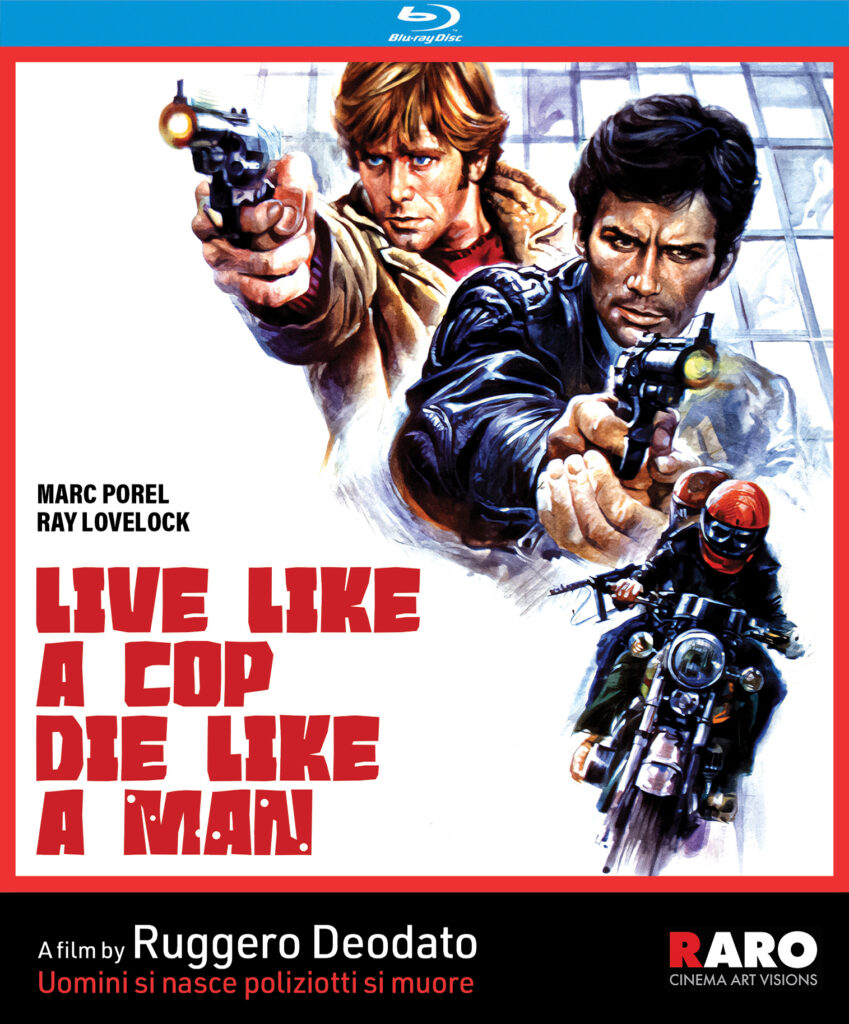
Live Like a Cop, Die Like a Man (Raro) One of my favorite Ray Lovelock films- he plays Tony and Marc Porel plays Fred. They are two cops with such criminal tendencies they are recruited to a special squad to prevent crimes from happening. Both ride around the city on a motorcycle and when they see a pair of purse snatchers they will go to excessive lengths to chase them down (and even kill them). Those dangerous chases around Rome on screen are breathtaking and outrageous. When one of their team is ambushed and killed they go all out for revenge with their own brand of crazed justice. The chemistry between the two lead actors is terrific. Watch the opening credits with both riding on one motorcycle. Porel sneakily tries to block Lovelock’s head, but Ray just weaves back and forth into frame. Director Reggero Deodato said that Lovelock was so amiable and good-natured he took no notice of Porel’s actorly antics and they both got along fine. One of the most bonkers of the Italian “Poliziotteschi” films (not surprising coming from the director of Cannibal Holocaust).
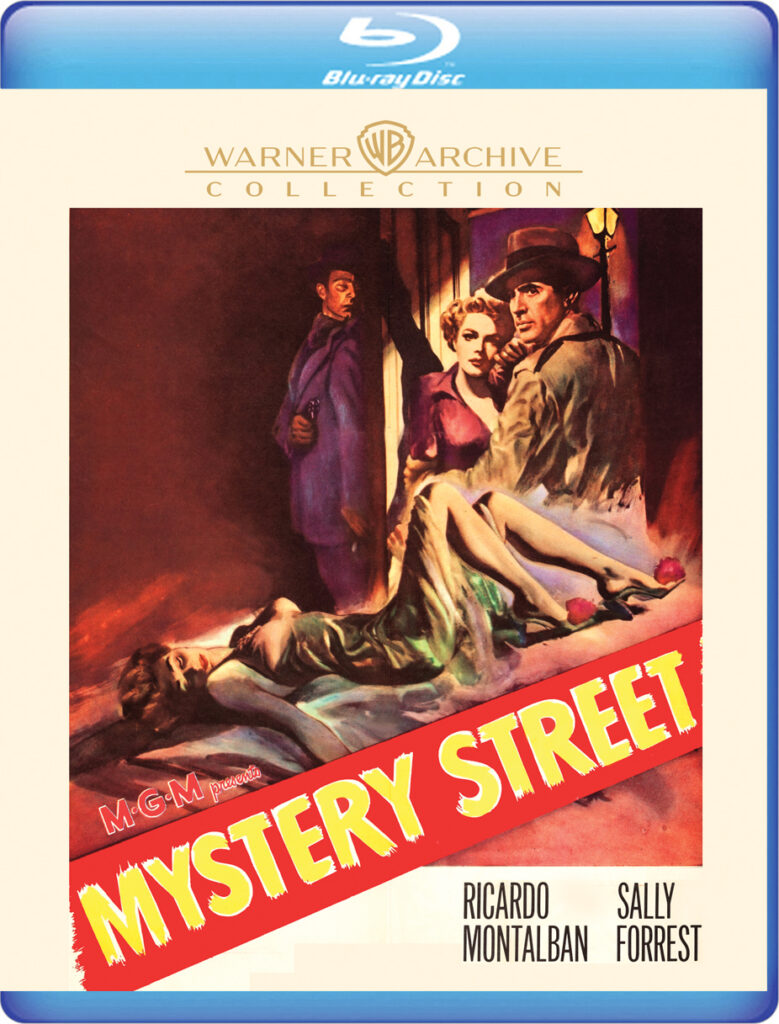
Mystery Street (Warner Archive) Crackling 1950 film noir that relies on forensic science to help a local Cape Cod detective (Ricardo Montalban) solve the mystery of bones found in a sand dune near Hyannis, Mass. They transport the skeleton to Harvard where a scientist (Bruce Bennett) helps discover the identity of the victim. Jan Sterling plays the murdered girl, and Marshall Thompson plays the innocent man railroaded for the crime. Elsa Lanchester has a field day as the seedy landlady who unwisely attempts to blackmail the real killer. Well-directed by John Sturges, with gorgeous cinematography by John Alton and Richard Brooks (In Cold Blood) as one of the scriptwriters.
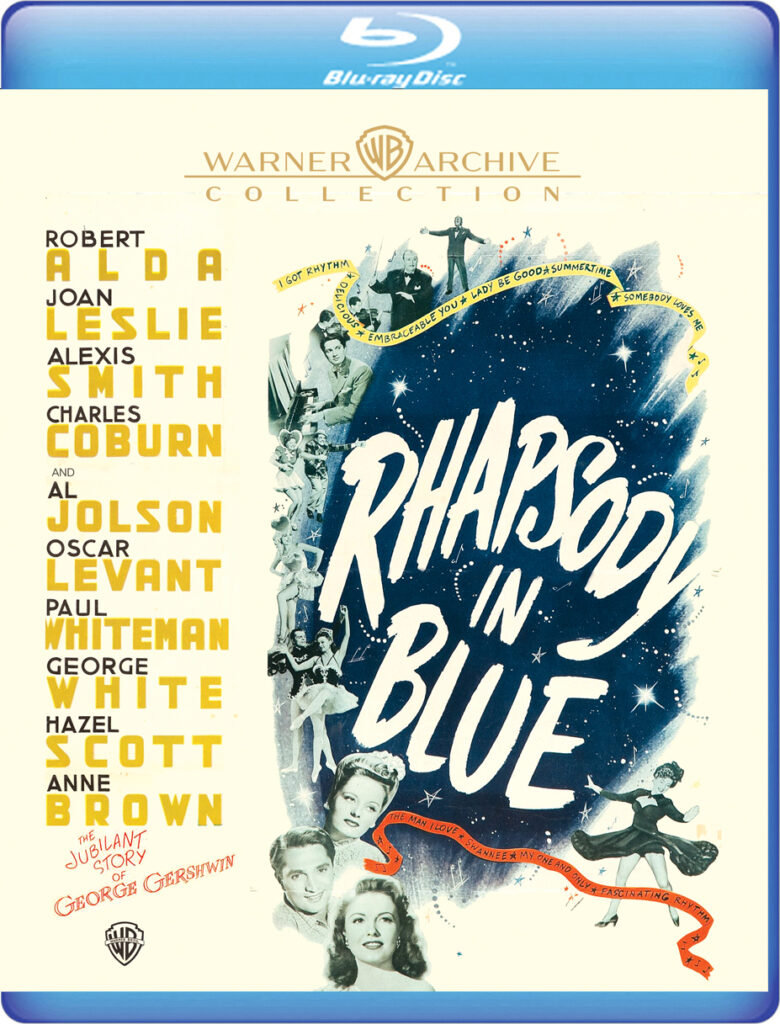
Rhapsody in Blue (Warner Archive) Boy, do I have a soft spot for those Warner Brothers “biographies” of composers and songwriters. I pray they put out a Blu-ray of the loony Night and Day, supposedly about Cole Porter (Cary Grant), someday soon. But this tribute to composer George Gershwin (Robert Alda) is a real treat. From the tenements in Brooklyn, with his young brother Ira, we see the rise of Gershwin from writing songs for Tin Pan Alley and then for Al Jolson (who plays himself) to his real vision of fusing jazz and classical music, resulting in the extraordinary “Rhapsody in Blue” and the “folk opera” Porgy and Bess. Along the way, he acquires a best friend (Oscar Levant playing himself), and the film throws in two fictional love interests (played by Joan Leslie and Alexis Smith). But the musical numbers are sublime and we get to hear “Rhapsody in Blue” plenty, which is heaven. This is a new 4K reconstruction and includes previously unseen footage!
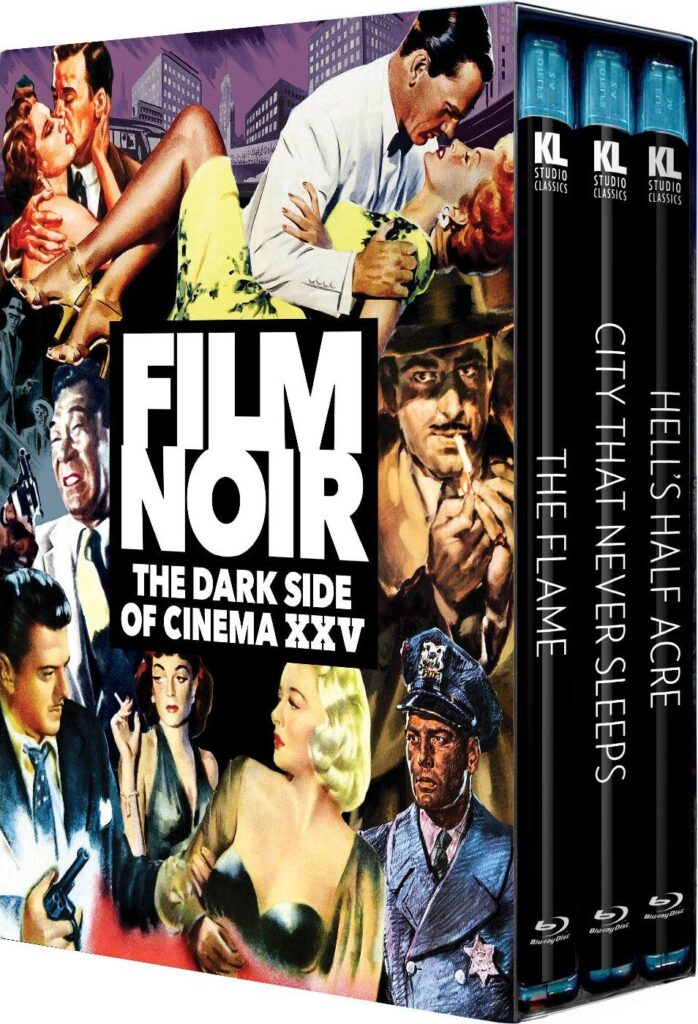
Film Noir: The Dark Side of Cinema XXV (Kino Lorber) The Flame (1947) This starts out like gangbusters- a man drives along the shadowy streets of New York City on New Year’s Eve. He goes into a building (the art direction is astonishing). He knocks on a door and steps inside and suddenly there is the sound of gunshots. We flashback to the tale of two half-brothers. George (John Carroll), a ne’er-do-well, disinherited by his wealthy brother Barry (Robert Paige). Vera Ralson plays Barry’s nurse Carlotta Duval- Barry is dying of some unspecified disease and Carlotta has accepted his hand in marriage. But secretly she is seeing bad brother George and they are just waiting for Barry to kick the bucket, leaving Carlotta all his cash. But Carlotta suddenly grows a conscience and realizes she has feelings for Barry. Then there’s Ernie Hicks (Broderick Crawford), a wily blackmailer, in the background. This film almost succeeds because of the style and craftsmanship involved, but unfortunately Vera Ralston tanks the production with her limited talent. Nonetheless it’s still a lot of fun and includes great character actors like Hattie McDaniel, Blanche Yurka and Victor Sen Yung. City That Never Sleeps (1953) One fateful night in the life of Chicago cop Johnny Kelly (Gig Young), planning to leave the force, not to mention his wife (Paula Raymond), just to run off with a showgirl from the Silver Frolics- Sally “Angel Face” Connors (Mala Powers). But everything goes awry- he’s partnered with an enigmatic new cop for the night (Chill Wills) and ends up chasing a cop killer across the elevated tracks. The ex-magician/cop-killer is played by frequent loser District Attorney on Perry Mason– William Talman. Outrageously melodramatic, with hilariously florid dialogue, like when Sally confesses to Johnny, “I’m sick of this town….Oh, there was a lot of things I was gonna do. Become famous. But Chicago’s the big melting pot and I got melted, but good!” Hell’s Half Acre (1954) Evelyn Keyes plays Donna Williams, flying to Honolulu to find out if a racketeer on trial for murder- Chet Chester (Wendell Corey)- is really her sailor husband of three days she thought was killed during the attack on Pearl Harbor. But when she arrives she finds that Chet has escaped custody, searching for the killer of his girlfriend. She enlists the help of a spunky cab driver (always fabulous Elsa Lanchester) to help track Chet down, and even gets a job in the seedy tenement section nicknamed “Hell’s Half Acre” as a taxi dancer to flush him out. Pretty preposterous but who cares? At least Marie Windsor is in it as, yet again, another deliciously duplicitous dame.
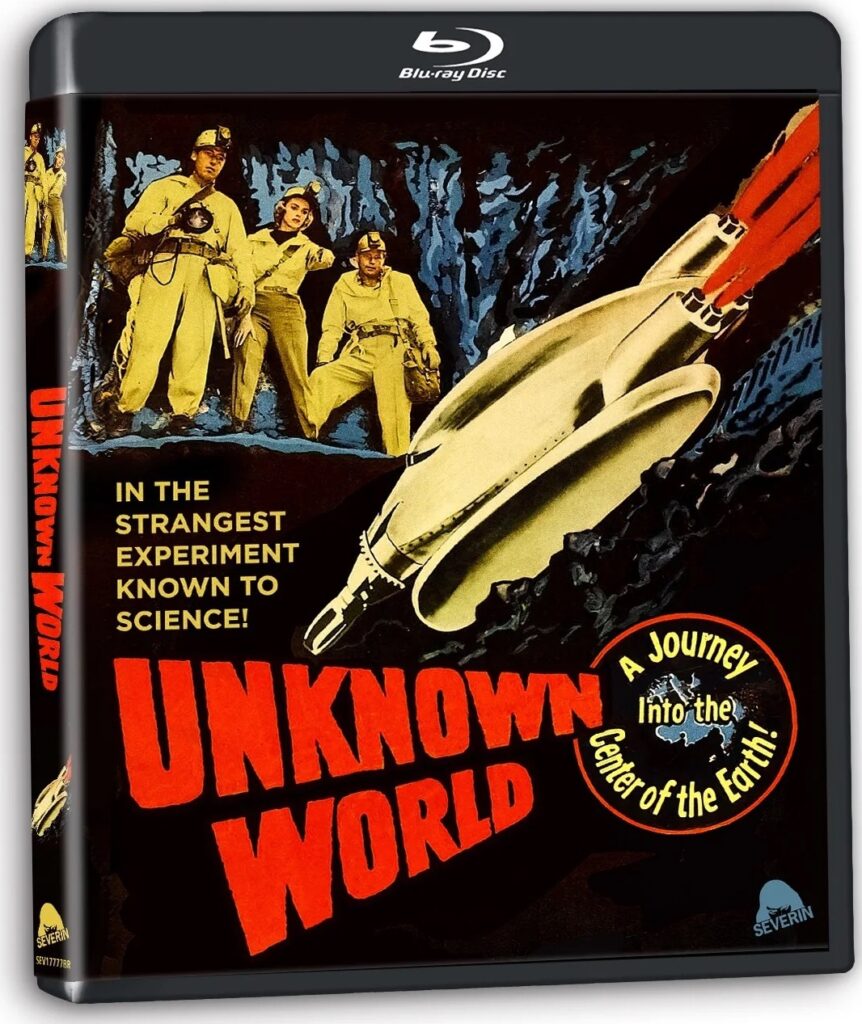
Unknown World (Severin) Victor Kilian plays a scientist who leads a team called the “Society to Save Civilization,” worried that nuclear war will eventually destroy every “man, woman and child” on the planet. They build a submarine/burrowing machine called the “Cyclotron” to explore deep into the center of the earth in hopes of finding a place for civilization to exist it. Things don’t go according to plan in this talky, surprisingly gloomy 1950 sci-fi film directed by early Warner Brothers editor and director Terrell O. Morse. Some scenes were shot in Carlsbad Caverns or Bronson Canyon in Griffith Park. Excellent extras include a feature on character actor Victor Kilian, who was blacklisted in the 1950s and then re-emerged to fame in later life on TV, especially as Grandpa/The Fernwood Flasher on Mary Hartman, Mary Hartman. An interview with film historian C. Courtney Joyner charts the career of Terrell O. Morse, and another extra is on the special effects team of the film Irving Block and Jack Rabin.