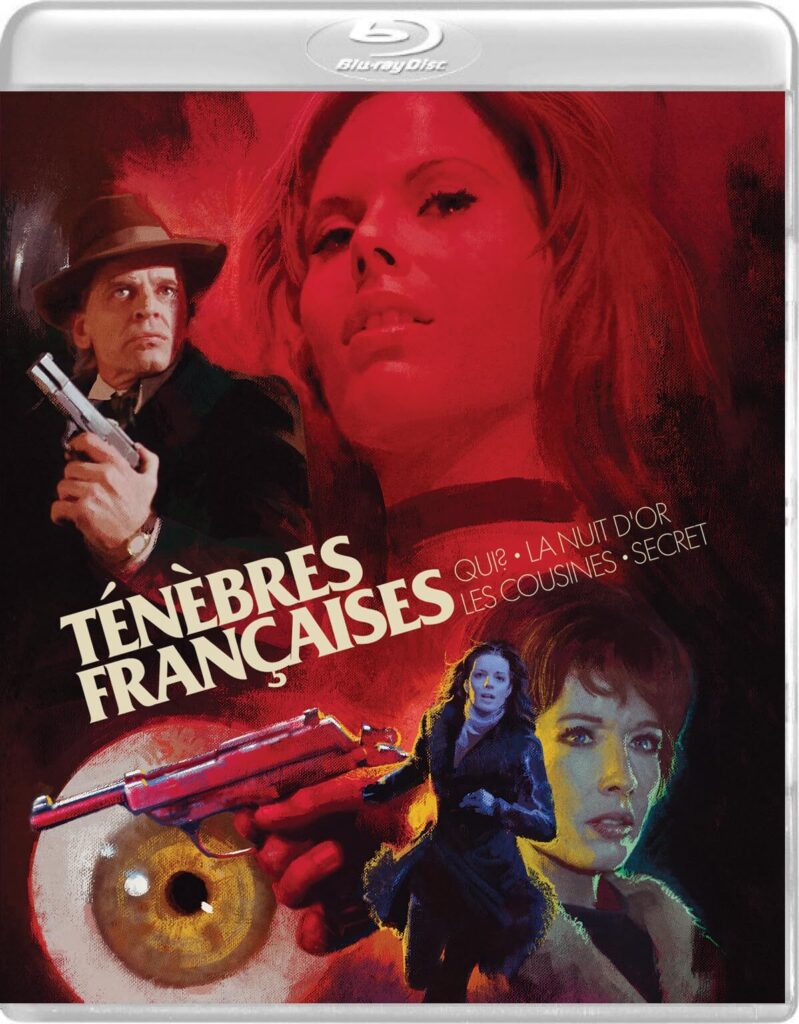
In my apartment, I have a framed lobby card with the best lurid title: From Ear to Ear which boldly claims it is “More Terrifying Than Psycho,” and teases it has “The Shock Ending of All Time!” For years I have tried to track it down with little luck. To my great joy it is now out on Blu-ray thanks to Vinegar Syndrome– on a disc entitled Tenebres Francaise, a collection of four little-known French thrillers from the 1970s. One of them is director Louis Soulanes’s Les Couisines, the original film which became From Ear to Ear, and was heavily censored in America (and still managed to be released with an X rating).
After the historically revolutionary effect the French New Wave had on cinema in the 1960s, the films France turned out in the 70s were a fascinating, mixed bag. The movies in this collection are more genre films than experimental and boundary-pushing, but according to the insightful booklet included in the set, written by Catherine Wheatley, “these films are evidence that the 70s was not a decade of decline for French cinema, but of diversification. Cinema is richer for it.”
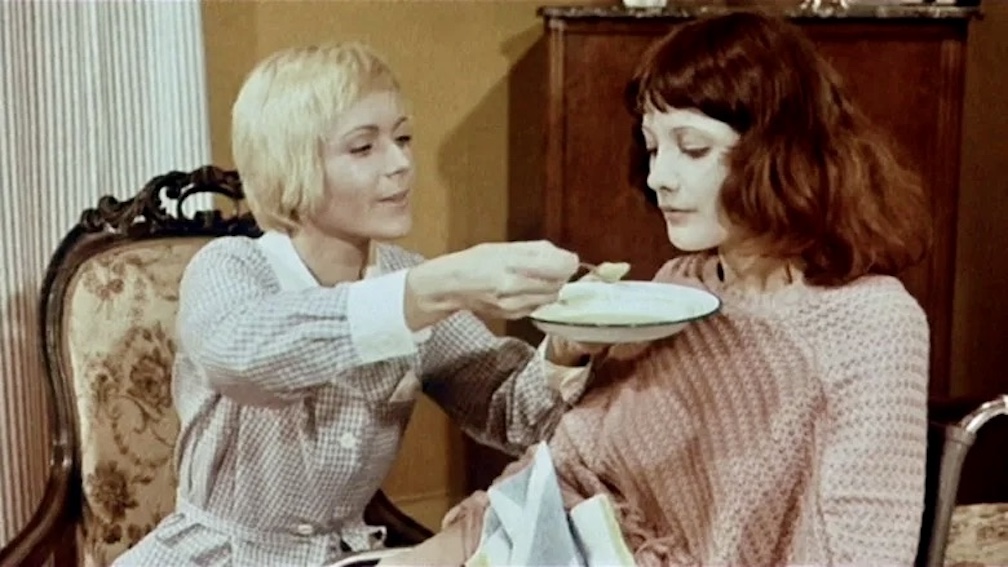
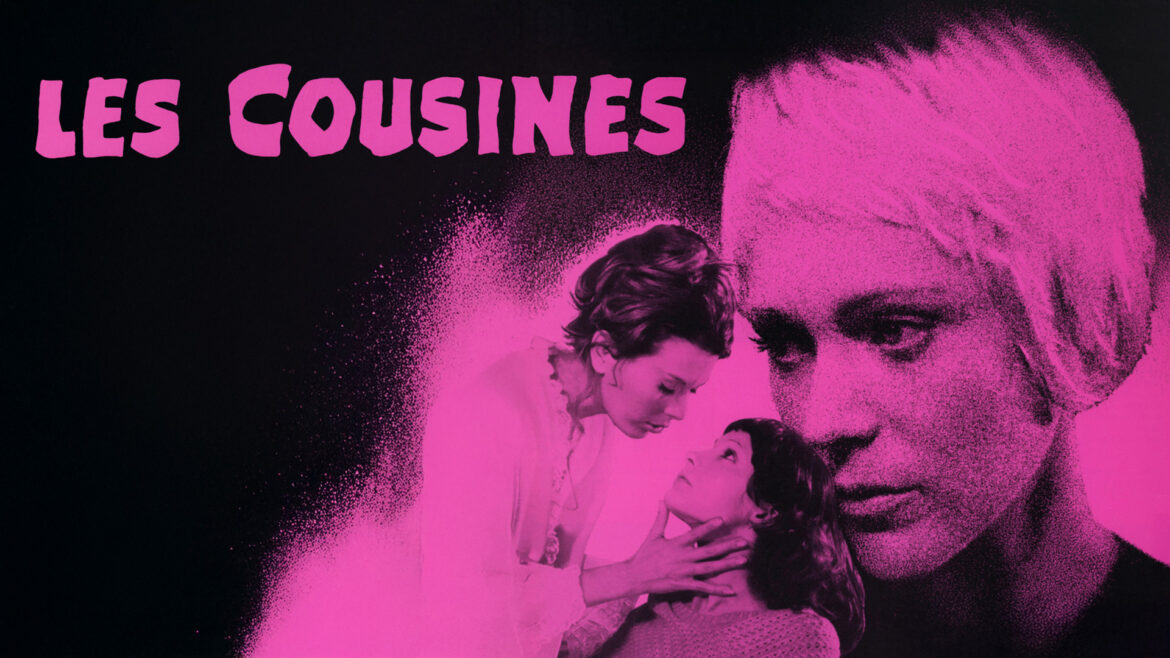
Les Cousines (1970) (The Cousins) (From Ear to Ear) The synopsis from the official Catholic Cinema Listings describes this movie as: “Two young lunatic perverse lesbians persecute their paralyzed sister.” Critics dismissed the film as “Degrading. Of no human value.” Christ, that would have made me race to the theater. It was directed by Louis Soulanes, who began his film career as cinematographer for Agnes Varda and then directed more sexploitation fare like The Fruit is Ripe starring Sophia Loren’s body double- Scilla Gabel. In this film, set in a villa in France, a young woman Lucile (Solange Pradel) has been in a mute, wheelchair-bound state ever since a traumatic incident as a child. She is cared for by her attractive sister Elisa (Nicole Debonne) and sexy cousin Josine (Daniele Argence), who delight in tormenting Lucile during the day and then lustily climbing into bed with each other at night. They throw a wild party while Lucile’s mother is away for the weekend which culminates in murder. A mix of The Maids with Whatever Happened to Baby Jane? it’s a bit of a slow-burn, but well-acted and great looking. It’s hard to see now what the fuss was about, but you have to realize that in France homosexuality was still criminalized in 1970, so the subject matter alone caused it to be released with a warning (on the poster and preceding the film). The credits state that it was based on the book The Perverse Women’s Night by Fletcher D. Benson, which most film historians concede is probably bullshit. The filmmakers used that to say- “Hey, we didn’t make this shit up- it’s from a book.”
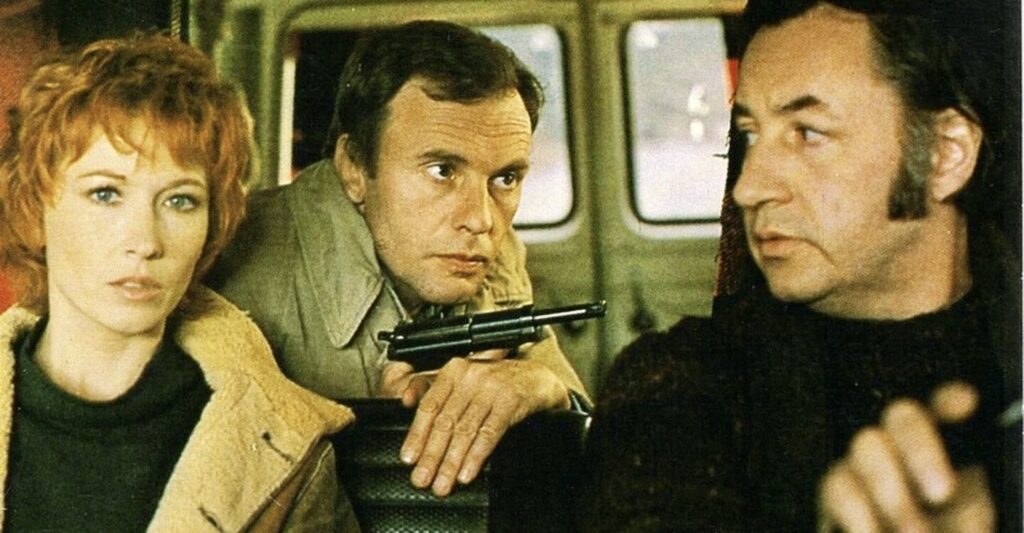
Le Secret (1974) (The Secret) Jean-Louis Trintignant stars as David, imprisoned, and water-tortured, in a mysterious, off-the-grid hospital in France. He kills a guard (Antoine Saint-John– who played the creepy-faced psycho in The Killer Must Kill Again) and escapes. While in the country he befriends a writer- Thomas (Philippe Noiret) and his sculptress girlfriend Julia (Marlene Jobert) who are living in a remote, crumbling stone fortress and confesses that government officials are out to get him because “I saw something that I shouldn’t.” Thomas is eager to believe him because of the “adventure,” but Marlene is cautious and frightened that David might be dangerous and unbalanced. With a score by Ennio Morricone, and directed by Robert Enrico, there is a nice The Parallax View vibe to it, and the three leads are just sensational. (Solange Pradel/Les Cousines shows up as a former girlfriend of David who lends him money while he is on the run). I have to admit a fondness for this kind of paranoid thriller.
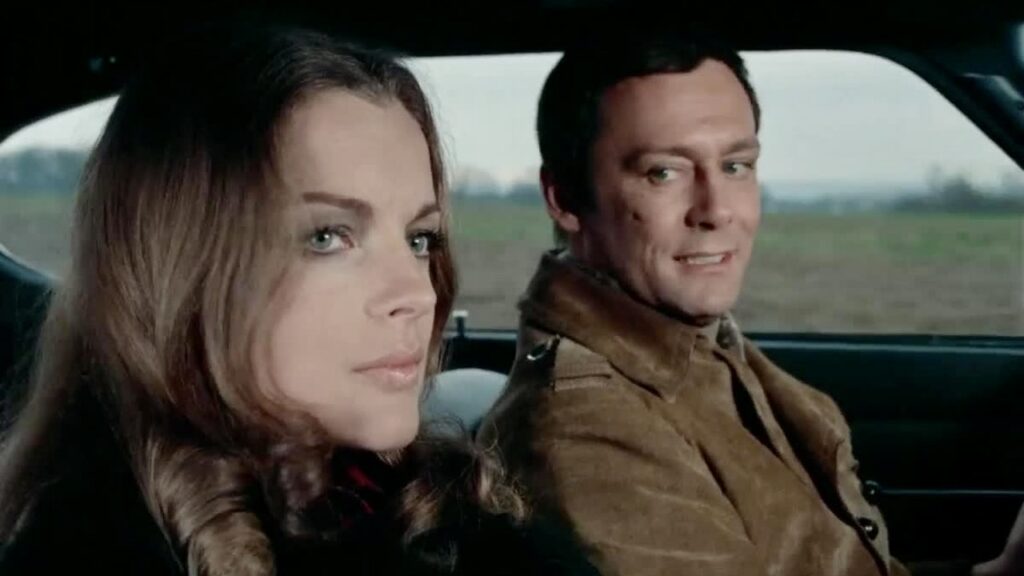
Qui? (1970) (The Sensuous Assassin) A couple vacationing in Brittany- Claude (scarily handsome Gabrielle Tinti) and Marina (exquisite Romy Schneider)- are battling outside of their hotel. He slaps her around and they get in his cherry red, convertible sports car and Claude drives perilously over the cliffs until the car plunges off into the rocks and sea below. Marina leaps out of the car and survives. Claude’s brother Serge (Maurice Ronet) arrives at the scene of the crime and offers to drive Marina back to Paris. But she is fearful of being alone and he lets her stay at his flat. This leads to an affair between the two but Serge becomes consumed with the idea that Marina killed his brother (even though they have been estranged most of their lives). While Marina has the uneasy feeling that she is being followed. Romy Schneider is fascinating as the enigmatic Marina in this twisty thriller.
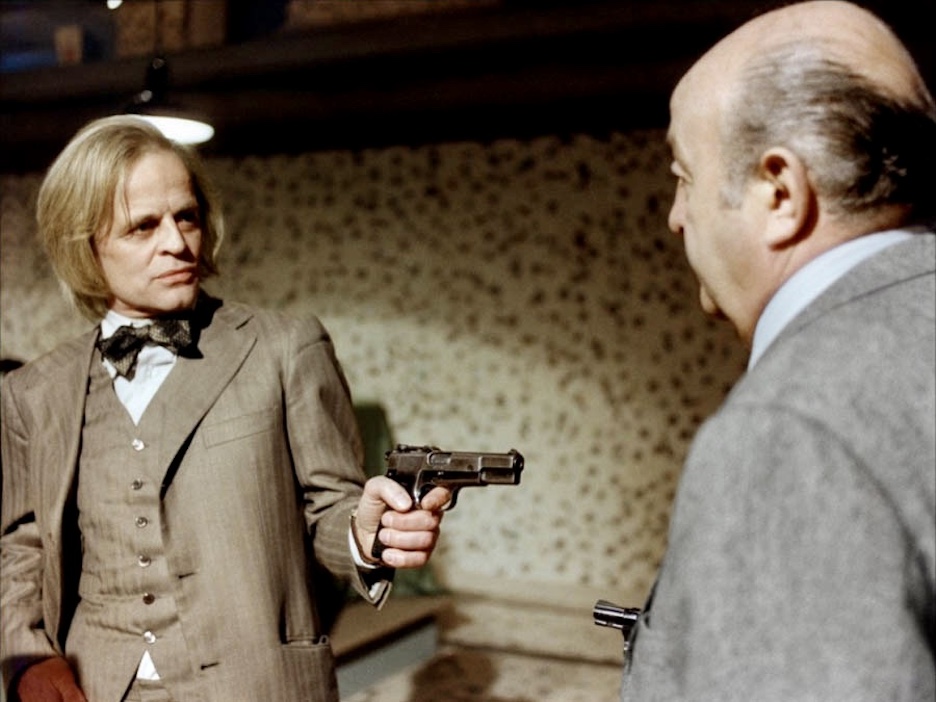
Nuit d’or (1976) (Golden Night) Cinema’s preeminent madman Klaus Kinski plays Michel Fournier, a scoundrel, gambler and possible murderer (known as “the Golden Chain Killer” for slaying an 11-year-old girl). But he is supposedly dead. Why suddenly are the people in his life- his brother, his father, his drunken mother, the police Commissioner- all hearing from him? Not to mention receiving creepy little dolls in the mail. He even kidnaps sweet, young Catherine (Valerie Pascale), threatening his mother that he will kill her. Is it his daughter? Why has he spirited her away to a house in the country along with a woman from a cult called the Temple of the Son of the True Light? What the hell is going on? Yes, all that and even a puppet show with all the characters represented. Klaus Kinski parades through the movie in a black waistcoat, a silken bow tie and a wide-brimmed brown hat, with that amazing face and volatile voice. Directed by Serge Moati, it’s a real head-scratcher of a film, but always intriguing to watch in many ways.