Some of my favorite movies are getting these new restorations on Blu-ray and it’s like seeing them anew. This month is a starry array of greats and offbeat fare looking so sharp and sounding so great, it’s a revelation. From film noir treats like Gilda, or neo-noir wonders like Point Blank. To classics like The Gay Divorcee and The Man Who Came to Dinner and Tea and Sympathy to the great British thriller The Third Man. Even Hammer horrors are getting upgraded like this fantastic new restoration of Vampire Circus. And some rare “gialli” in a handsome box set from Vinegar Syndrome. So, who’s the April fool now? I am, because I have to have every one of these.
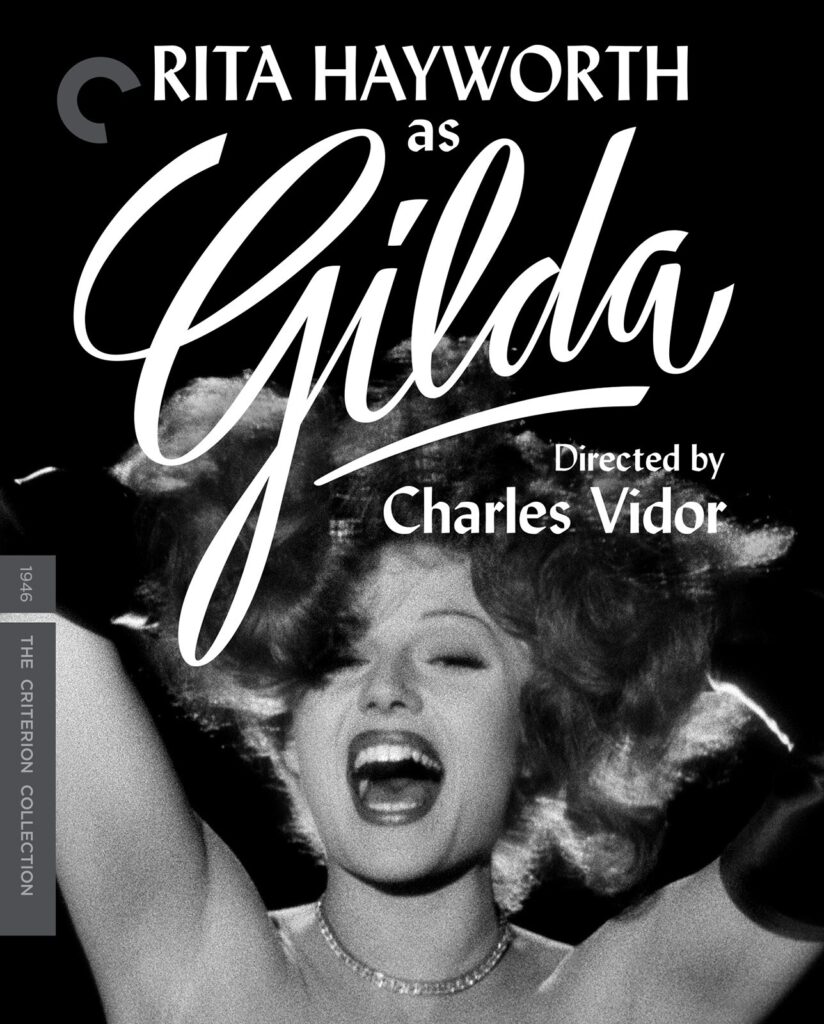
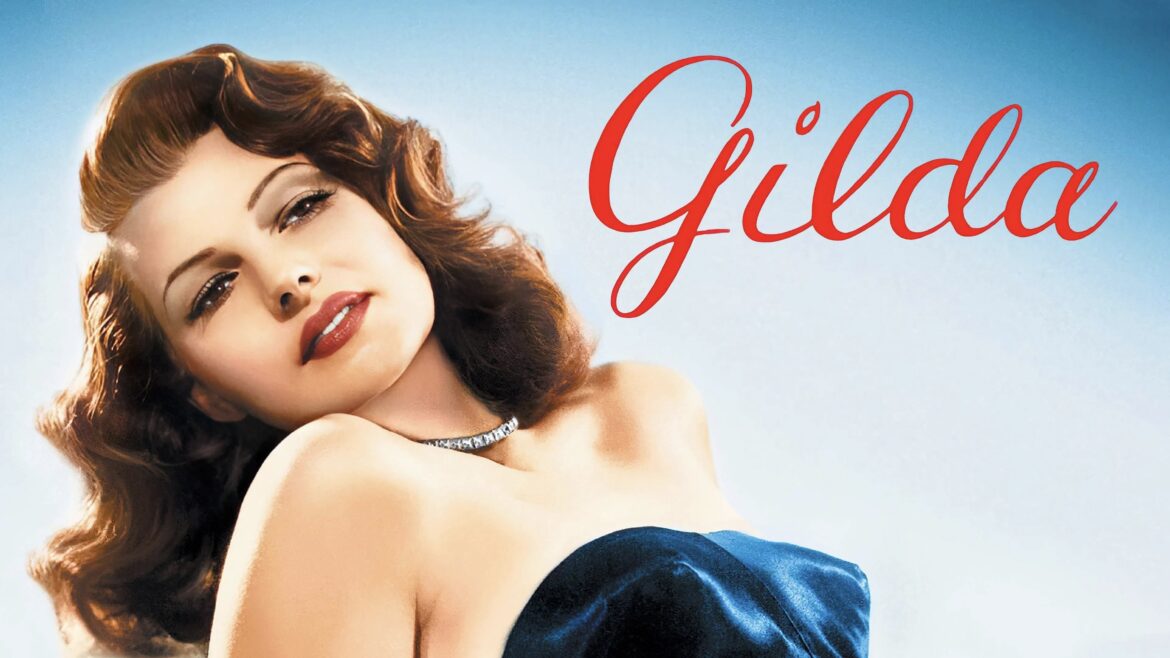
Gilda (Criterion) Glenn Ford plays Johnny Farrell, a sweaty, down-on-his-luck, gambler in Buenos Aires who is rescued and taken in by the elegant Casino owner Ballin Mundson (George Macready). Johnny becomes Ballin’s devoted casino manager and states, “I was born the night you met me.” But Mundson returns from an extended trip suddenly married to Gilda (Rita Hayworth) and Johnny hits the roof. The weird undercurrent of hostility that Glenn Ford’s Johnny Farrell feels for Rita Hayworth’s Gilda can be read in several ways. It is implied that Johnny and Gilda had a disastrous past relationship, but I’m not buying it. Even Glenn Ford remarked in an interview that he and Macready “knew we were supposed to be playing homosexuals.” This brilliant 1946 film noir, directed with knife-like precision by Charles Vidor, is wildly subversive, and crackles with dark wit. Ford is just fantastic, and Rita Hayworth looks almost supernaturally beautiful. “Are you decent?” Ballin asks, knocking at her bedroom door. “Me????” Gilda sarcastically replies. This is a gorgeous new 4K UHD restoration and comes with audio commentary with film critic Richard Schickel and an interview with film nor historian Eddie Muller. Directors Martin Scorsese and Baz Luhrmann discuss their appreciation for the film.
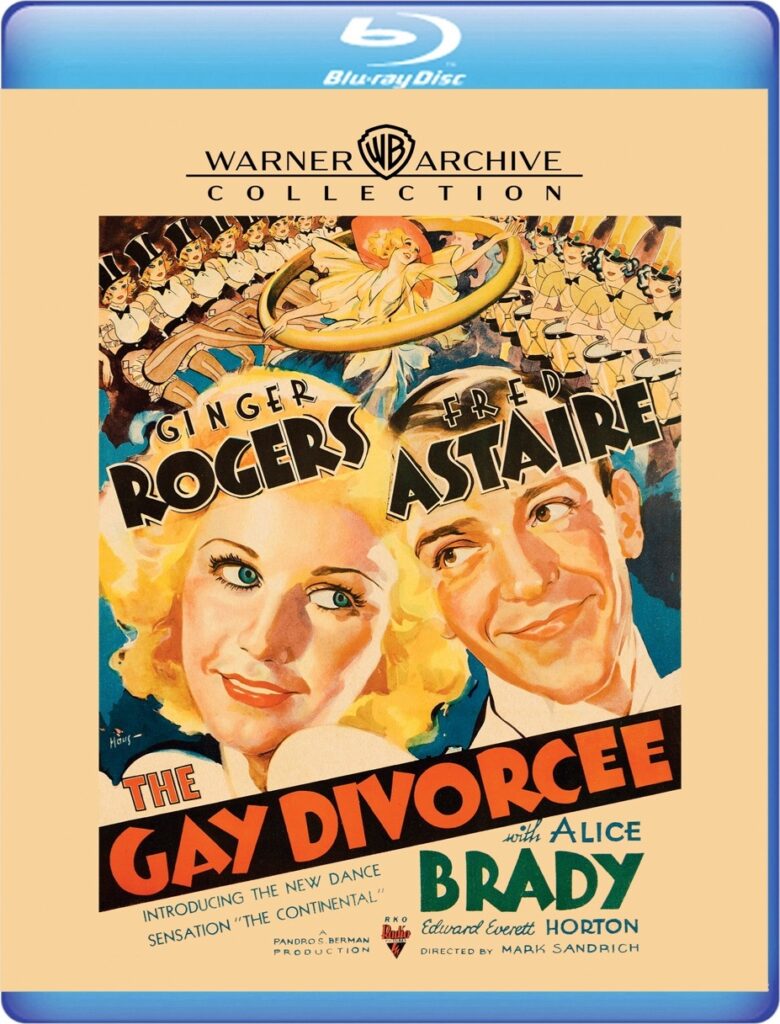
The Gay Divorcee (Warner Archive) Looking absolutely stunning on Blu-ray this was one of the best of the Fred Astaire/Ginger Rogers musicals that RKO turned out in the 1930s. Fred Astaire plays Guy Holden, an American dancer, traveling by boat to England who has an awkward run-in with the beautiful Mimi (Ginger Rogers) and continues to hunt her down, with often disastrous results. Mimi is in the middle of a divorce and has hired a gigolo (Erik Rhodes) to spend the night with her at a seaside resort which will cause her to finally get her legal separation. But Guy shows up and screws everything up. Fortunately, Guy and Mimi dance their troubles away in some memorably astonishing numbers like The Continental and the achingly beautiful dance to Cole Porter’s Night and Day. The film includes wonderful comic assistance from Edward Everett Horton, Alice Brady and Eric Blore. Fred Astaire is elegance personified, and as for Ginger Rogers, as many have pointed out, Ginger did it backwards and in heels.
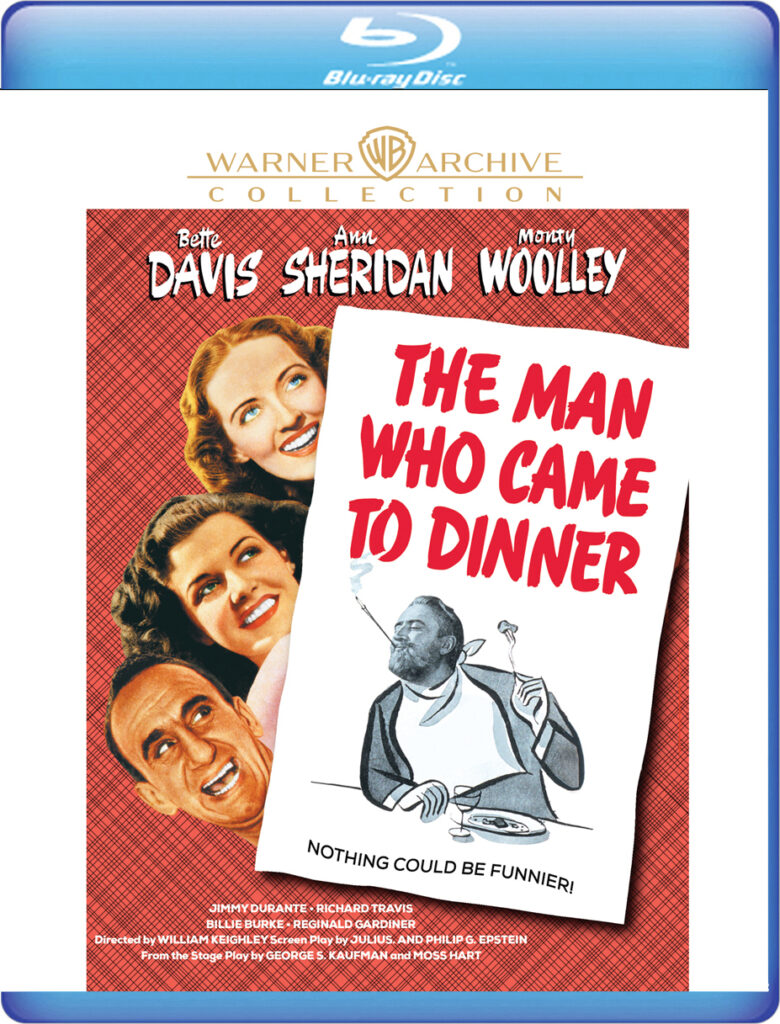
The Man Who Came to Dinner (Warner Archive) Finally my prayers have been answered- a sparkling restoration of this marvelous screwball 1941 comedy, faithfully adapted from the George S. Kaufman & Moss Hart Broadway smash hit. Monty Woolley reprises his stage role as the famed critic and lecturer Sheridan Whiteside, who very reluctantly agrees to a lunch at the Messelia, Ohio home of Mr. & Mrs. Stanley (Billie Burke & Grant Mitchell). He arrives with his devoted secretary Maggie Cutler (Bette Davis) and slips on the ice outside their door and has to recuperate in their home, turning the place into bedlam with his demands and conditions. Maggie takes a shine to local newspaperman, and aspiring playwright, Bert Jefferson (Richard Travis), which worries Whiteside. So, he deviously calls in seductive actress Lorraine Sheldon (Ann Sheridan) to thwart the romance. Woolley is absolutely marvelous and there are great comic bits by the always wonderful Mary Wickes as the exasperated nurse Miss Preen and Jimmy Durante as the frenetic, Marx Brothers-like, Banjo, who unexpected drops in. Hilarious from start to finish, and expertly directed by William Keighley. The film is comic perfection. Extras include a short about the making of the film, a hilarious Bugs Bunny cartoon- “The Wabbit Who Came to Supper,” and a Lux radio version of The Man Who Came to Dinner starring Clifton Webb and Lucille Ball.
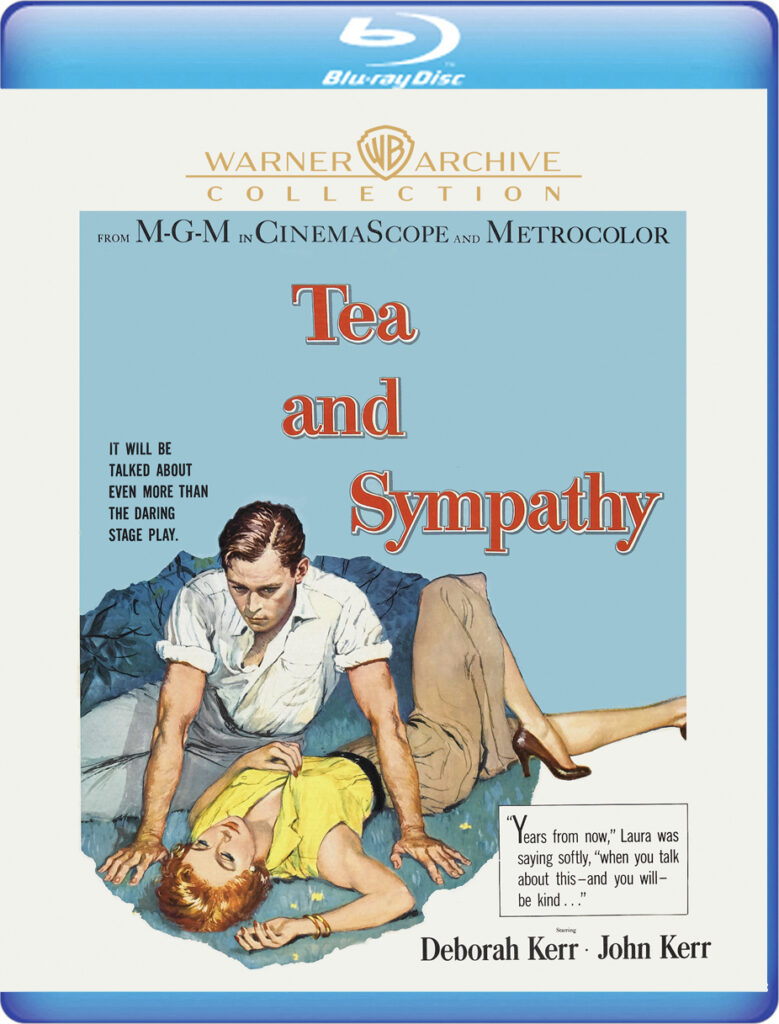
Tea and Sympathy (Warner Archive) This 1956 film is based on the Broadway stage play by Robert Anderson about “the love that dare not speak its name.” Deborah Kerr movingly plays Laura, the wife of the brutish dormitory head and coach Bill Reynolds (Leif Erickson) at a private prep school for boys. Her home becomes safe haven to the bullied student Tom Lee (beautifully played by John Kerr), who is called all sorts of gay slurs like “sister boy” because he is sensitive and not considered manly enough by the other yahoos. Laura shows the boy compassion and sticks up for him, and eventually gives of herself to prove his manhood. The “Years from now, when you talk about this, and you will, be kind” speech at the end still packs an emotional punch. It’s hard to imagine but even the hint of the subject of homosexuality in a play or a movie was unacceptable and censored at the time. Even though it seems slightly muted, the film, sensitively directed by Vincente Minnelli, still resonates with great tenderness. The gorgeous color CinemaScope cinematography is by the great John Alton.
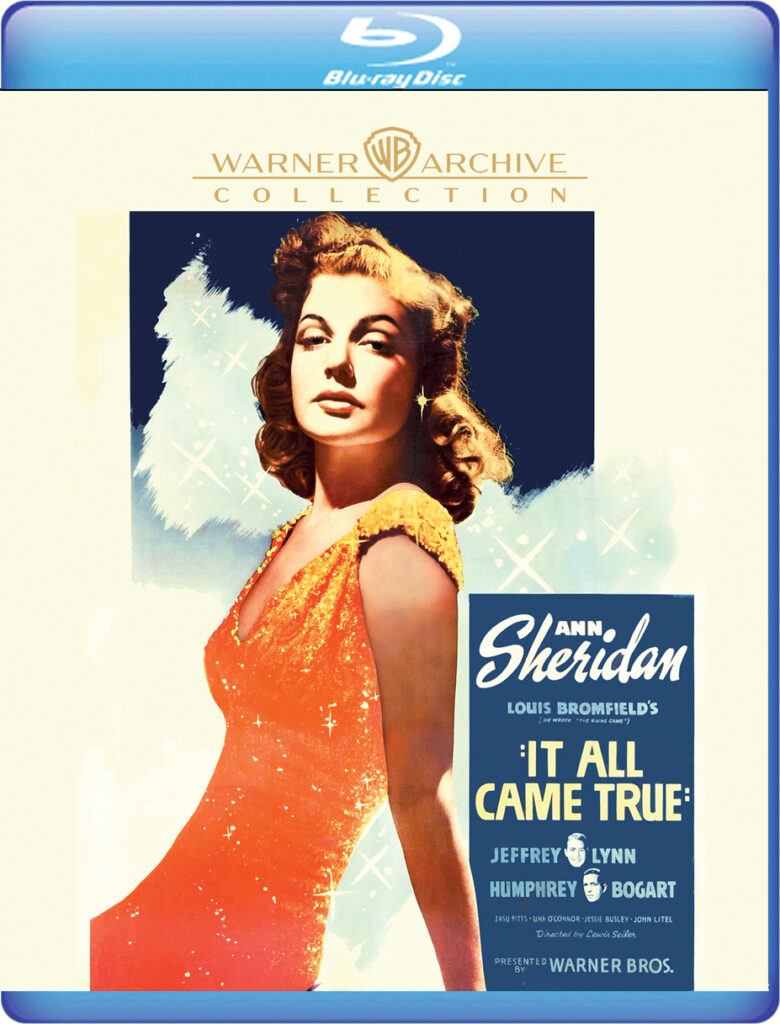
It All Came True (Warner Archive) What a treat to discover this little, forgotten, 1940 gem from Warner Brothers starring the always great Ann Sheridan and Humphrey Bogart, still toiling away for the Studio playing gangsters but just a year away from his breakout roles in High Sierra and The Maltese Falcon. Bogart plays Chips Maquire, a nightclub owner/mobster forced to hide out from the cops with his piano player Tommy (Jeffrey Lynn) at the boarding house run by Tommy’s mother (Jessie Busley). A bunch of old eccentrics live in the house (the zany Zasu Pitts plays a woman living there who is convinced dangerous men follow her home every night). Una O’Connor plays home co-owner Maggie Ryan, whose daughter Sara Jane (Ann Sheridan) is an aspiring singer and has always held a torch for Tommy. The bank threatens to take the house away from the two elderly women if they don’t pay back taxes and Chips decides to transform the house into an elaborate nightclub called The Roaring 90s, where the performers sing numbers from the gay 1890s. The whole show at the end is worth the price of admission. Sheridan is just heavenly. She can play tough but tender and sexy and sardonic all at the same time. She gets to sing the number Tommy wrote: “Angel in Disguise.” This comes with two whacky Warner Brothers cartoons-: “Circus Today” and “The Sour Puss.”
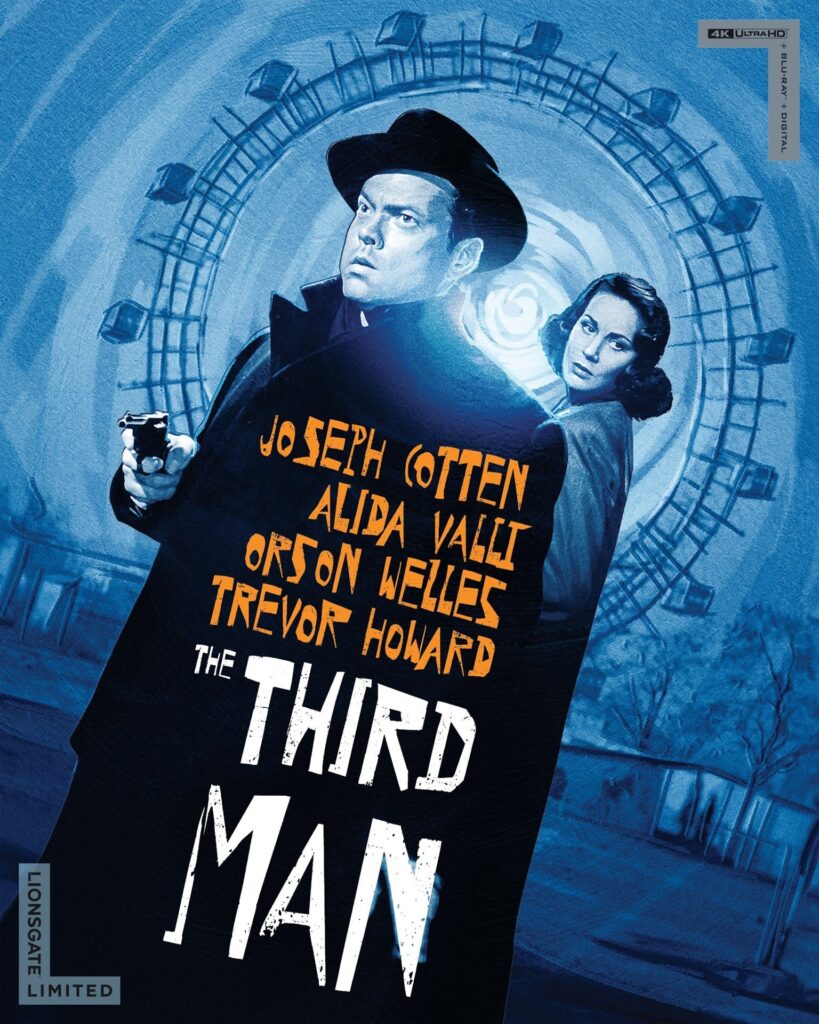
The Third Man (Lionsgate Limited) So many talented elements converged to make a truly unforgettable 1949 British thriller. Superb direction by Carol Reed. A phenomenal screenplay by Graham Green. A brilliant cast. Not to mention a partially bombed out Vienna after the War as a moody backdrop. And a haunting zither score by Anton Karas. Joseph Cotton plays a Zane Gray-like pulp writer who arrives in Vienna because his old friend Harry Lime (Orson Welles) has offered him a job. He arrives to find that Harry has been killed, hit by a car in a mysterious accident. He meets a cynical British police major- Calloway (Trevor Howard) at the funeral who informs him that Harry was involved in a deadly smuggling ring. He also meets the beautiful actress girlfriend of Lime- Anna Schmidt (exquisite Alida Valli), heartsick over Harry’s death. The more he investigates the darker and more complex the film gets, climaxing in a visually astonishing chase through the underground sewers. This two-disc steelbook includes the 4K UHD disc (the other the Blu-ray) of an incredible restoration by Studio Canal.
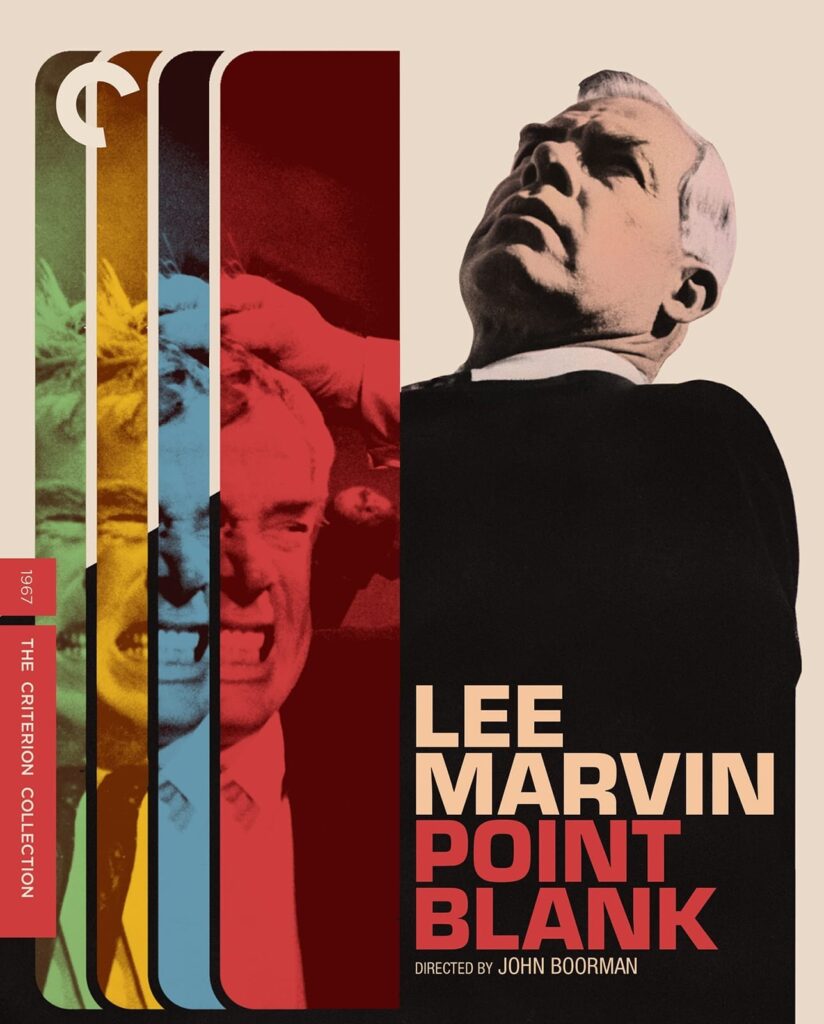
Point Blank (Criterion) Lee Marvin stars as an unsmiling killer hell bent on revenge in John Boorman’s dazzling 1967 crime thriller. His wife and partner leave him for dead after a money heist at Alcatraz but with the aid of his ex’s sexy sister (Angie Dickinson, who’s just terrific) he stalks down members of the “Organization” one by one. Marvin’s dogged pursuit of the $93,000 is so extreme that Dickinson finally flips out, beating him with her fists while he just stands there impassively. Boorman’s jazzy, unorthodox filming (flashing back and forth in time) killed its chances at the box office at the time of its release, but it holds up remarkably well along with other neo-noir greats like Kiss Me Deadly and Night Moves, as well as European art movies that aped the tough guy films of the 40s and transformed them into something startling and new. Check out Steven Soderbergh’s The Limey to see a respectful homage to this blazingly original film. Stupidly remade in 1999 with Mel Gibson called: Payback (both based on the Donald E. Westlake novel The Hunter written under the pseudonym Richard Stark). The picture and audio for this restoration is extraordinary. You can really appreciate the cinematography by Philip Lathrop. There is audio commentary with director John Boorman and filmmaker Steven Soderbergh. But there is a wonderful extra with Jim Jarmusch discussing his love for the film. He tells a great story (told to him by John Boorman) of how Lee Marvin pretended to be drunk on the set in front of the producers, in order to give Boorman time to figure out how he was going to film the final scenes.
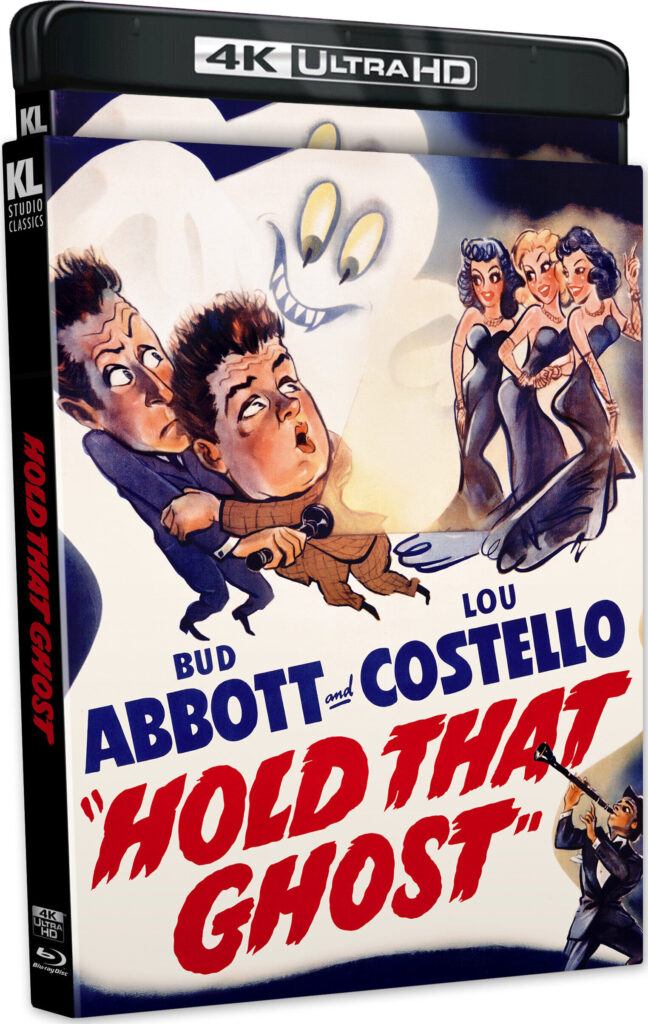
Hold That Ghost (Kino Lorber) A brand new 4k scan of the 35mm original camera negative of the third Abbot & Costello comedy for Universal and a favorite among fans. They inherit a spooky, decrepit roadhouse from a gangster. A busload of other passengers become stranded with them including the whacky Joan Davis, Richard Carlson as an absent-minded scientist, and the lovely Evelyn Ankers. It’s definitely a raucous old dark house comedy with disappearing corpses, glowing eyes in the dark, secret passageways, and a bedroom that, when you hang your pants on a coatrack, transforms into a gambling casino. This definitely was a forerunner for Abbot & Costello Meet Frankenstein and their many other horror-themed comedies. In this film are musical numbers by Ted Lewis (“Is everybody happy?”) and his orchestra plus the lively harmonies of The Andrew Sisters.

The House of Seven Corpses (Kino Lorber) A film crew is shooting a horror movie in the creepy Beale family mansion (actually shot at the Utah Historical Society). John Ireland plays the hot-headed director and Faith Domergue plays the star and they unfortunately read from the real Tibetan Book of the Dead they find in the house for all the occult shots in the film which inadvertently really raises the dead in the outside graveyard. John Carradine plays the weird caretaker who tells the story of all of the family members who were really murdered in the mansion. This really picks up in the last half hour when the reanimated dead begin killing off the cast and crew. There is fun audio commentary with film historian David Del Valle and director David DeCoteau and an informative separate audio commentary with Gary Kent, who was Associate Producer on this film. This is a 2-disc set which includes a terrific-looking 4K UHD restoration. I went to see this at a Drive-In when it opened in 1973, but spent the whole movie making out with someone. So, it was an eye opener to finally see the damn thing.
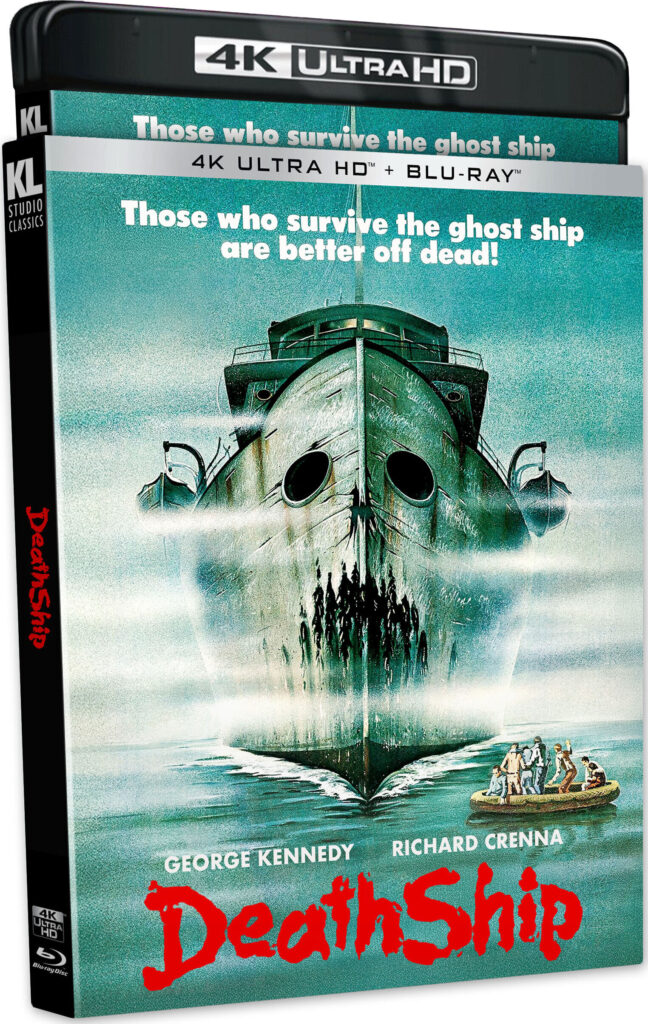
Death Ship (Kino Lorber) Passengers surviving a catastrophic ocean liner sinking are paddling the sea on a raft when they come across a seemingly empty, ominous ship. It turns out to be a German Nazi vessel from World War II, but this Flying Dutchman-like freighter has a mind of its own. George Kennedy plays Captain Ashland, one of the survivors, who becomes possessed by the spirit of a German naval officer. “This ship needs blood…it must have blood to survive,” he chillingly tells Trevor (Richard Crenna), who is there with his wife (Sally Ann Howes) and two children. Other doomed passengers include handsome Nick Mancuso, Saul Rubinek and Kate Reid (who eats some deadly candy she finds onboard). This is a 4K scan of the original camera negative and you can choose between the theatrical cut or the extended cut (basically an extra 4-minute sequence between George Kennedy and Richard Crenna). Both versions look spectacular. One of the screenwriters was Jack Hill (Coffy/Spider Baby), but his story was drastically altered. (Jack Hill’s original short story script is included on the Blu-ray plus a documentary on the making of the movie). God forgive me, but I’ve always loved this stupid film. It just doesn’t get better than watching George Kennedy playing a possessed Nazi psycho chasing two frightened kids along the deck of a haunted ship.
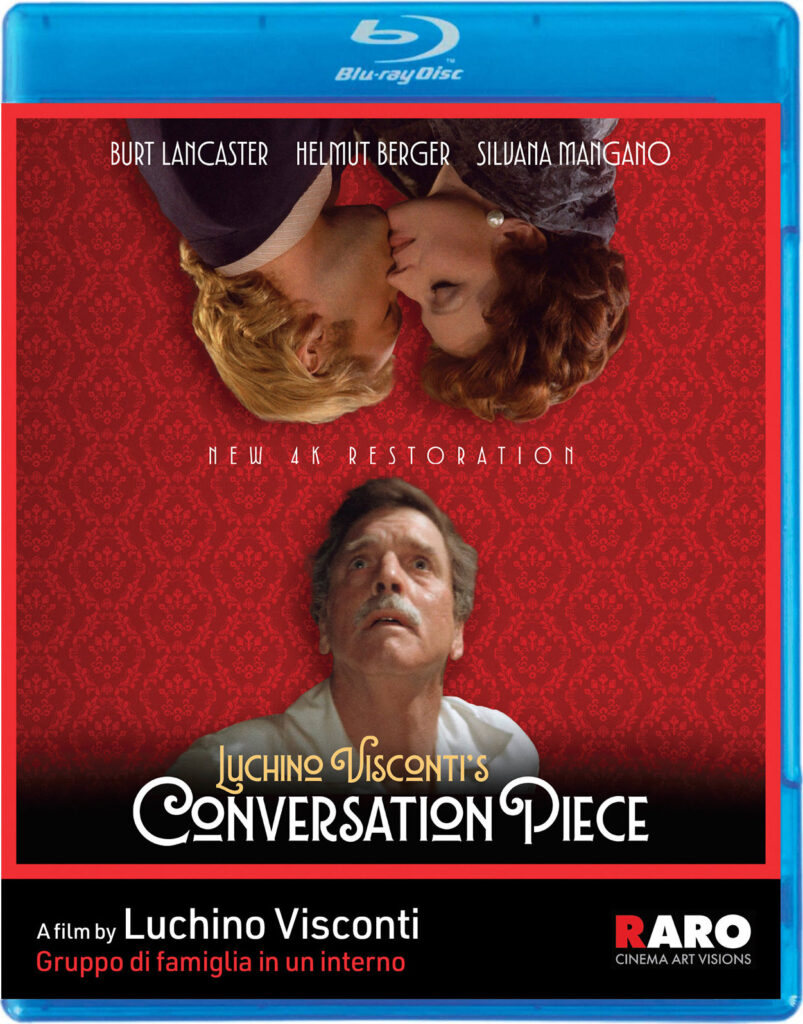
Conversation Piece (Raro/Kino Lorber) The second to last feature by the great Italian director Luchino Visconti is a witty, darkly humorous and ultimately tragic tale of the unwelcome intrusion of modern life onto a wealthy nobleman (Burt Lancaster), who would prefer to be alone with his art, books, Mozart and memories. He owns a palazzo in Rome and a pushy Marchesa (the gorgeous screen goddess Silvana Mangano) talks the reluctant professor into renting the upstairs apartment for a year for her young boytoy Konrad (Helmut Berger), her daughter Lietta (Claudia Marsani) and her daughter’s passive boyfriend Stefano (Stefano Patrizi). They loudly come and go at all hours, push their way into the nobleman’s living quarters, do unwelcome renovations which cause water leaks and the ceiling to crack and crumble. The nobleman wearily puts up with all of it because he becomes intrigued with the handsome boyfriend Konrad (Berger). He even attends to him when he finds him beaten up and bloody on the stairs. The upstairs interlopers are a demanding, vulgar bunch- even the police show up to question the professor about Konrad and drug smuggling. But as much as the noise and chaos infuriates him, he is pathologically drawn to this decadent bunch. Visconti had suffered a stroke before making the film and only after Burt Lancaster agreed to step in at the helm if there was a problem did the movie get insured. The film feels achingly personal too, with Lancaster as the alter ego of Visconti, facing failing health and death with a bitter, jaundiced, Proustian eye on the future generation. There are brief flashes from the professor’s past and of his beautiful mother (an uncredited Dominique Sanda), who kept a secret room in the house during the war to hide dissidents. That’s the room the professor uses to hide Konrad and lovingly care for him after he is beaten up. Infuriatingly dismissed by critics at the time of its release in 1974, this gorgeous 4K restoration will possibly cause audiences to see this film in a fresh light. I’ve always had a warm spot for this movie and think it’s an important later work by a truly gifted filmmaker.
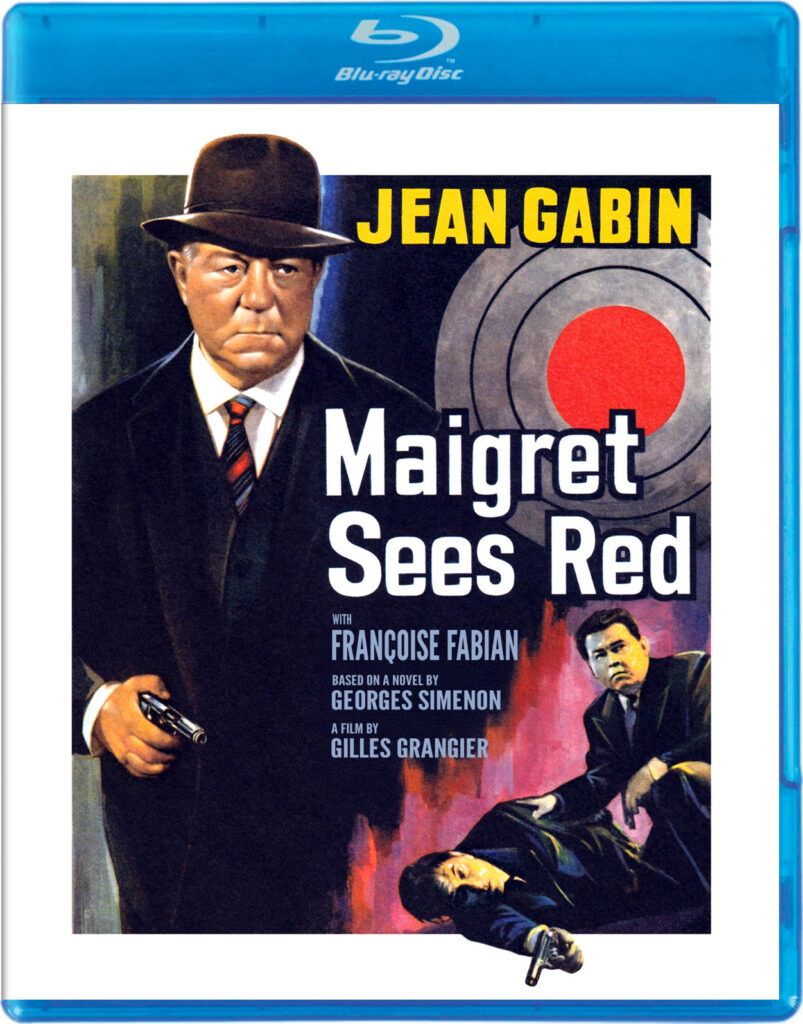
Maigret Sees Red (Kino Lorber) Actor Jean Gabin’s final time playing the famed pipe-smoking French detective Maigret, based on the popular mysteries by Georges Simenon. This 1963 film directed by Gilles Grangier is about some hired guns from St. Louis who have arrived in France for some deadly, unknown reason. But bodies begin to pile up and it’s up to Magrait to untangle the murderous plot. It all also seems to revolve around a bar/bowling alley where a pretty girl named Lily (Francoise Fabian) works, dating an American the hoods are friendly with. With music by Michel Legrand. This 4K restoration is sensational, and there is good audio commentary by author Simon Abrams.
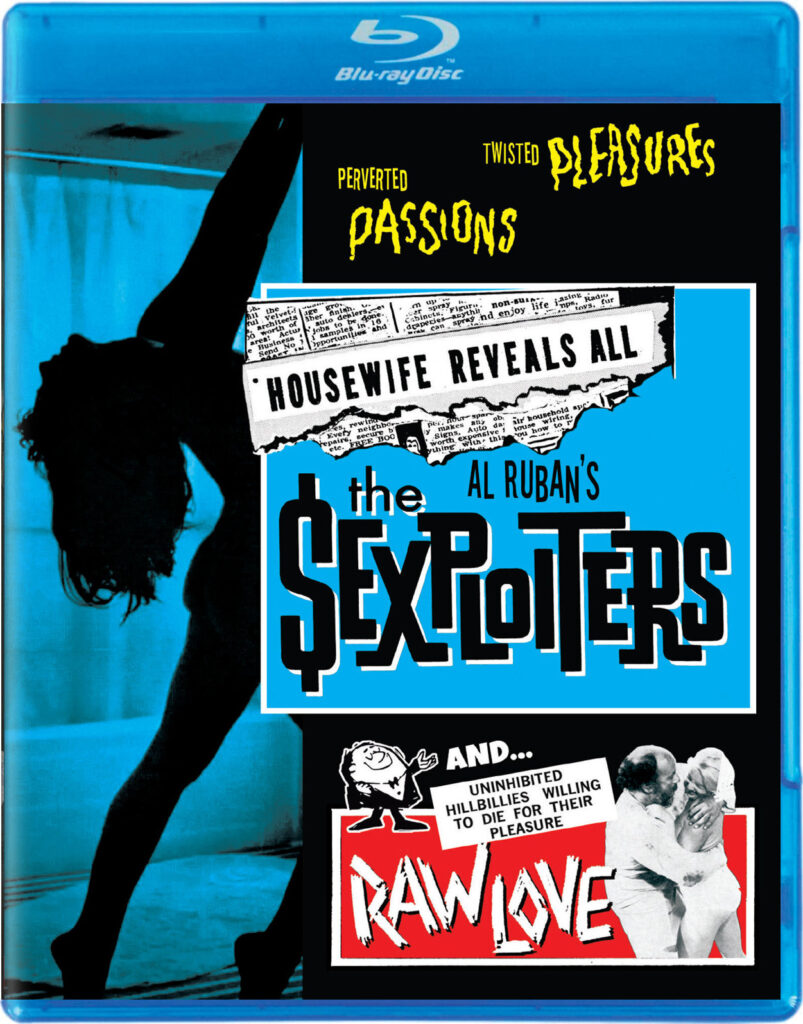
The Sexploiters & Raw Love (Kino Lorber) Two sublimely sleazy black & white sexploitation films- the first up is The Sexploiters (1965) which opens with a suburban housewife driving into NYC for a “specialty” assignment for the “Agency” she works for. She shows up at a penthouse apartment that overlooks Central Park and ends up in a bra whipping her client- a big lug who answers the door wearing an ascot (that alone makes him deserving of a beating). The “Agency” supposedly lets men with cameras shoot undressing women, but it’s really a prostitution racket. Our suburban Mrs. even gets a gig where she has to change into revealing lingerie and, fake weeping, climb into a coffin with a client pretending to be dead. This was the only directorial credit for Al Ruban– who went on to work with John Cassavetes (producing, cinematography, editing) on such films as Faces, Opening Night, The Killing of a Chinese Bookie, etc. The film has terrific audio commentary with cameraman C. Davis Smith and film historian Michael Bowen. Raw Love (1965) is pure “hixploitation,” riffing on movies like Tobacco Road and God’s Little Acre. This one has a moonshiner named Skeeter, some sexy cousins that enjoy swimming nude at the nearby watering hole and dragging unsuspecting fishermen into the lake with them. There’s a horny sheriff; buxom adulterous wives and it ends in a big (surprisingly well- choreographed) fight between a hunky neighbor and a drunken rapist wearing a stained union suit. According to the excellent audio commentary by historians Gentry Austin and Casey Scott, this film ran into legal trouble in Memphis where it was charged with obscenity.
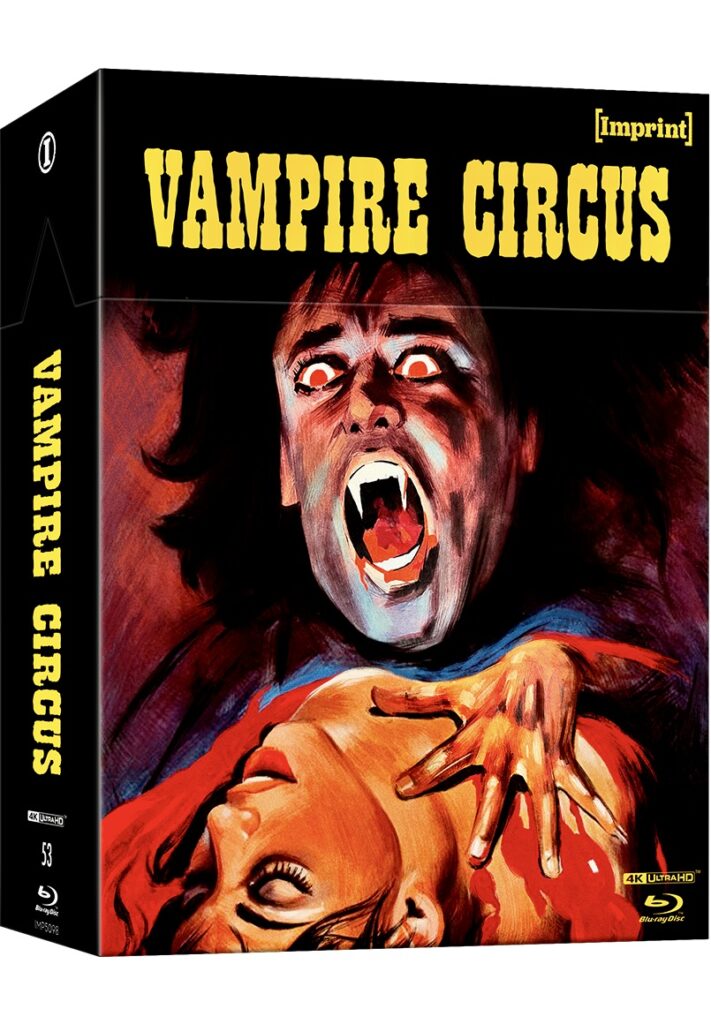
Vampire Circus (Imprint). Now I always need a shot of Hammer horror movies from time to time, and this is a fun late entry from the British horror studio that frightened the shit out of us with Christopher Lee’s snarling fangs in Horror of Dracula. A traveling circus in the 19th century stops in a European town and astounds audiences with a man who changes into a panther, a tiger woman, and twin aerialists who turn into actual bats. (Yes, true acro-bats). Then suddenly there an outbreak of vampire killings that ties back to the fiendish Cirque du So-deadly. This is a 4K UHD from a restoration by Imprint Films. It has two separate audio commentaries with Hammer historians. Two documentaries on the making of the film. “The Bloodiest Show on Earth” and “The Secret History of Vampire Circus.” An interview with director Robert Young and actress Sibylla Kay “Vampire Victim.” Plus, a fabulous book with stills and posters from the film.
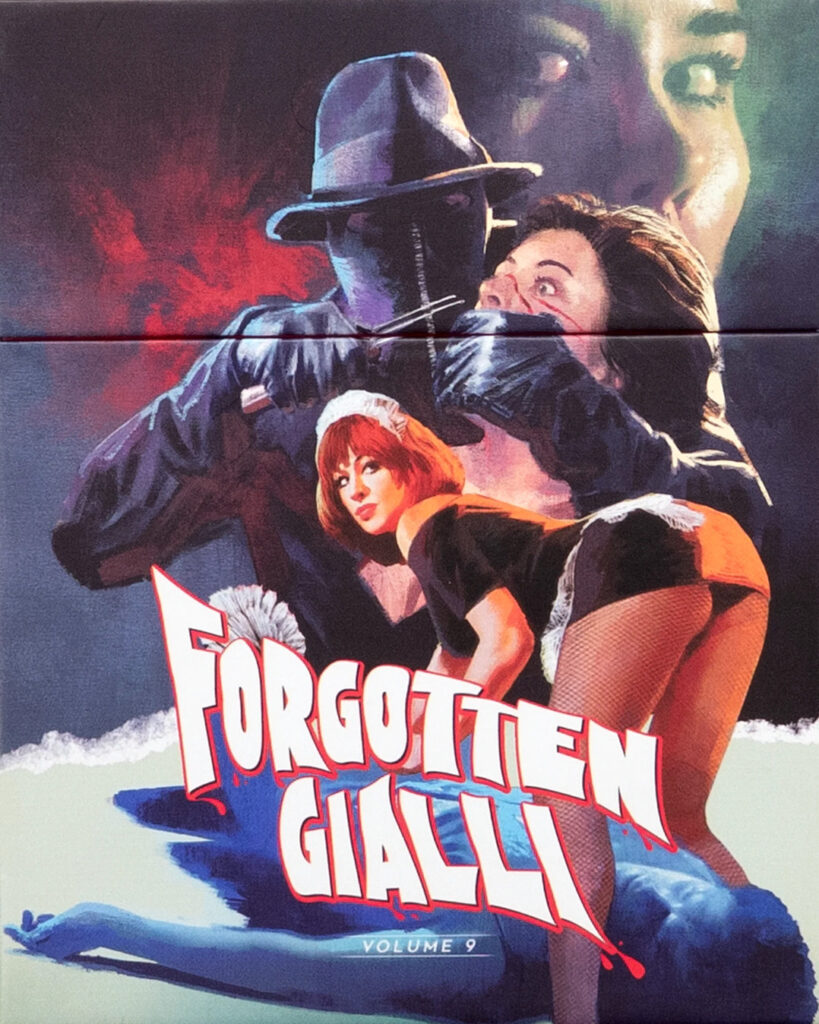
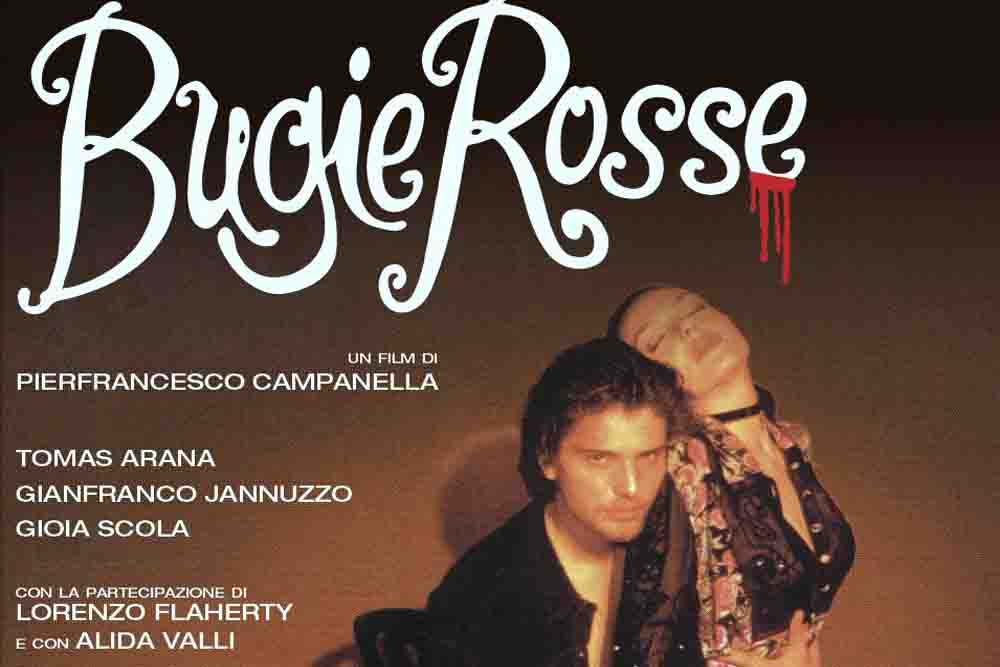
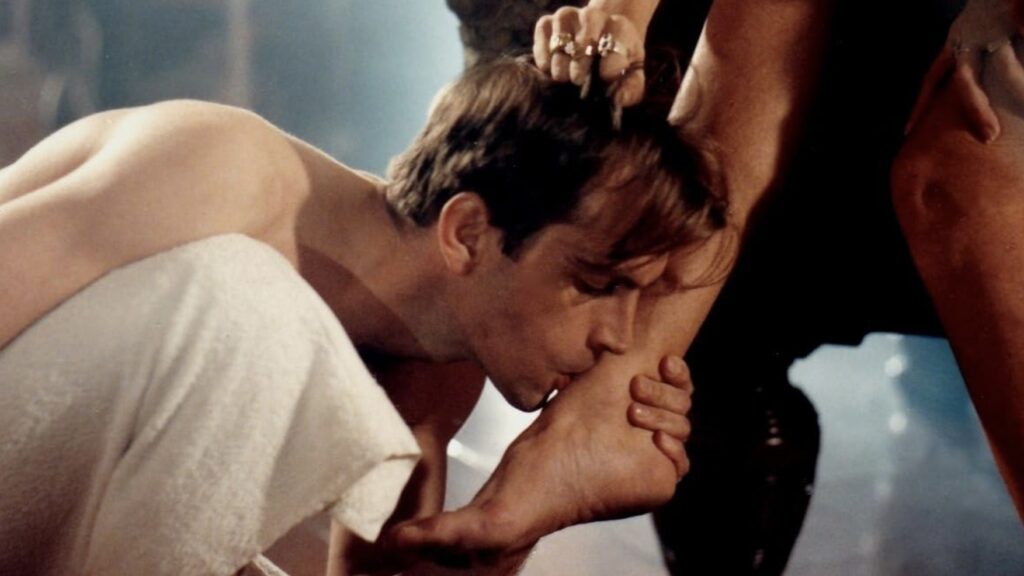
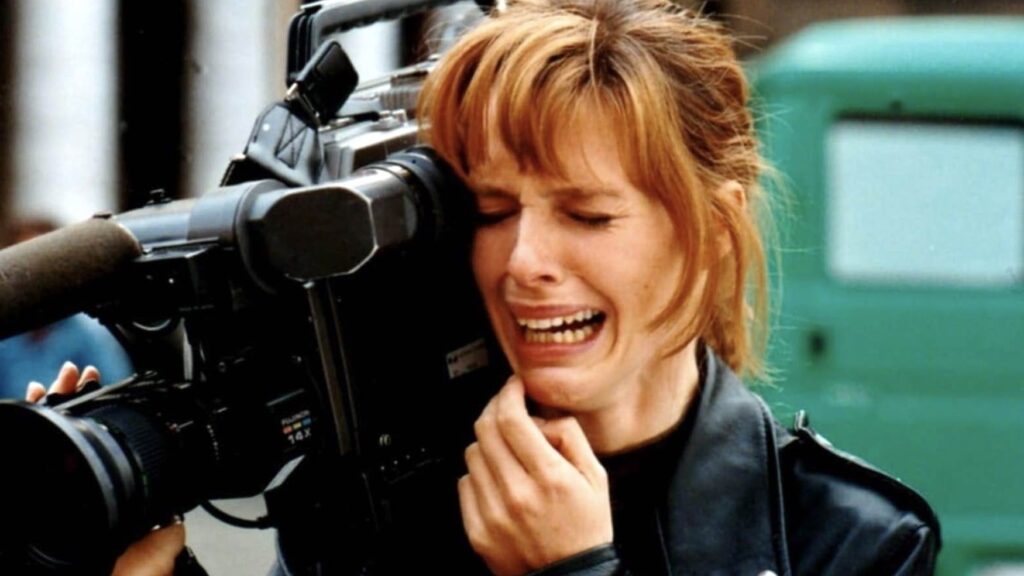
Forgotten Gialli: Volume 9 (Vinegar Syndrome) More rare titles of Italian thrillers as part of an invaluable Blu-ray series from Vinegar Syndrome. This time around the set includes: Madness (1993) about a comic book artist- Giovanna (Monica Carpanese), who has created a controversial character- Doctor Dark, a fiend dressed in a black mask and hat who stalks and kills babysitters, plucking out their eyes with a specially-made, two-pronged instrument. Unfortunately, there’s a real killer doing just that, and the media is accusing Giovanna of being morally responsible for the crimes. Soon the killings get closer and closer to her inner circle of friends. Directed by Bruno Mattei, the acting is way over the top and this builds to a pretty preposterous ending. Fortunately, a lot of the male actors were really cute so it kept my attention. Murder in Blue Light (1991) is set in New York where a killer is stabbing men with a Bowie knife and leaving a toy hand grenade between their legs while whistling “Greensleeves.” David Hess (Last House on the Left) plays a police Sergeant hunting the killer. (Seeing David Hess playing a good guy is surprisingly unnerving). Meanwhile a bratty, successful fashion model named Starlet (Florence Guerin) is also living a secret double life keeping a seedy apartment and wearing a wig posing as a dominatrix, catering to weird older men who want her to humiliate them while wearing a maid’s outfit. Her friend Mike (Joseph Misiti) is watching in the next room through a hole in the wall to make sure no one gets out of hand. She is actually trying to find the person who caused her brother’s death. The finale and especially the killer’s revelation (and how he is caught) is so outlandish and hilariously bizarre you have to see it to believe it. Directed by Alfonso Brescia (Naked Girl Killed in the Park). But the real gem of the set is Bugie Rosse (1993) (aka The Final Scoop). I have been dying to see this erotic thriller (with a gay twist) ever since I read about it in Troy Howarth’s terrific books about 50 years of Italian Giallo Films: “So Deadly, So Perverse.” Tomas Arana (The Church, Last Temptation of Christ) plays Marco, a journalist investigating a series of gay murders. His beautiful wife (Gioia Scola) begins to suspect he is immersing himself too deeply in the scene- cruising spots, porn theaters, swimming pools, clubs, and especially involving himself with the handsome, bisexual hustler Andrea (terrific Lorenzo Flaherty). The great Alida Valli plays the mysterious mother of his prosecutor friend. Directed by Pierfrancesco Campanella, there definitely are allusions to Cruising (1980), but the film is really intriguing and sexy and whacked-out. There’s a great interview with Tomas Arana who talks about how he was excited by the project and also meeting Alida Valli. This is newly scanned and restored from the 35mm original negative and looks absolutely fantastic.