I guess the musical Carousel was right, “June is Bustin’ Out All Over.” At least on Blu-ray this month, with new 4K editions and Blu-rays of rare, exceptional films. From the thought-to-be-lost Wake in Fright, to rare Spanish thrillers, to Hammer Studios early genre films, to an early Brian De Palma black comedy, to the electrifying Sirat, to the ludicrous Cole Porter bio-picture, to several other tremendous Warner Archive Blu-rays, to one of the last Lucio Fulci films and more. This is an eclectic and exciting batch of new releases.
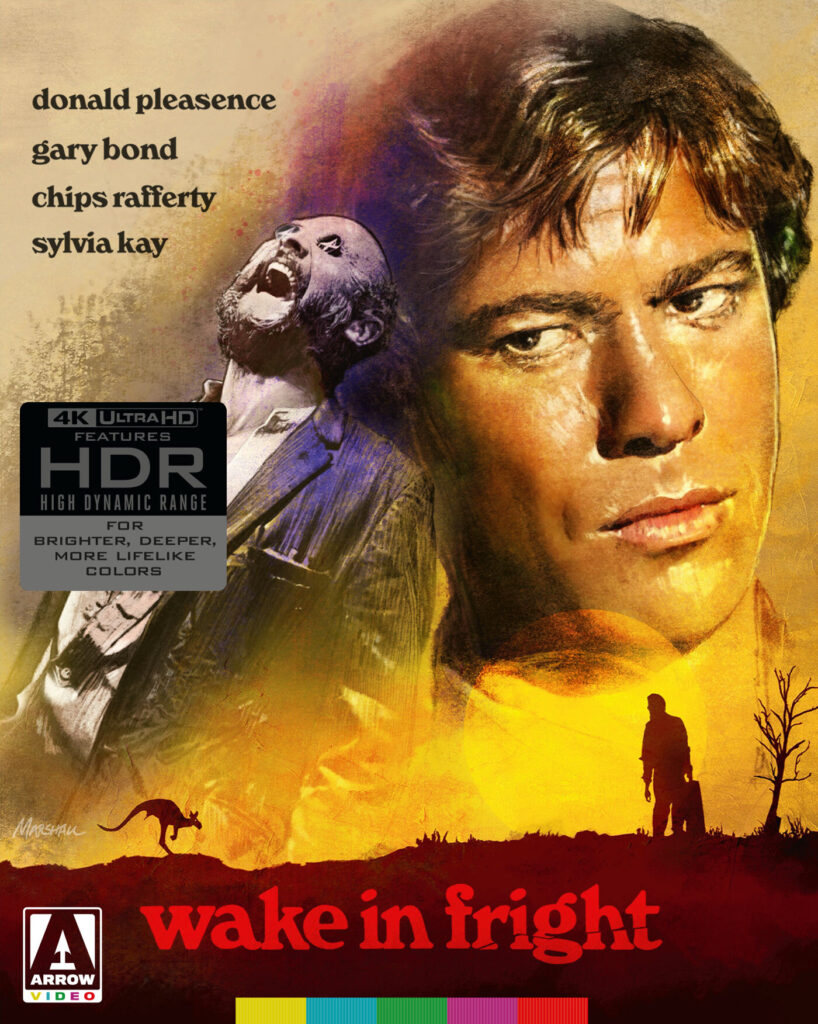
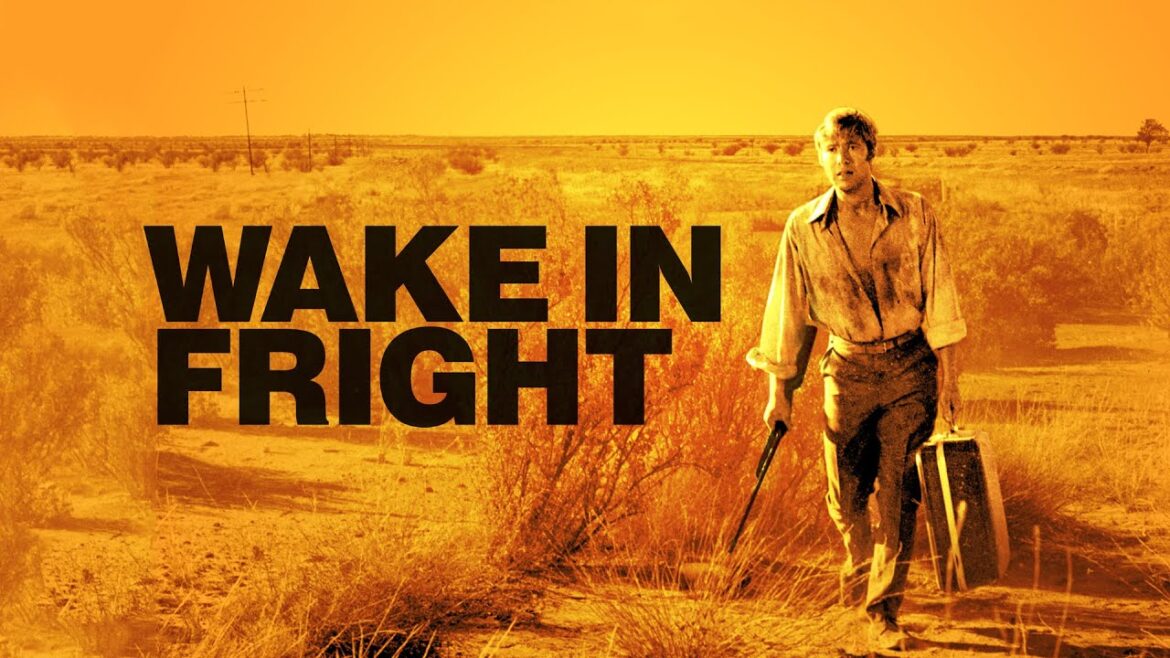
Wake in Fright (Arrow Releasing) An absolutely harrowing 1971 film directed by Ted Kotcheff about a schoolteacher (Gary Bond), who gets trapped in a brawling, disreputable Australian mining town and ends up hanging out with a vagrant, alcoholic physician (Donald Pleasence), going on a nightmarish bender. John Grant (Gary Bond) teaches in a one-room schoolhouse in Tiboonda, Australia. Planning to see his girlfriend in Sydney he has to spend the night in a mining town called Bundayabba, nicknamed the “Yabba” and gets blind drunk with a cop and ends up gambling all his money away. He befriends sleazy Clarence “Doc” Tydon (Donald Pleasence) and ends up hanging with the locals, drinking, fighting and going out at night shooting kangaroos. You can almost feel the heat watching the movie, not to mention the dust and the sweat and taste the endless beers, as John slides further and further into degradation and despair. This was a commercial failure in Australia, and certainly not the best kind of travelogue for tourism. It was dumped in theaters in the United States as “Outback” and didn’t fare any better. The film was thought to have been lost- the master negative had gone missing, but mercifully was discovered and rescued (by editor Anthony Buckley) before it was destroyed. It was re-released for a screening at the 2009 Cannes Film Festival and was a sensation. Handsome Gary Bond (mostly known for his theater work in England) is a revelation on screen, and Donald Pleasence is just terrifyingly brilliant.
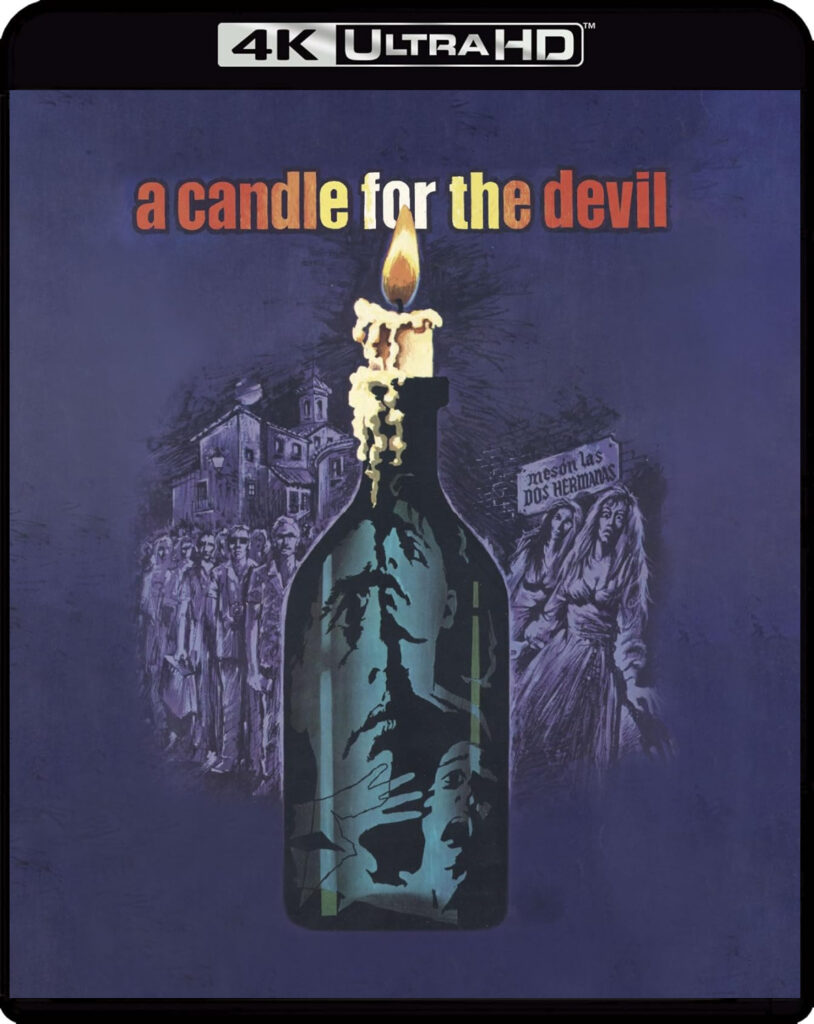
A Candle for the Devil (Bizarro) Diabolical Spanish thriller from 1973, expertly directed by Eugenio Martin (Horror Express), which deserves wider recognition. Two middle-aged sisters- Marta (Aurora Bautista) and Veronica (Esperanza Roy), run a bed and breakfast in their remote and picturesque Spanish town. But Marta, a sexually repressed, fiercely religious woman is righteously offended by the free-wheeling, mini-skirt-wearing, young, female travelers who board there. Marta accidentally kills a female guest who had the audacity to sun-bathe practically nude on her roof. She feels the death was by “Divine” intervention. Marta and her sister dispose of the body but the victim’s sister (Judy Geeson) shows up looking for her, and when other young women start disappearing from the hotel she starts to suspect something sinister is going on. There’s a great scene when Marta spies on young boys swimming naked nearby and then purposefully walks through bushes of nettles to tear her skin afterwards as some kind of spiritual flagellation. What’s great about the film is how politically on target this is about the repression during the Franco regime in Spain and especially the Catholic fervor during his reign. The extras are sensational on this newly scanned 4K restoration. Judy Geeson talks candidly about the making of the film and her career. There’s a fascinating interview with actor Vic Winner and how he went from being a lawyer to acting in scores of cult films. There’s also a wonderful interview with actress Lone Fleming, who was director Eugenio Martin’s partner and portrays a slutty-acting tourist at the hotel (in A Candle for the Devil), who comes to a violent end when she tangles with the savage sisters.
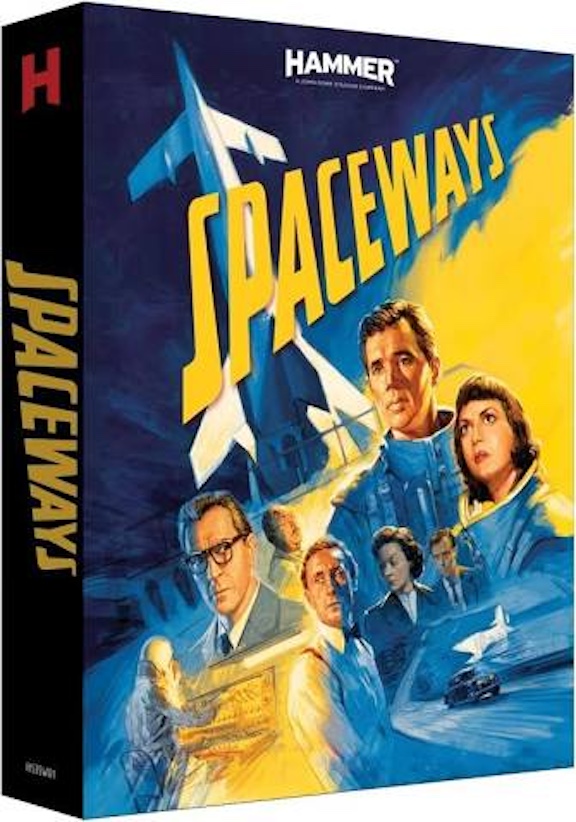
Spaceways (Hammer) A terrific 1952 sci-fi movie from Hammer Studios, that’s more of a murder mystery set in a quarantined, British, top-secret military base. Starring Howard Duff as Dr. Stephen Mitchell, a space engineer accused of killing his cheating wife (Cecile Chevreau) and her lover (Andrew Osborn)- a fellow scientist possibly involved in espionage. Stephen stands accused of hiding their corpses in a rocket and purposefully marooning it in space- creating the “perfect crime.” Expertly directed by Terence Fisher and co-starring lovely Eva Bartok as Dr. Lisa Frank, hopelessly in love with Stephen. This is a 4K UHD edition which looks absolutely stunning and comes with a mock pressbook and a booklet with incredible articles about the making-of the film. Extras on the Blu-ray include an in-depth look at the careers of Howard Duff and Eva Bartok.
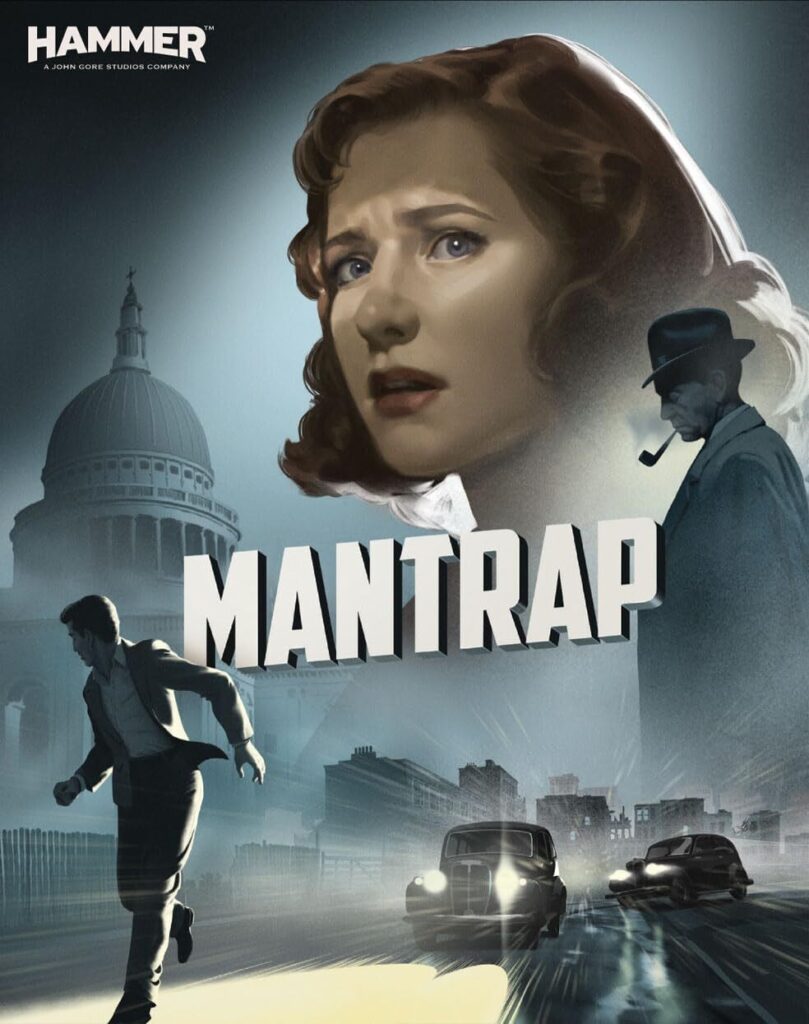
Mantrap (Hammer) (aka Man in Hiding) 1953 British thriller starring Lois Maxwell (Miss Moneypenny in the first 16 James Bond films) as the successful editor of a fashion magazine, fearful when her ex-husband (Kieron Moore) escapes from prison (accused of killing a woman). She accepts the help of lawyer and sleuth Hugo Bishop (Paul Henreid) who tries to untangle the mystery with the support of his secretary/fiancé (the lovely Kay Kendall). Beautifully directed by Terence Fisher, this is based on one of the successful Hugo Bishop mystery books by author Elleston Trevor under the pseudonym Simon Rattray. This is another handsome box set from Hammer with a gorgeous 4K UHD disc & Region B Blu-ray and a 116-page booklet with fascinating articles on everything from Kay Kendall, Elleston Trevor and Paul Henreid, who came to England after finding it difficult to find work after being put on an unofficial “Greylist” during the McCarthy era, when he and other actors formed the Committee for the First Amendment, protesting the persecuted screenwriters dubbed the “Hollywood Ten.”
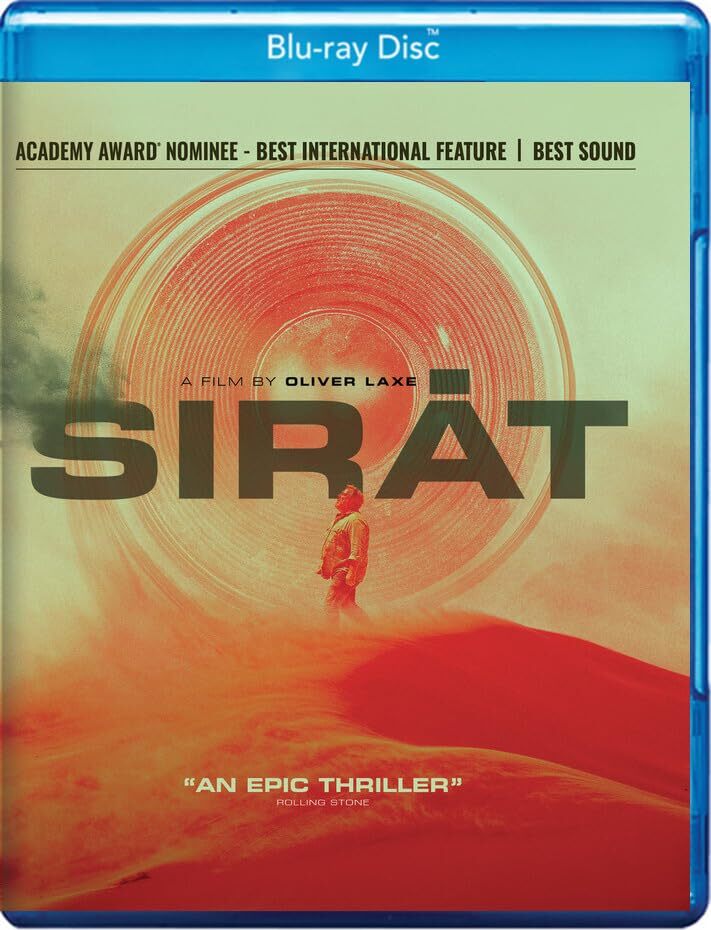
Sirat (Decal Releasing) Winner of the Jury Prize at the 2025 Cannes Film Festival, Oliver Laxe’s nerve-shredding, trippy, nightmarish odyssey begins with a wall of weathered speakers being assembled in a gully surrounded by mountains in the barren Moroccan desert. Soon a wall of throbbing techno bass causes the crowd of stoned ravers to undulate to the music. In the crowd- Luis (Sergi Lopez) is handing out fliers searching for his missing daughter. He is accompanied by his young son Esteban (Bruno Nunez Arjona) and their little dog. The military arrive and break up the party and Luis and his son slip free from them and follow a caravan of nomadic, tattooed, drugged-out travelers heading to another rave further down south. They try to dissuade Luis from following, pointing out his vehicle won’t be able to traverse the rugged terrain but he heedlessly pushes on, and is eventually adopted by the hedonistic family. Now here’s where discussing the film gets tricky because what happens next you can’t really reveal. Suffice to say there are several brutal and cruel twists of fate ahead. In the background, heard in snippets on the radio, it seems there is some war-like, cataclysmic event in progress. But we stay with the stoner caravan as they journey deep into the unforgiving desert. It’s a hypnotic, mystical, occasionally horrifying trip indeed, eventually revealing an apocalyptic landscape of grief and trauma. This truly is an extraordinary film.
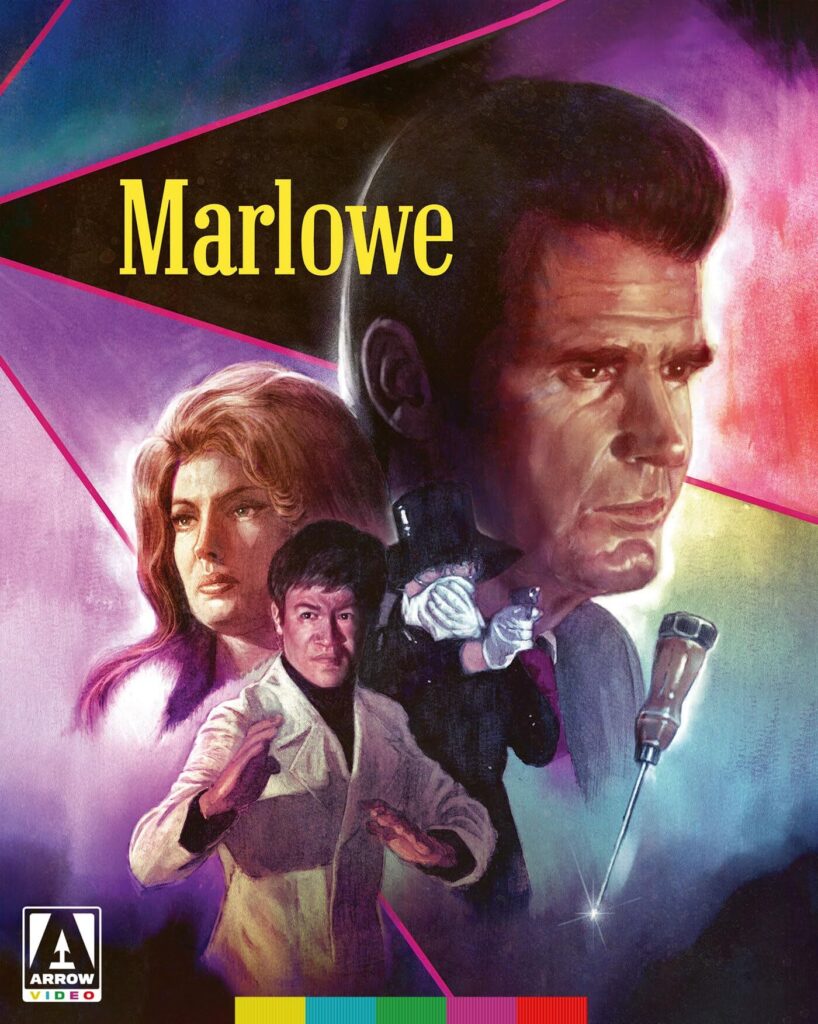
Marlowe (Arrow Releasing) Raymond Chandler’s tough, sardonic, detective is transported into the anti-war, hippie-milieu of the late 1960s and now personified by suave, Mr. Cool himself- pre-Rockford Files– James Garner in Paul Bogart’s fairly entertaining neo-noir. Los Angeles private eye Marlowe is investigating a missing person for a blonde from Kansas (Sharon Farrell) and finds himself up to his neck in ice pick murders, and the blackmail of successful TV sitcom star Mavis Wald (Gayle Hunnicutt) over her affair with a notorious hood. There is great supporting work from Bruce Lee who karate kicks and destroys Marlowe’s office right in front of him and Rita Moreno as Mavis’ old friend now a sexy burlesque queen. The finale in the strip club with Moreno on stage is just fabulous. Carroll O’Connor and Kenneth Tobey play the exasperated police trying to make sense of all of this. An extra: “$100 A Day (Plus Expenses)” is a new appreciation and examination of the history of Philip Marlowe on screen by film historian Howard S. Berger.
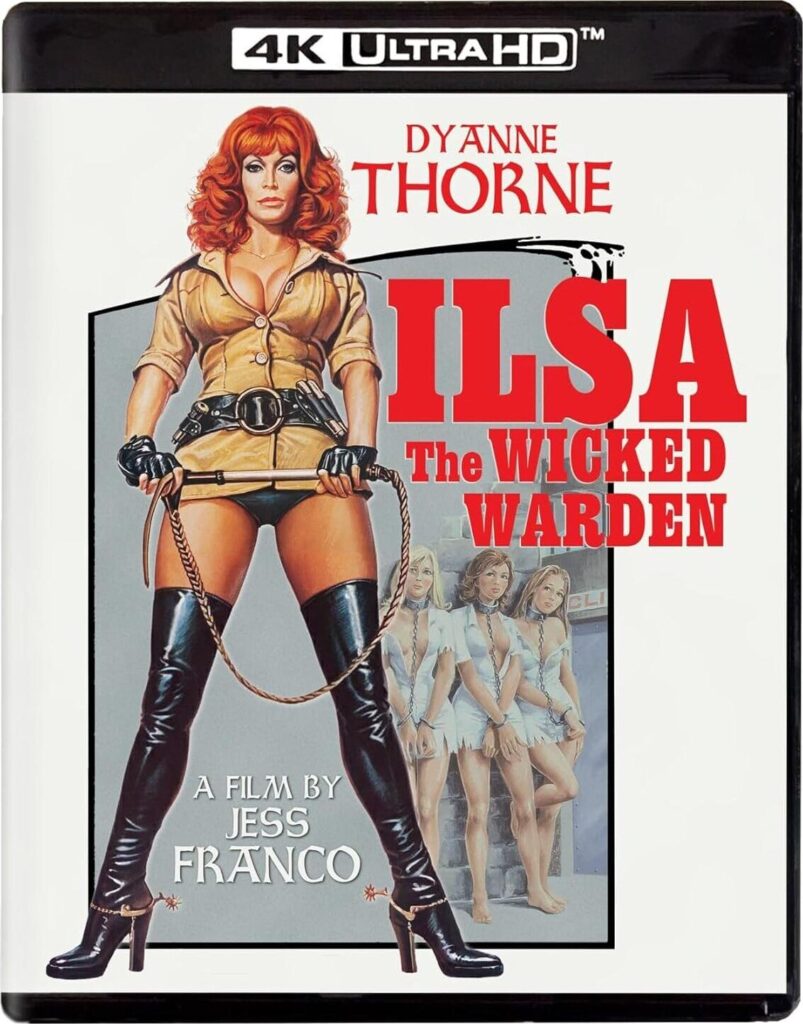
Ilsa, the Wicked Warden (Kino Lorber) Not really an “Ilsa” movie, but a 1977 Jess Franco-directed women’s prison film (some of it shot in the botanical gardens in Lisbon). The beautiful, bodacious Dyanne Thorne plays Greta, the sadistic ruler of a South American clinic supposedly treating women with sexual abnormalities but really facilitates torture and brutality. A woman goes undercover to avenge her sister (director Franco plays a kindly doctor who facilitates her mission to bring down the clinic). Lina Romay (Franco’s partner) plays a tough-talking prisoner who helps Greta undress at night and gives her a nude backrub. Lots of nudity, naked girl fights, lesbian scenes, not to mention shock treatments, acid injections and a human pin cushion. They even secretly film the girls being tortured and sell the reels. Hilariously, this 2-disc set includes a 4K UHD version and the extras include archival commentary with Dyanne Thorne and Howard Maurer plus a separate commentary track with knowledgeable film historian Troy Howarth. Author Stephen Thrower (who penned two volumes on the prolific cult director has a great extra: “A Thorne by Any Other Name.”
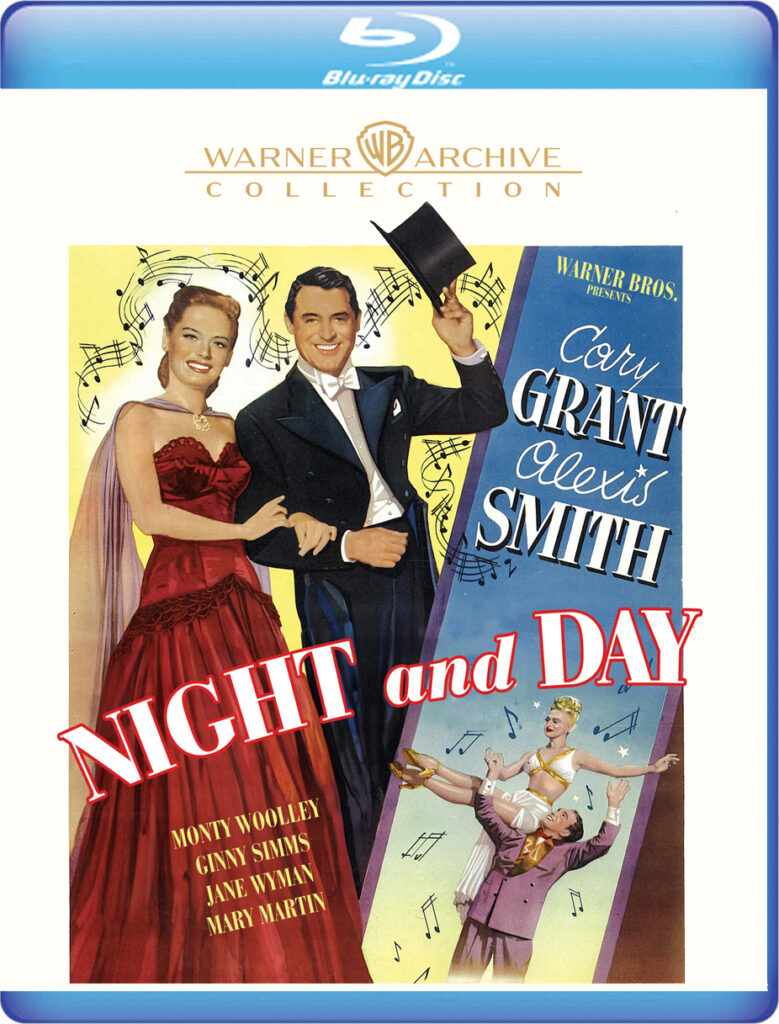
Night and Day (Warner Archive) Ludicrous but fabulously entertaining bio-pic on the great songwriter Cole Porter, filled with show-stopping musical numbers and purposefully glossing over the real facts of Porter’s life. It’s a bloated Hollywood fantasia that just slays me. Supposedly the casting of Cary Grant as “Cole Porter” was a joke made by Porter when asked who should play him in the movie. After Grant was cast and friends asked, he replied, “If they wanted Cary Grant to play you in a movie, would you complain?” Monty Woolley co-stars as Porter’s lifelong friend (as he actually was in real life). And gorgeous Alexis Smith plays his love interest and wife Linda. While carefully sidestepping Porter’s homosexuality, the film does address when he fell off his horse which ended up costing him 30 operations to save his leg over the next 20 years. There’s an unforgettable moment at the end when Alexis Smith runs into Cary Grant’s arms and the look on his face is so weird and unromantic it makes for the most subversive of film endings. Supposedly after the movie premiere, Cole Porter remarked to his wife, “If I can survive that, I can survive anything.”
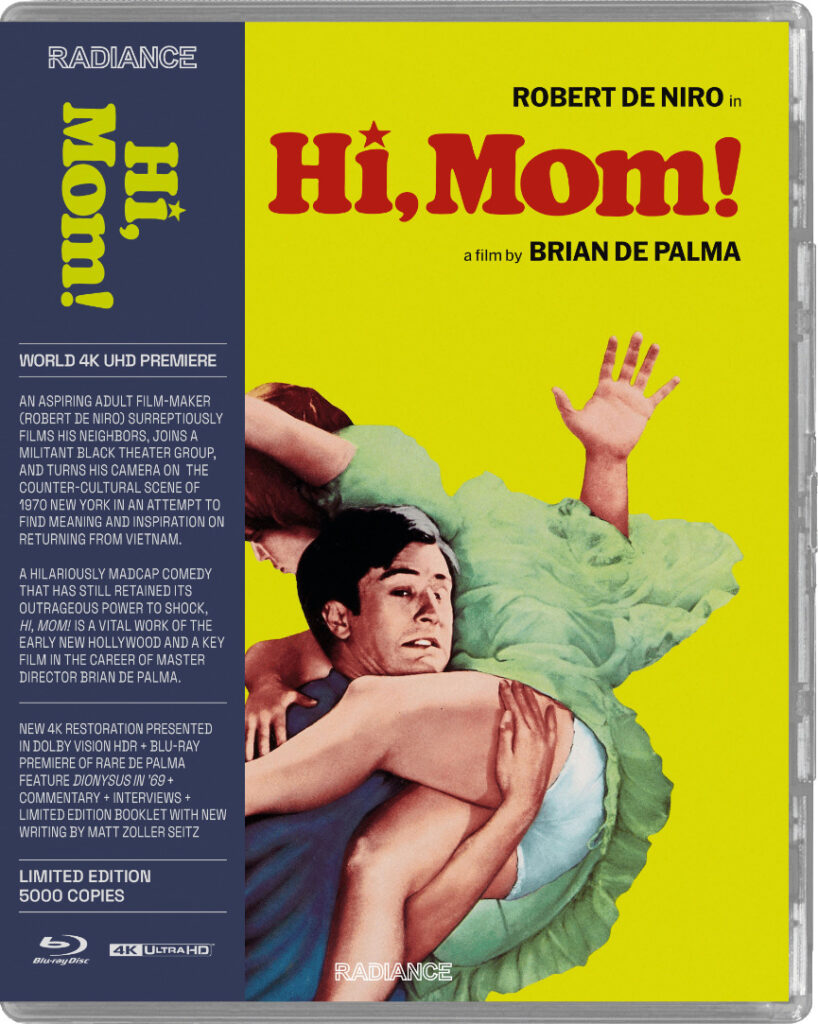
Hi, Mom! (Radiance) Early, raucous, dark satire by Brian De Palma, and follow-up of sorts to his film Greetings, where a young Robert De Niro reprises his role as Jon Rubin, a former Vietnam vet and aspiring filmmaker in New York City. Rubin approaches a porn producer (Allen Garfield) with his idea of spying on his neighbors on camera from his apartment window and turning it into a sexy “peeping tom” feature. He romances a girl pretending to be an insurance salesman and then takes her to see David & Lisa at a repertoire theater. He gets involved with an experimental theater group who are doing an intensely confrontational production called Be Black Baby where they shoe polish the faces of white audience members and then brutally attack and threaten them. Afterwards, the audience gushes on camera on what a great theatrical experience it was. Jon Rubin eventually becomes an urban terrorist. The seeds of many of De Palma’s future obsessions are there- like the voyeuristic spying in Sisters and Body Double. Not to mention actors he would use again like Jennifer Salt and Gerrit Graham. A terrific extra on the disc is De Palma’s filming of Dionysus in 69, a controversial theatrical performance by Richard Schechner at The Performance Garage (where he used split screen (another trademark in later films). Hi Mom! has been meticulously restored in 4K and color graded from scans of the original 35mm negative.
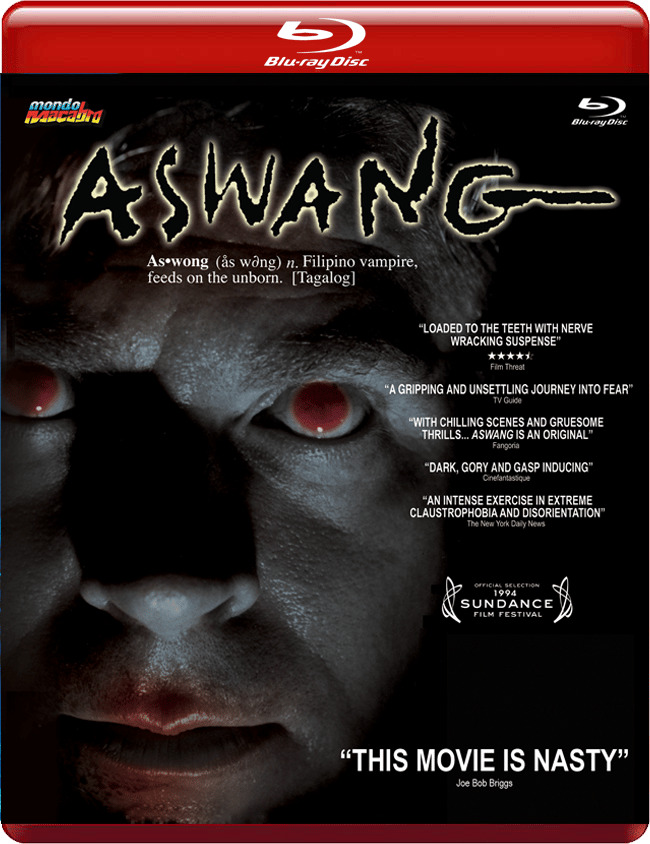
Aswang (Mondo Macabro) Bizarre, 1994, low budget, folk horror wonder shot in Wisconsin about a pregnant young woman Katrina (Tina Ona Paukstelis) who accepts an offer by Peter Null (Norman Moses) to sell her baby and pretend to be his wife so that he can receive an inheritance (only if he produces an heir). He drives her to his remote estate, where she meets the weird, wheelchair-bound mother (Flora Coker), the Filipino maid Cupid (Mildred Nierras) and then there is creepy, unseen sister Claire (Jamie Jacobs Anderson), living out in the guest house, who she is warned to stay away from. Katrina finds that the family used the to live in the Philippines, but what she doesn’t know is they are linked to the legend of a mythological vampiric creature known as the Aswang, which sucks the unborn fetuses out of women. This was the first horror movie to be show in Sundance, and deserves to be better known- there’s a scrappy, gory, outrageous “Midnight Movie” energy to it. Directed by Wrye Martin & Barry Poltermann, this “limited edition” is a brand new 4K restoration from the original negative and is fully uncut.
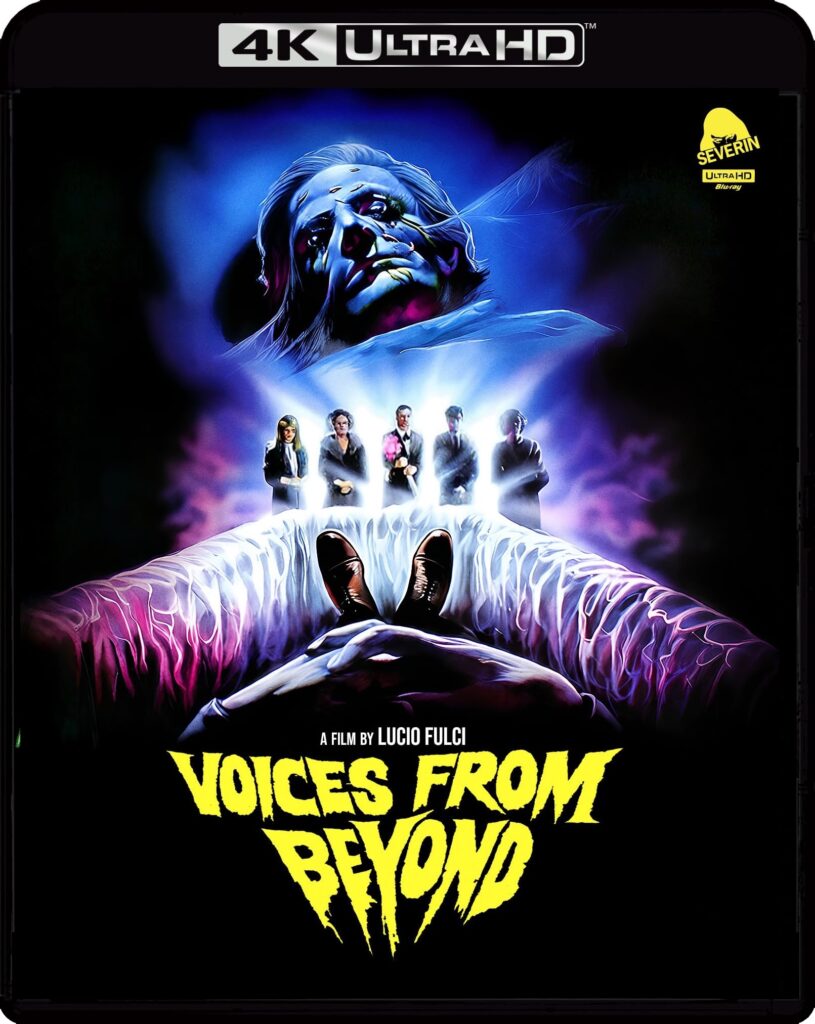
Voices from Beyond (Severin) The second to last film of Lucio Fulci (The Beyond/House by the Cemetery) is a last hurrah of sorts- a stylish gothic chiller about the death of a wealthy, cruel man- Giorgio (Duilio Del Prete), whose spirit reaches out from the grave to his daughter Rosie (Karina Huff), begging her to solve the mystery of which one of his greedy, hateful family murdered him. Beautifully shot, with typical grisly nightmare sequences- corpses breaking out of the crypt to attack one of the family, and one where a mistress faces a dinner plate of eyeballs. Meanwhile we watch in chilling detail as Giorgio’s corpse rots in his grave, covered with maggots, spiders and worms. The film is newly scanned in 4K from the original negative and looks sensational. Included in the extras is an audio interview with Fulci, dialogue with actor Pascal Persiano, who played Mario, and author Stephen Thrower, who wrote the ultimate book about Lucio Fulci– Beyond Terror. Thrower says it best about this film, “After the slump of his late 1980s output, this last peak on the oscilloscope of his career is perhaps the best way to remember Fulci’s latter days.”
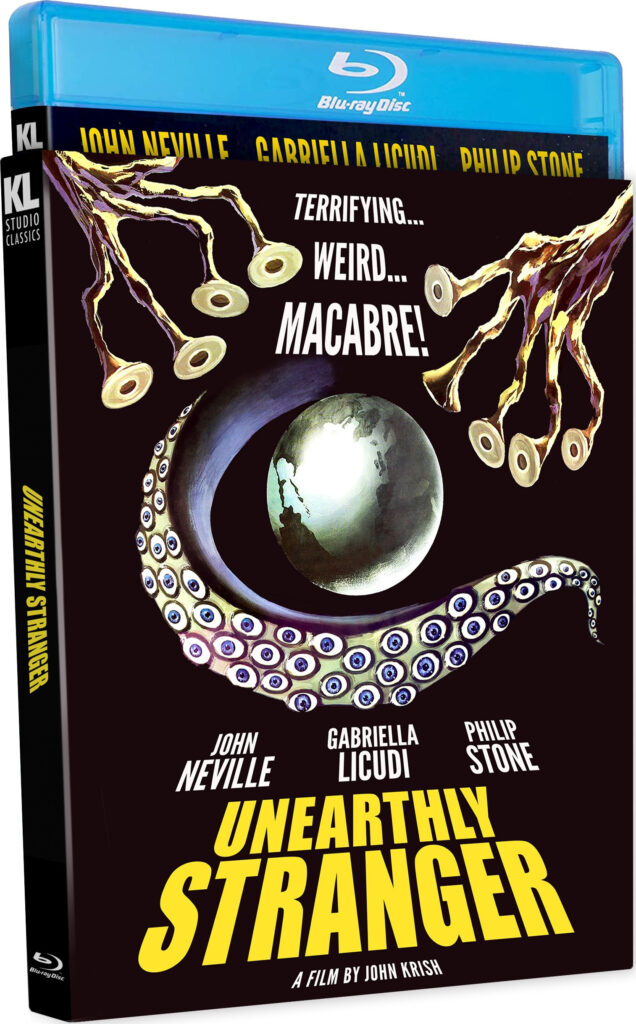
Unearthly Stranger (Kino Lorber) Intelligent 1963 British sci-fi film that’s I Married a Monster from Outer Space from the groom’s point of view. The film opens with a sweaty Dr. Mark Davidson (John Neville), running down the nighttime streets of London heading to his place of work- the Royal Institute for Space Research. There he speaks into a tape recording, leaving a warning for others, “In a little while I expect to die…be killed by something you and I know is here. Visible…yet moving unseen, amongst us all.” Then we flash back to he and fellow scientists working on the projection of thought through space using the mind. Unfortunately, other scientists in other countries who were working on the same premise have died mysteriously of brain hemorrhages (after hearing an eerie high-pitched sound). The Major (Patrick Newell) is concerned over Mark’s security when he finds that he married a beautiful woman- Julie (Gabriella Licudi) in Switzerland after a whirlwind romance and officials cannot find any tangible trace of her in any records. Mark has begun to be suspicious of his wife too when he catches her sleeping with her eyes wide open and he cannot feel any pulse. That, and the fact that she never blinks, can take a scalding hot casserole out of the oven with her bare hands, and when she cries the tears burn into her cheeks. There’s a great scene where she walks by a schoolyard and all the children slowly back away from her. Many of the team behind the movie were responsible for The Avengers. With actress Jean Marsh (as a secretary) and just the best ending.
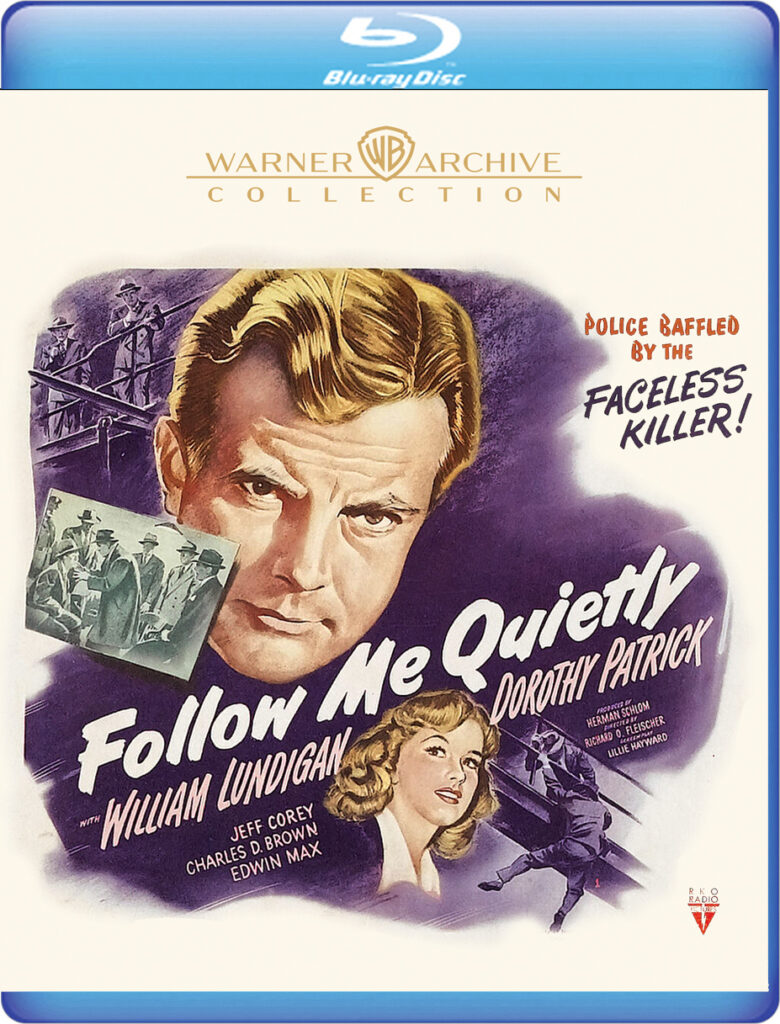
Follow Me Quietly (Warner Archive) “The patter of rain incites in a madman’s mind a pattern of murder!” screams the trailer for this lean, tense, hour-long 1949 B-thriller directed by Richard Fleischer (The Narrow Margin). It stars William Lundigan as Lieutenant Harry Grant, doggedly pursuing a homicidal serial killer who calls himself “The Judge” and has already strangled 7 people “at night…in the rain.” Dorothy Patrick plays Ann Gorman, a tenacious reporter for “4 Star Crime” magazine desperate for a scoop about the case. They even build a life-size dummy of the fiend from what they know of him to aid other officers in their pursuit- which makes for a chillingly effective moment in the film.
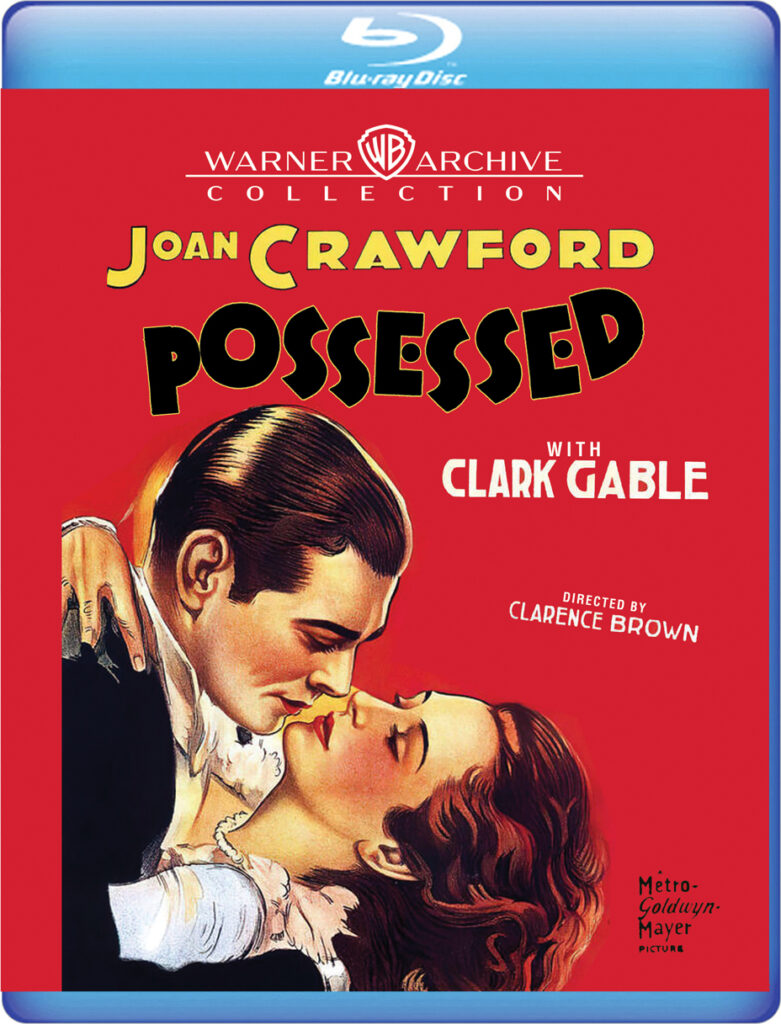
Possessed (Warner Archive) Enjoyable 1931 pre-Code melodrama directed by Clarence Brown (Anna Karenina) and starring Joan Crawford in one of her rags-to-riches sagas. She plays Marian, working in a cardboard box factory in Eerie, Pennsylvania, who heads to New York City to land a rich man. She finds him in wealthy lawyer Mark Whitney (Clark Gable) and Marian becomes his kept woman for several years. He keeps her in a fancy apartment under the name “Mrs. Moreland,” as a divorcee living off her alimony. But when she fears that her presence will destroy any political ambitions she selflessly breaks it off with him. “Regrets?” Mark asks Marian, to which she replies, “I left school when I was 12. I never learned how to spell regret.” These kind stories of “fallen women” usually ends with a moralizing tragedy, but this refreshingly ends on a satisfying note of romance. Crawford and Gable made 8 movies together and their chemistry on screen (and off) is wonderfully palpable. “Auntie Em” (Clara Blandick) plays “Mother.”
so many great recommendations this month, Spaceways and Mantrap seem right up my alley and lets through in James Garner for good measure. Love your take on movies.