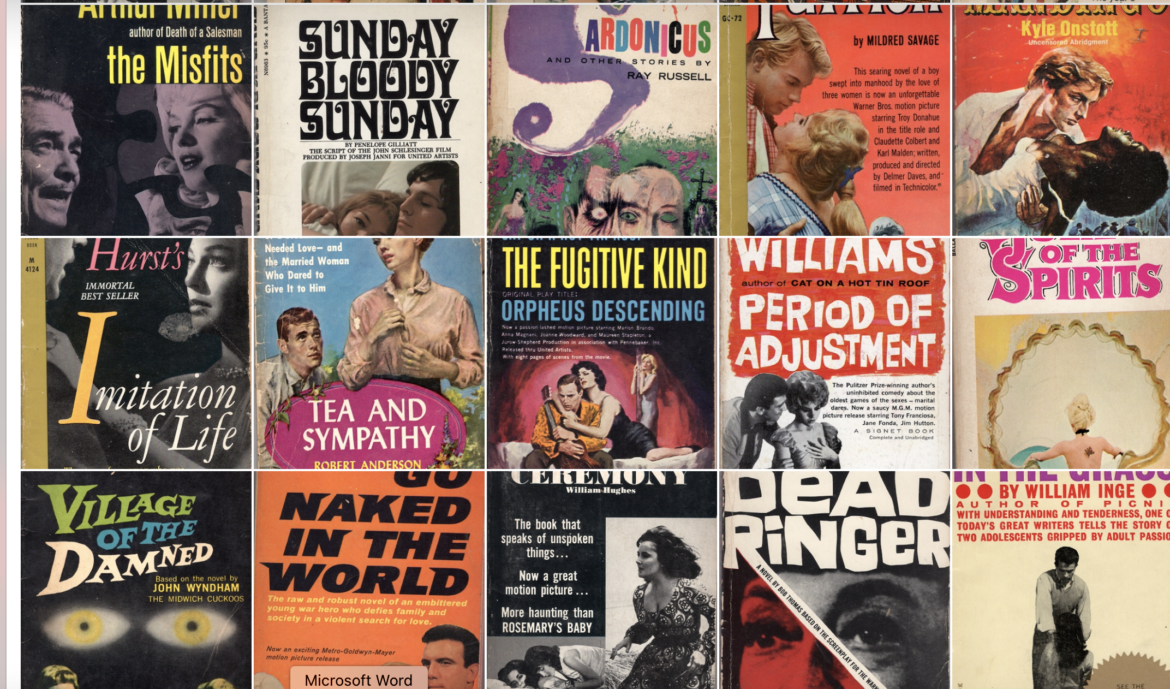
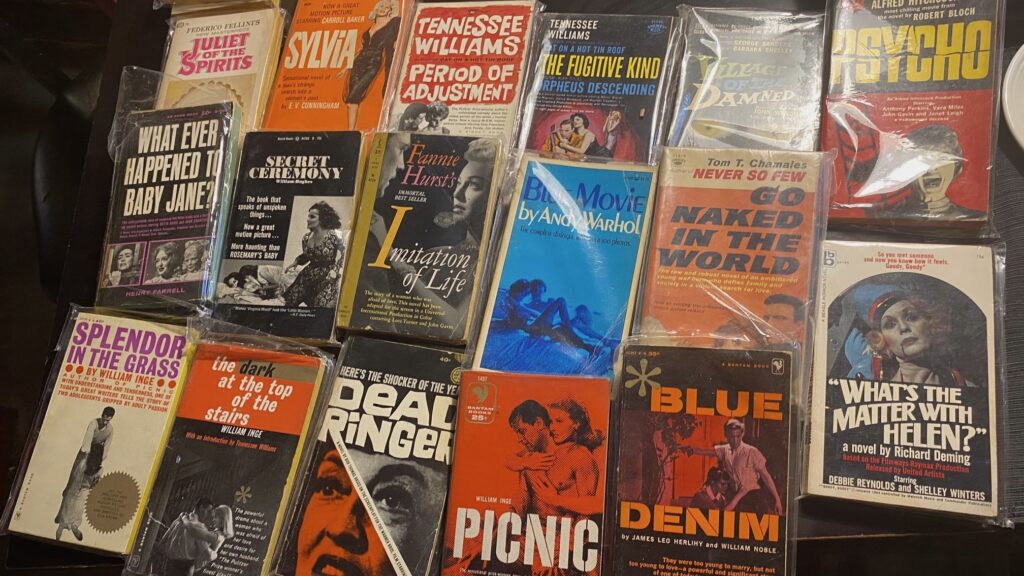
I was lying in bed the other morning, plotting revenge, when I glanced over at the bookcase and saw this little stack of 30 paperbacks, lovingly piled up, and realized it was what’s left of my “movie tie-in” books.
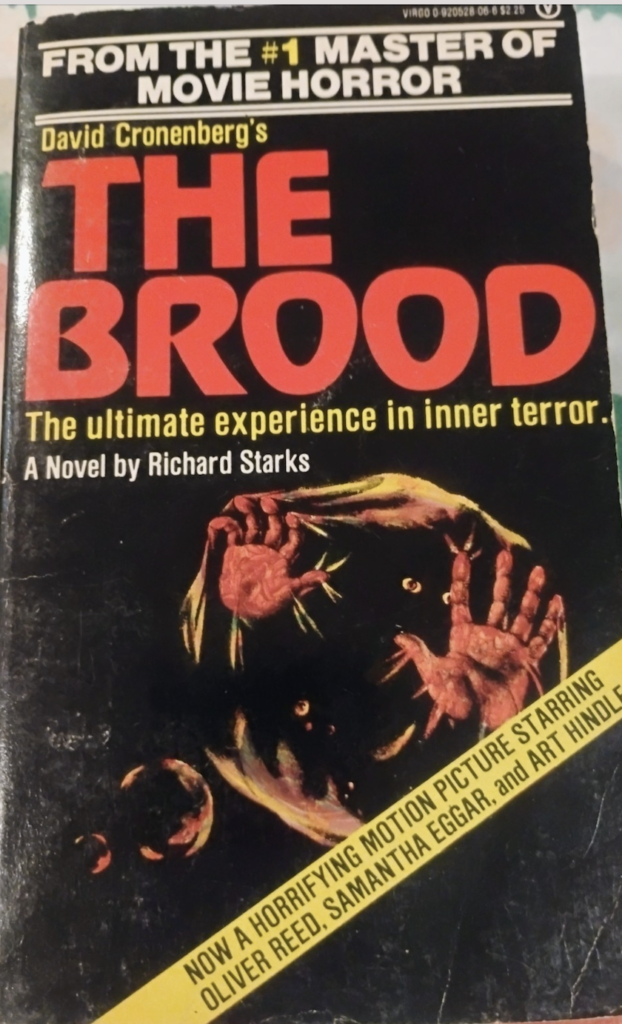
They were paperbacks that were promoting new films with a novelization based on the movie or the actual novel that the film was based on. Occasionally they were the actual screenplays which included a selection of stills from the movie. I used to pick them up at used book stores for almost nothing. And gave them out as presents. But now on eBay they really cost a fortune. Especially the horror paperbacks, for some reason. The original Silent Night, Deadly Night goes for over $50. A vintage Friday the 13th paperback goes for $300. I gave a friend my Konga paperback, based on the 1960 film, and it now goes anywhere from $40 to $80 on eBay and $237 through Amazon. Christ, David Cronenberg’s The Brood goes for $1,119.99.
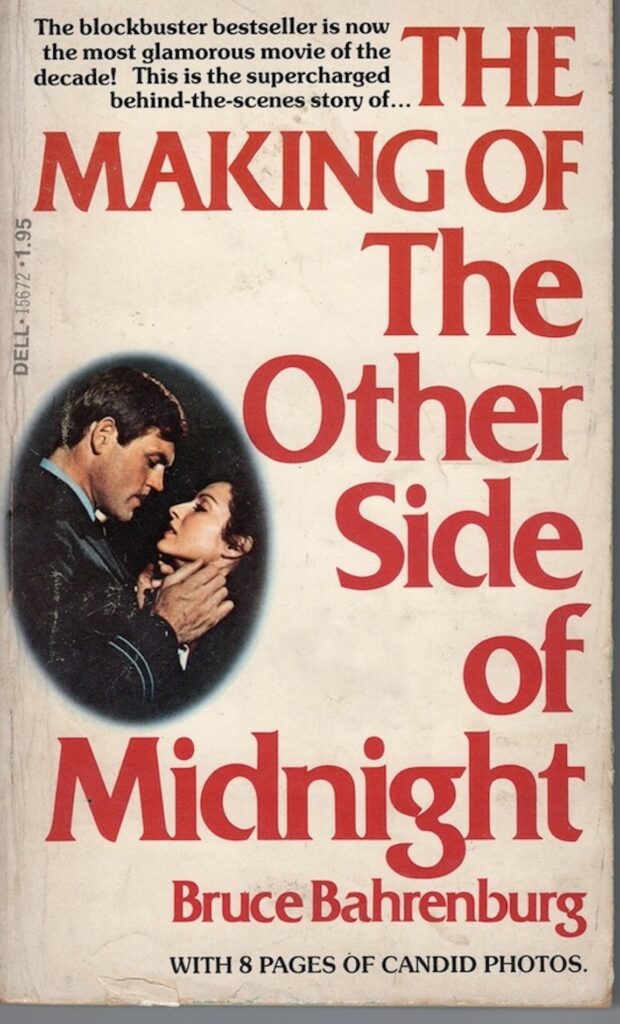
So, I covet the ones I have left which are an eclectic bunch, to be sure. Not because they are worth a lot (although possibly a few are). But because just holding them elicits a memory of either the movie itself, or the fact that I was idiotic enough to buy a paperback based on it. I found three paperbacks of “The Making of The Other Side of Midnight” in the shelves. Dear God- what the fuck was I thinking?
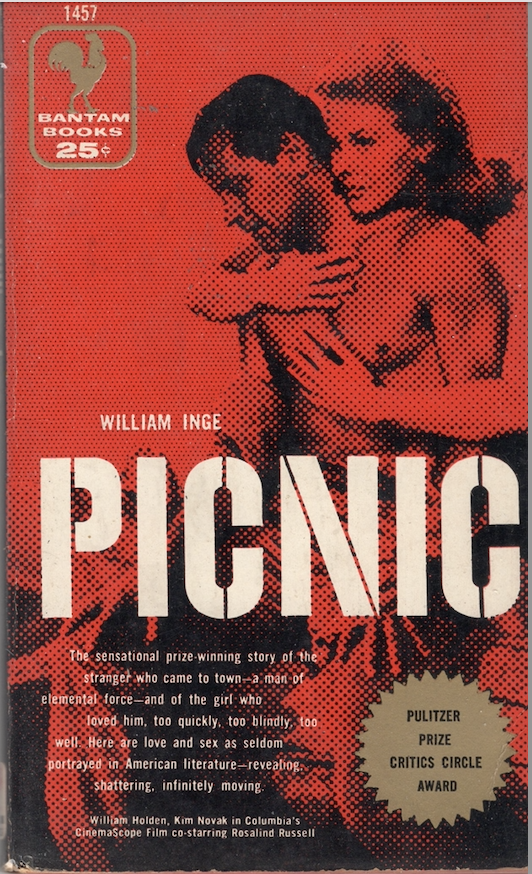
Picnic (Bantam Books) Director Joshua Logan did a beautiful job adapting William Inge’s Pulitzer Prize-winning play to the big screen in 1955. William Holden plays a drifter who comes into town the morning of the Labor Day picnic and stirs up the libidos of all the women there. Trust me, there is nothing on film to match the dance between William Holden and Kim Novak to the song Moonglow. It’s a sequence so ravishing and romantic it always slays me. It’s the once scene I always fantasize that I will be watching when I have an aneurysm and drop dead on the couch.
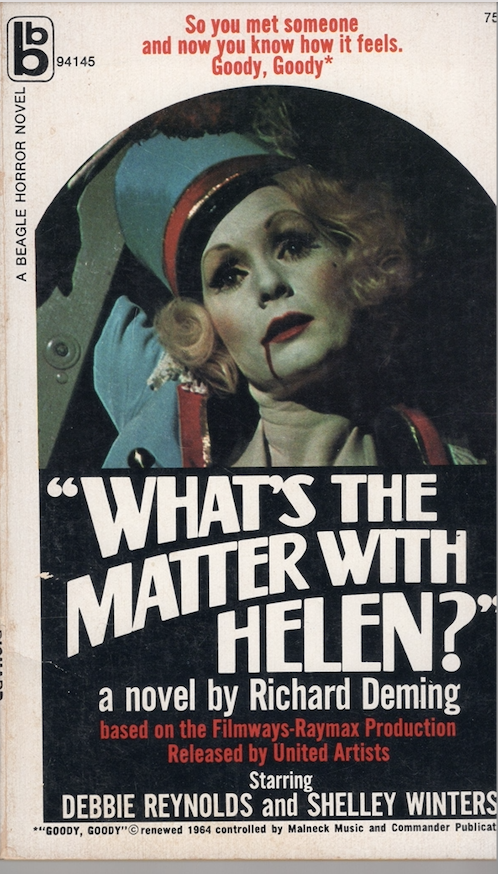
What’s the Matter with Helen? (Beagle) God, I love this title. This is another wonderful Curtis Harrington gothic horror film starring Debbie Reynolds and Shelley Winters as women who have changed their names and fled from Iowa to Hollywood in the 1930s to open a dance school for little Shirley Temple-look-a-like tap dancing tykes. (Their sons were both tried and found guilty of Leopold & Loeb-like murders). When they are suddenly besieged by mysterious phone calls and blackmail letters, Shelley Winters is driven to madness (and what a glory that is to behold).
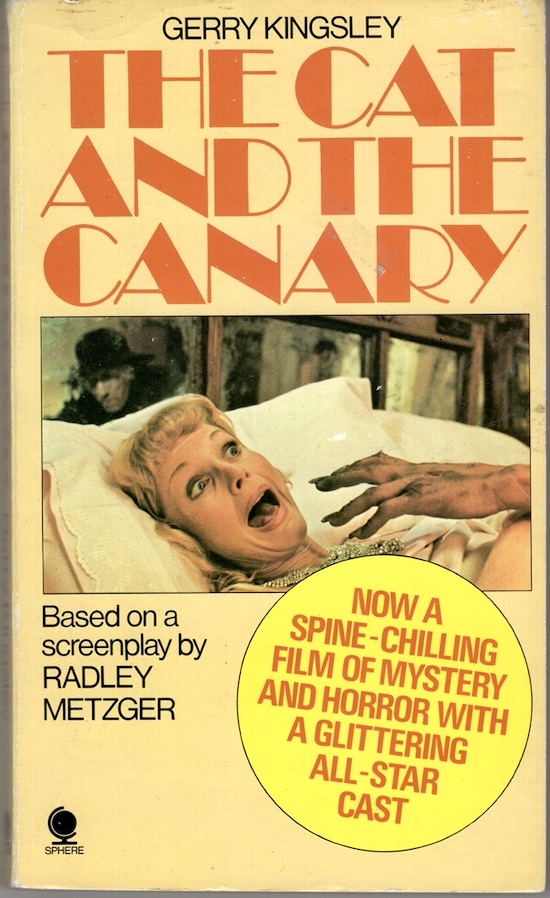
The Cat and the Canary (Sphere) Radley Metzger was the stylish director of soft (and hardcore) erotic films such as The Lickerish Quartet, Carmen, Baby, and Score. This was his 1978 foray into mainstream cinema- a remake of an oft-told old dark house chiller about relatives gathered at a spooky mansion for the reading of a will who are bumped off one by one. With a nice cast like Carol Lynley, Honor Blackman, Wendy Hiller, Olivia Hussey and Edward Fox, it isn’t half bad. Maybe not up to the gothic grandeur of the 1927 silent film or the rollicking 1939 Bob Hope and Paulette Godard horror/comedy, but still lots of fun.
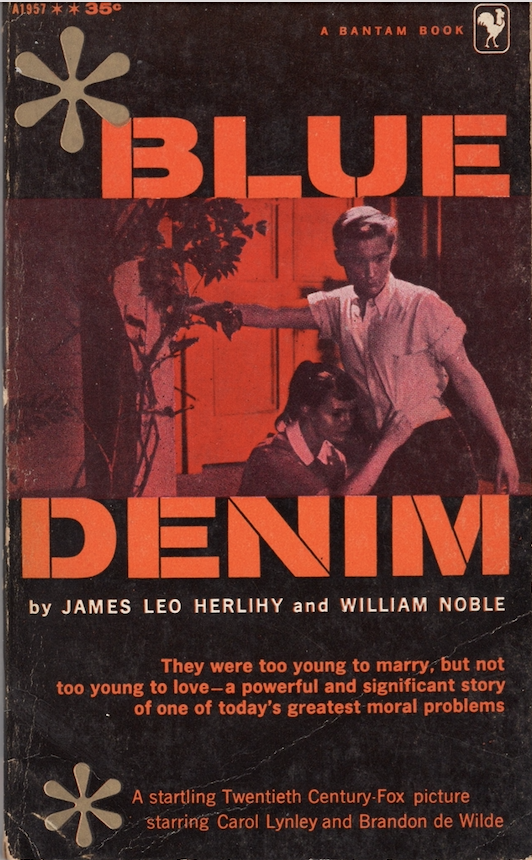
Blue Denim (Bantam Books) A transcript of the original play by James Leo Herlihy and William Noble. Carol Lynley reprises her Broadway role as the sweet teenage girl who gets knocked up by her boyfriend (Brandon deWilde). The movie was controversial at the time because it dealt with the then-illegal subject of “abortion.” What do you know- the country has conservatively shifted back in time and we’re dealing with the same crap. Director Philip Dunne does a good job with the sensitive material and elicits great work from the cast which includes Macdonald Carey and Marsha Hunt as the boy’s conflicted parents.
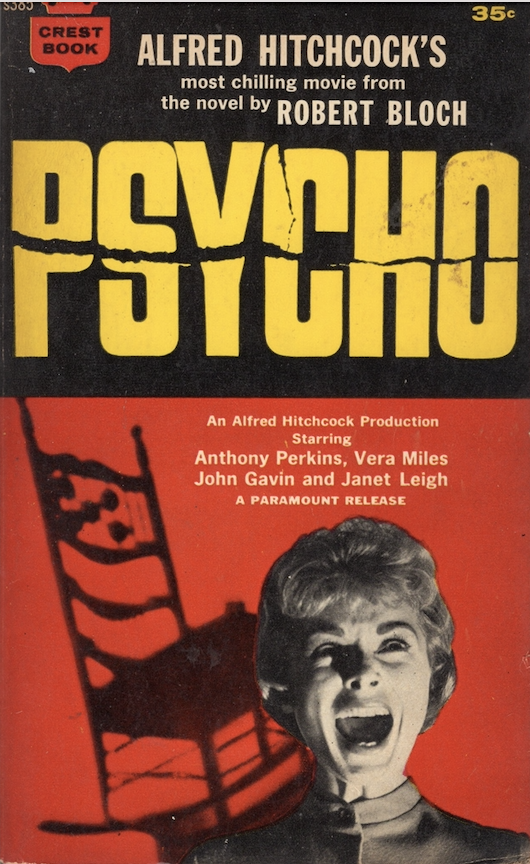
Psycho (Crest Book) Author Robert Bloch’s original novel about a series of grisly murders at a remote motel, slightly based on the Ed Gein crimes. Norman Bates is more pudgy and ungainly in the book and one misses the dizzying brilliance of Alfred Hitchcock’s shower sequence with Bernard Herrmann’s chilling soundtrack shrieking in the background. Here, the murder is told more matter-of-fact: “the curtains parted further and a hand appeared, holding a butcher knife. It was the knife that, a moment later, cut off her scream. And her head.”
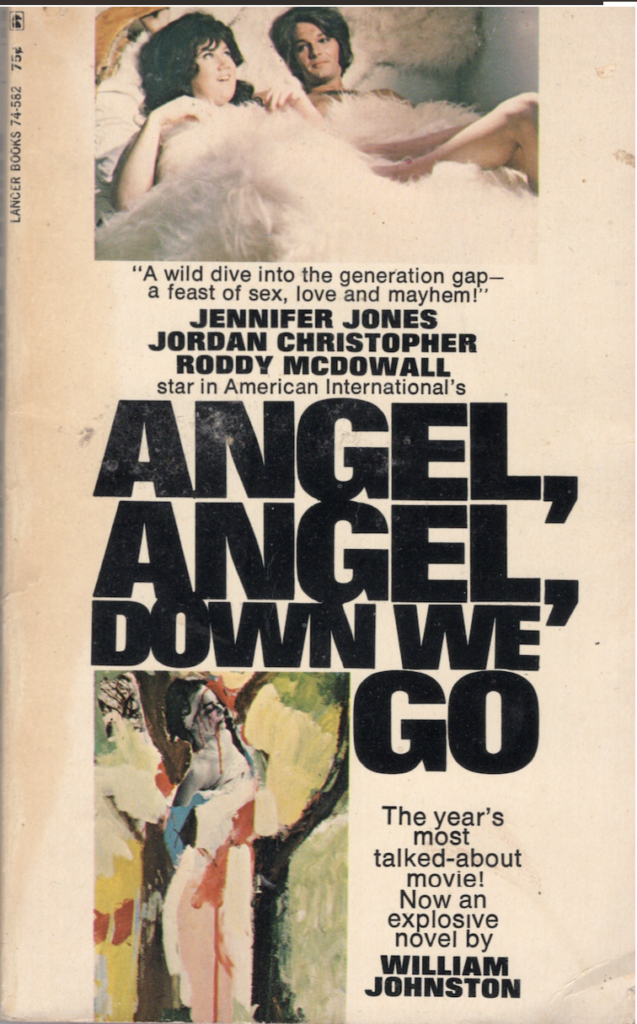
Angel, Angel, Down We Go (Lancer Books) A loony psychedelic stew starring singer/songwriter Holly Near as the unhappy daughter of a famous movie star (Jennifer Jones) who falls in with a seductive, dangerous rock star (Jordan Christopher) and his cult-like, hippie, gang of friends (which includes Roddy McDowall and Lou Rawls). They tried changing the title to Cult of the Damned to give the movie a better box office with a Manson family vibe, but that didn’t work. Directed by Robert Thom, a playwright and novelist, who wrote fine screenplays for movies like Compulsion and Death Race 2000. He had originally conceived this as a play starring his-then wife Janice Rule. Still, it’s a crackpot howler like no other.
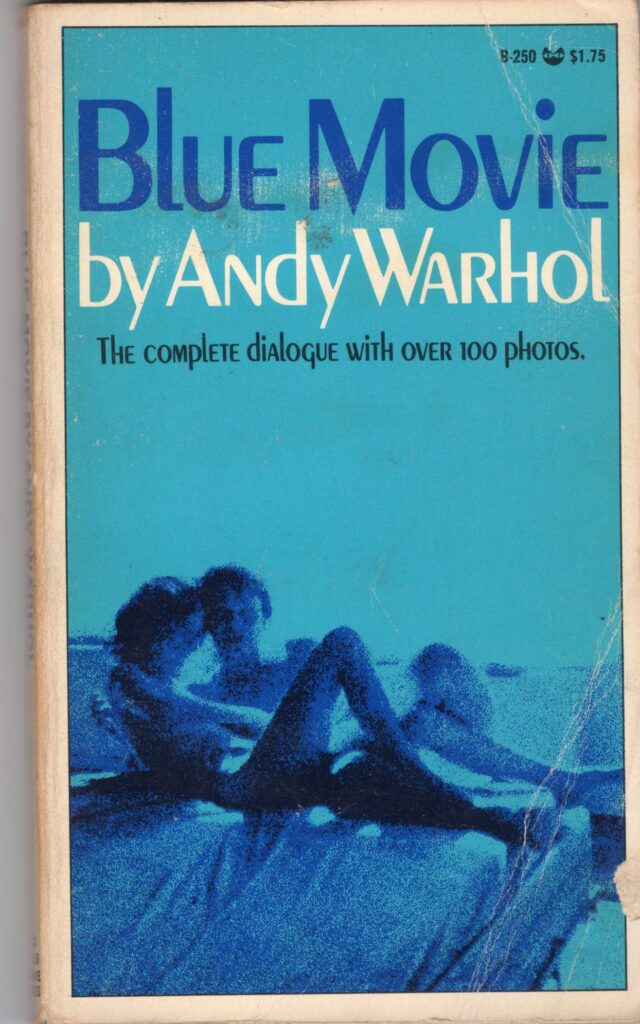
Blue Movie (Grove Press) This was another Andy Warhol experiment, shot in 1968 and filmed at a friend’s apartment with sound by Jed Johnson and produced by Paul Morrissey. It stars the beautiful and sardonically loquacious Viva and Louis Walden. They lie in bed, endlessly talking- about everything from politics, gonorrhea, demonstrations, to the Vietnam War. They have sex, have something to eat and take a shower. The end. This was shown at the Andy Warhol Garrick Theater then, but rarely since because Viva always halts it legally. But this book is a transcript of their interaction on film. Louis Walden always had a nice, laid back charm on screen in films like Lonesome Cowboys. And Viva is the best. She really is strikingly beautiful and has this wonderfully droll, terminally-bored sound to her voice as she drones on and on. I absolutely adored her- on screen, or on page (her books are just hilarious). She truly was a “Superstar.”
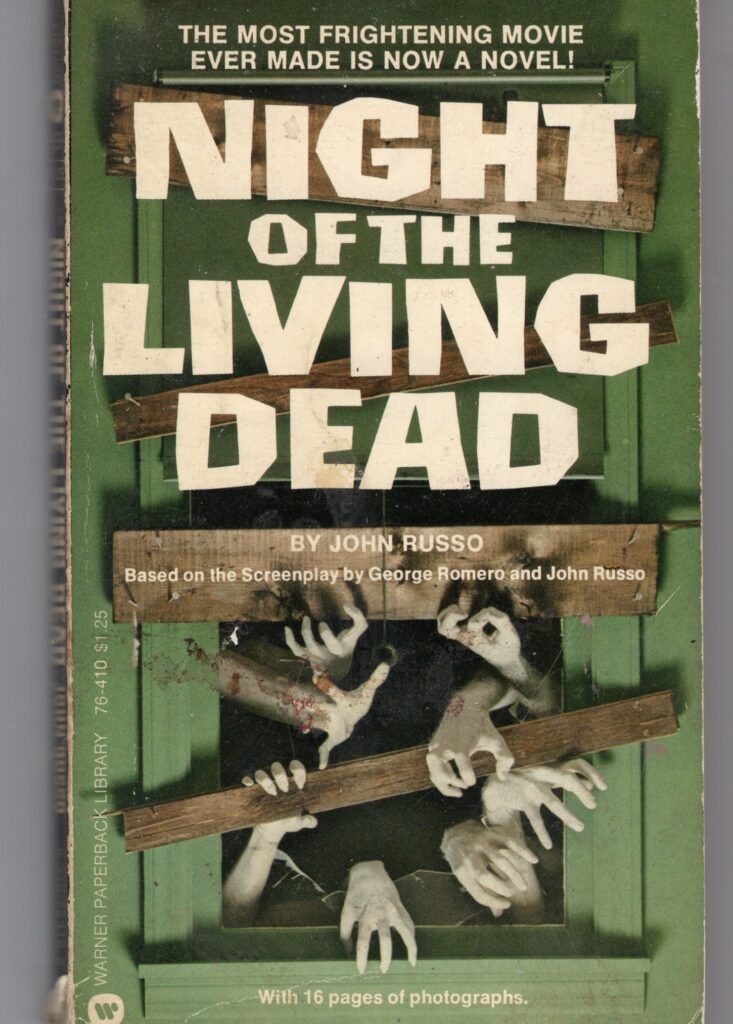
Night of the Living Dead (Warner Paperback Library) George Romero’s ground-breaking, chilling 1968 black and white zombie classic, filmed in Pittsburgh, with a script by Romero and John Russo. This is a novelization by Russo. The film was an effectively scary account of cataclysmic event causing corpses to rise from their graves and roam the countryside looking to chow down on the living. A group of people are holed up in a farmhouse, bickering and fighting for their lives. I caught this by accident at the end of a horror triple bill at a theater and was bowled over at how great it was and how subversively political it was by the end. (I was so into the movie I didn’t notice someone behind me had picked my pocket and stole my wallet). The paperback includes 16 pages of gut-munching photographs.
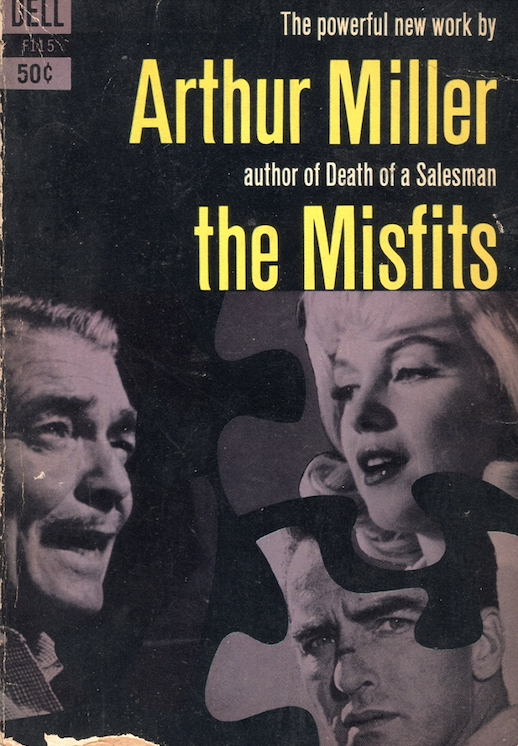
The Misfits (Dell) Arthur Miller wrote this as an original screenplay for his then-wife Marilyn Monroe. It was directed by John Huston and concerns a recently divorced woman (Monroe) and some beautiful losers in Reno, Nevada. From a sarcastic landlady (Thelma Ritter), a worn-out cowboy (Clark Gable), a truck driver (Eli Wallach) and a punch-drunk bronco buster (Montgomery Clift). Monroe is really incandescent in the film; it was Clark Gable’s final film, and it has a truly haunting and beautiful ending. What’s so interesting about this paperback it’s Arthur Miller “synthesis of screenplay and novel.” So having this “novel” of the film by Arthur Miller is kind of cool.
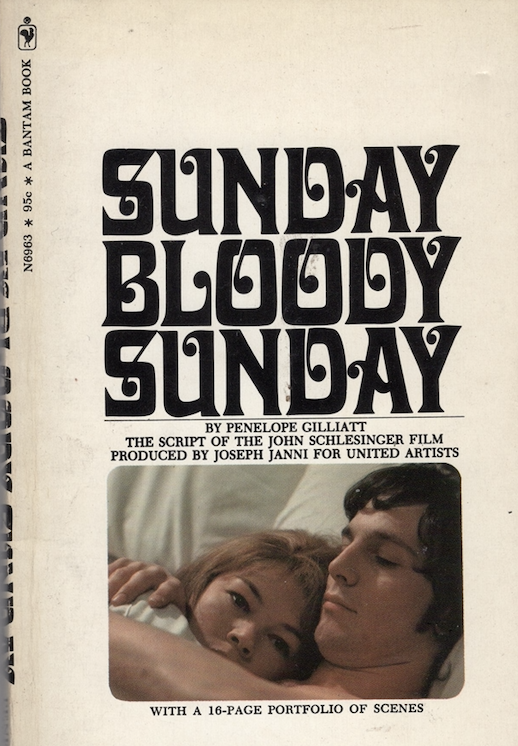
Sunday Bloody Sunday (Bantam Book) Director John Schlesinger’s intelligent, infinitely moving 1971 British film about a love triangle. A handsome young artist (Murray Head) shares his time (and bed) with an older, distinguished doctor (Peter Finch) and a divorced woman (Glenda Jackson). The screenplay by Penelope Gilliatt (who was a film critic for The New Yorker at the time) is reprinted here and it’s a thing of beauty. The movie was smart, witty and beautifully acted (especially by Peter Finch and Glenda Jackson). Just seeing this book on the shelf propels me back in time to the theater I first saw this in and how shaken it left me when the lights came up.
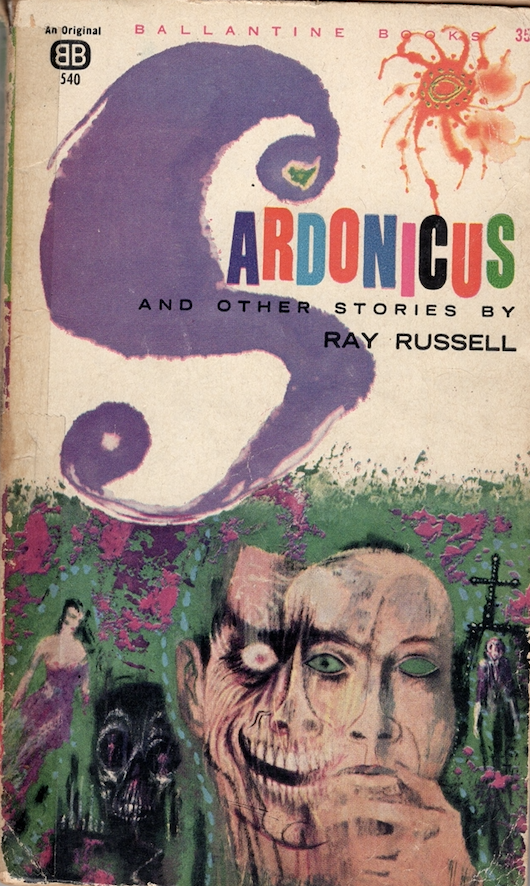
Sardonicus (Ballantine Books) I’ve held onto this paperback since I was a teen. It’s a collection of short stories by Ray Russell, and one of the stories was turned into a gimmicky film by the great William Castle (The Tingler) entitled Mr. Sardonicus, starring Guy Rolfe as the sadistic, mysterious, mask-wearing manor owner. I was such a William Castle fan as a kid- from House on Haunted Hill to 13 Ghosts and Homicidal. This gothic shocker came with an ending where the audience got to cast the fate of Mr. Sardonicus (and how the movie would end) with little glow-in-the-dark “thumbs up” or “thumbs down” cards. Trust me, No one held up the “thumbs up” side.
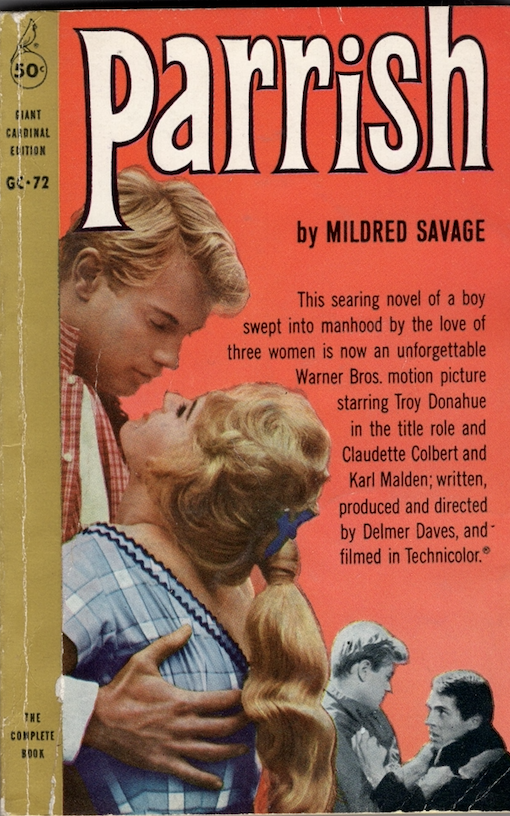
Parrish (Giant Cardinal Edition) Another favorite of mine- a trashy melodrama about a handsome young man (Troy Donahue) and the women in his life as he toils in the Connecticut tobacco fields of the 1960s. I grew up in Connecticut and didn’t even know that Connecticut had tobacco fields until I read the terrific, sprawling novel by Mildred Savage. I was thrilled to get a personalized autograph of my first edition of Parrish signed by Mildred Savage and made a pilgrimage to her grave last year to pay my respects.
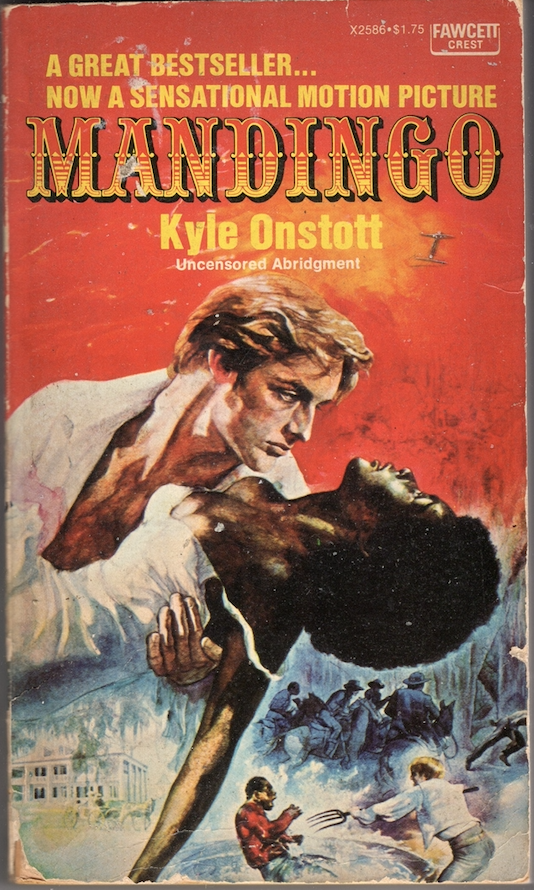
Mandingo (Fawcett) This was a best-selling novel set in the 1860s Antebellum South around a cotton plantation in Alabama. It’s about estate owners and the cruelty to their “slaves” at the time. The movie is even more salacious and stars James Mason as the plantation owner, Perry King as his randy son Hammond and his love affair with one of the workers (Brenda Sykes), and frighteningly handsome Ken Norton as the slave used as a prize fighter and also for sex (with fetching Susan George as Hammond’s horny wife). The movie was a big hit too, although it’s easy to imagine modern audiences flipping out at how politically incorrect it is. Even the director, Richard Fleischer, failed to even mention the film in his autobiography. But I saw this with an almost all-black audience on Times Square (on a double bill with the sequel “Drum”) and everyone was howling with laughter.
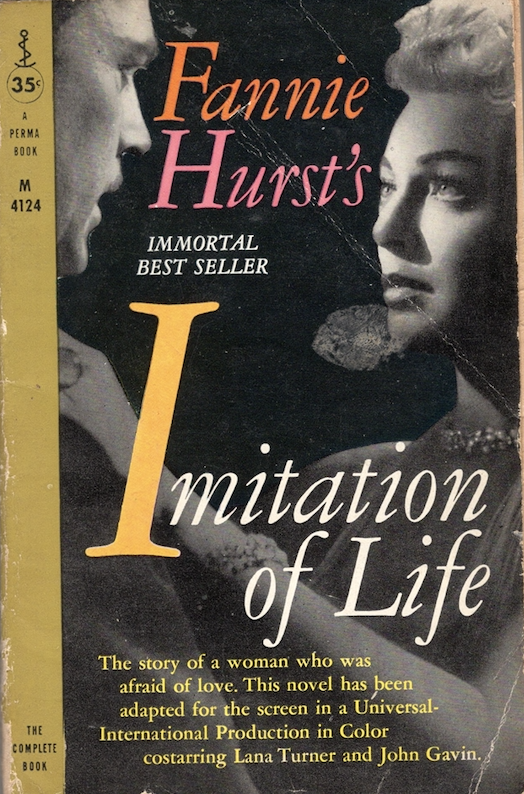
Imitation of Life (Perma Books) Fannie Hurst’s best-selling soap opera about a single mother and her friendship with Delilah, a black woman whose recipe for pancake batter eventually turns her into a successful businesswoman. The first version starred Claudette Colbert and Louise Beavers, but the cover of this paperback reflects the glossy 1959 Douglas Sirk melodrama starring Lana Turner (who is transformed into an aspiring actress), Sandra Dee as her spoiled daughter, Juanita Moore as Delilah and Susan Kohner as Delilah’s daughter Sarah Jane, who passes for white. That funeral at the end- with white horses carrying the coffin, Mahalia Jackson singing in the church and Susan Kohner flinging herself crying on the casket- is to die for. It was ranked 37th on BBC’s “100 Greatest American Films” list.
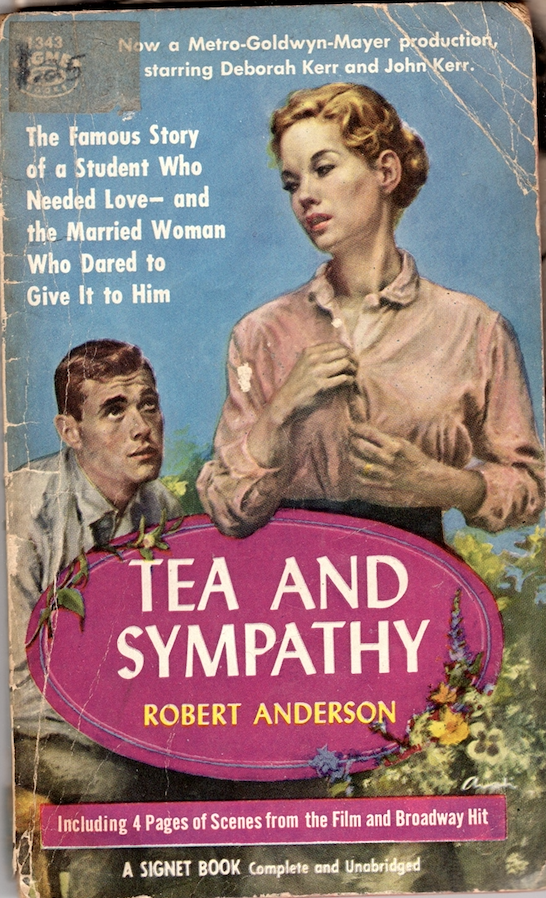
Tea and Sympathy (Signet) This 1956 film is based on the Broadway stage play by Robert Anderson about “the love that dare not speak its name.” Deborah Kerr movingly plays Laura, the wife of the brutish dormitory head and coach Bill Reynolds (Leif Erickson) at a private prep school for boys. Her home becomes safe haven to the bullied student Tom Lee (beautifully played by John Kerr), who is called all sorts of gay slurs like “sister boy” because he is sensitive and not considered manly enough by the other yahoos. Laura shows the boy compassion and sticks up for him, and eventually gives of herself to prove his manhood. The “Years from now, when you talk about this, and you will, be kind” speech at the end still packs an emotional punch. Sensitively directed by Vincente Minnelli, it still resonates with great tenderness. This is the screenplay with 4 pages of stills from the film and the book is so old it’s practically falling apart.
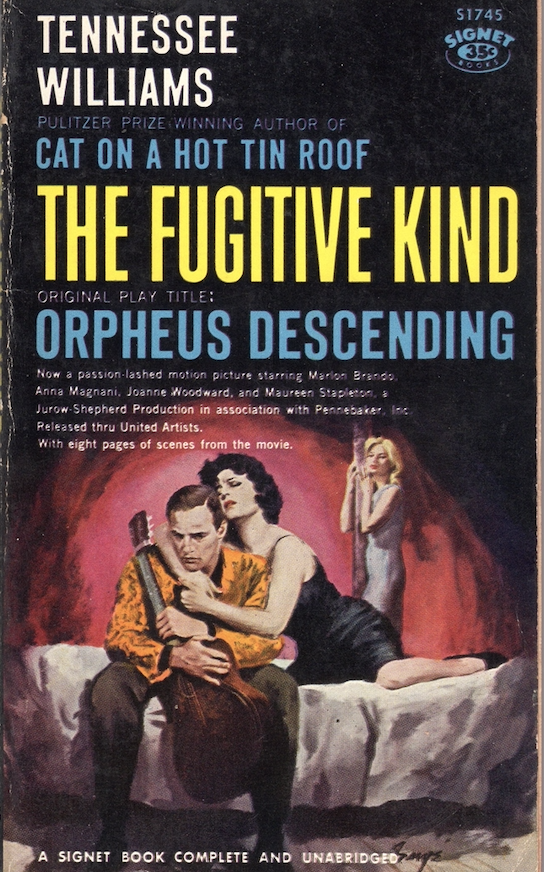
The Fugitive Kind (Signet) This began as “Orpheus Descending” on stage by Tennessee Williams and became The Fugitive Kind on film directed by Sidney Lumet with a stunning cast including Marlon Brando as the snakeskin jacket-wearing drifter who shows up in a racist Southern small town and falls in love with an Italian wife (Anna Magnani) of a bed-bound brute (Victor Jory). Joanne Woodward is absolutely riveting as the free-wheeling hell raiser Carol, who flaunts her decadent ways in town. When I was in my teens I memorized whole sections of the play I loved it so much and repeatedly saw Broadway revivals that never seemed to work despite the starry casts. I still think the 1960 Sidney Lumet film is the definitive version. “Wild things leave skins behind them…and these are tokens passed from one to another, so that the fugitive kind can always follow their kind..” Amen.
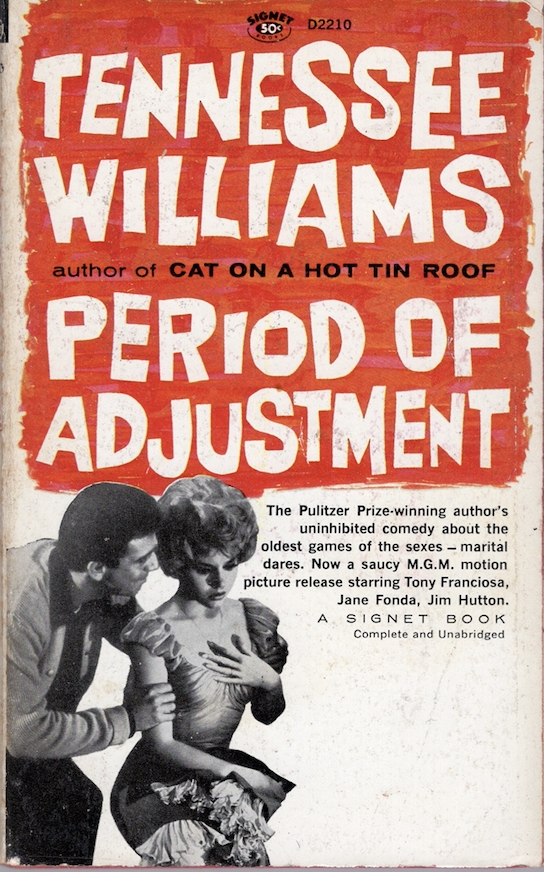
Period of Adjustment (Signet) Even I, a huge Tennessee Williams fan, have a hard time with this genial, uneven comedy. Williams admits it was written in a drug haze at the time. It’s about two couples- one just newlywed and the other married for five years- their marital struggles, dreams and desires. It premiered on Broadway in 1960, and then on film, directed by George Roy Hill (The Sting) and starred a jittery Jane Fonda, Tony Franciosa, Jim Hutton and Lois Nettleton. The film got mixed reviews but was a surprise sleeper hit at the box office. Still, it has one of my favorite lines from Tennessee, “The human heart would never pass the drunk-test.”
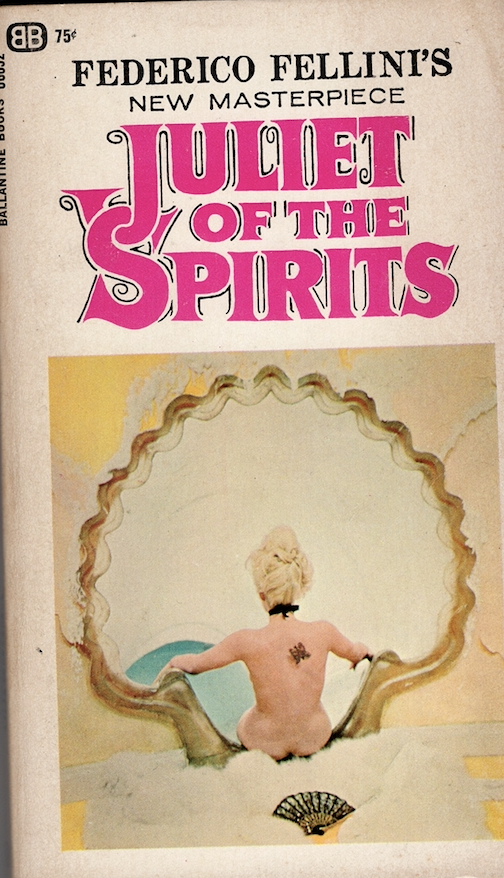
Juliet of the Spirits (Bantam) One of my favorite Federico Fellini films, starring the luminous Giulietta Massina as a neglected wife consumed by memories, dreams, nightmares and fantasies during her days wandering outside her mansion. Especially intrigued by the glamorous neighbor next door- Suzy (Sandra Milo), and the fantastical bordello she lives in. Fellini’s surreal, hallucinatory color film is just thrilling to experience multiple times, and it’s wonderful to have the paperback of the screenplay (with plenty of movie stills) to flash back on experiencing that visionary 1965 film for the first time in a movie theater.
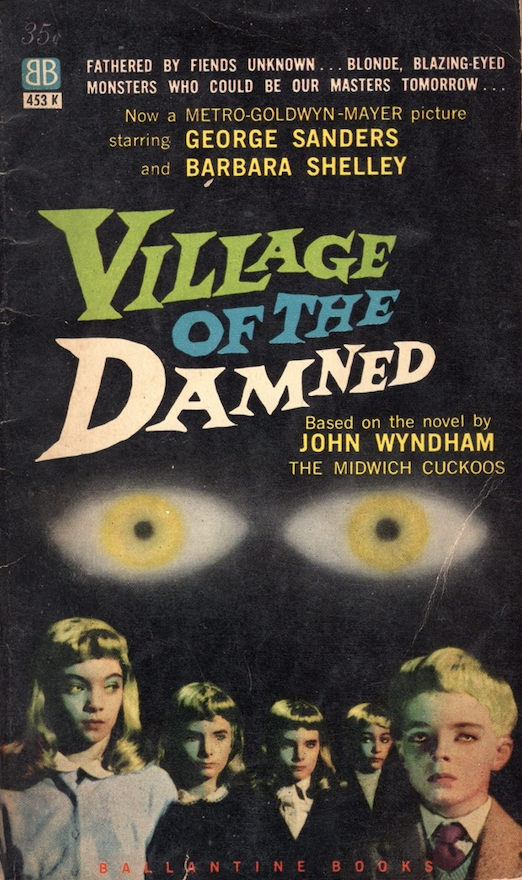
Village of the Damned (Bantam) Based on this novel by John Wyndham called The Midwich Cuckoos, it was made into a great 1960 sci-fi film directed by Wolf Rilla. A small village in England is mysteriously cut off from the world and everyone there falls into a deep sleep for several hours. Only later do they realize that many of the town’s women are pregnant. They give birth to blonde-haired children with “strange eyes.” The later scene with the children laser-staring at people who do them harm, is extraordinarily effective and creepy. Starring George Sanders and Barbara Shelly.
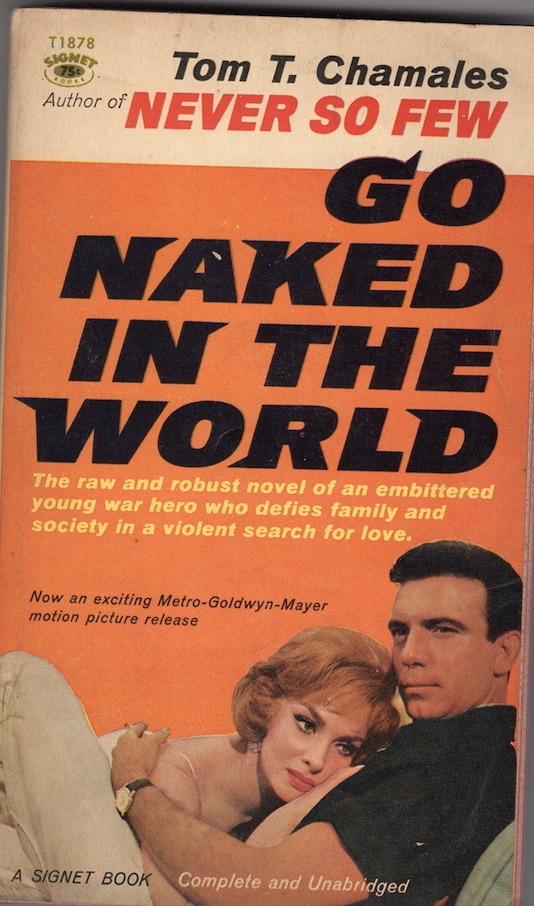
Go Naked in the World (Signet) In the film, Gina Lollobrigida plays Guilietta, a high-priced call girl in San Francisco, whose response to a maître d’s query if she’s free later that evening is, “I’m never free, sweetie.” Tony Franciosa plays Nick, just back from the Army who boasts, “I can make love in twelve languages.” However, he’s too stupid to figure out Guilietta is a prostitute, who he falls madly for, even though she warns him, “girls like me don’t fall in love.” When he brings her, as his date, to his parents’ anniversary party, his tyrannical Greek father (Ernest Borgnine) informs him, “There’s a dozen men in this room who know that call girl better than you- including me, you dumb kid.” Having the paperback of the novel by Tom T. Chamales of this 1961 howler (with a picture of Gina and Tony in bed on the cover) really fills me with joy.
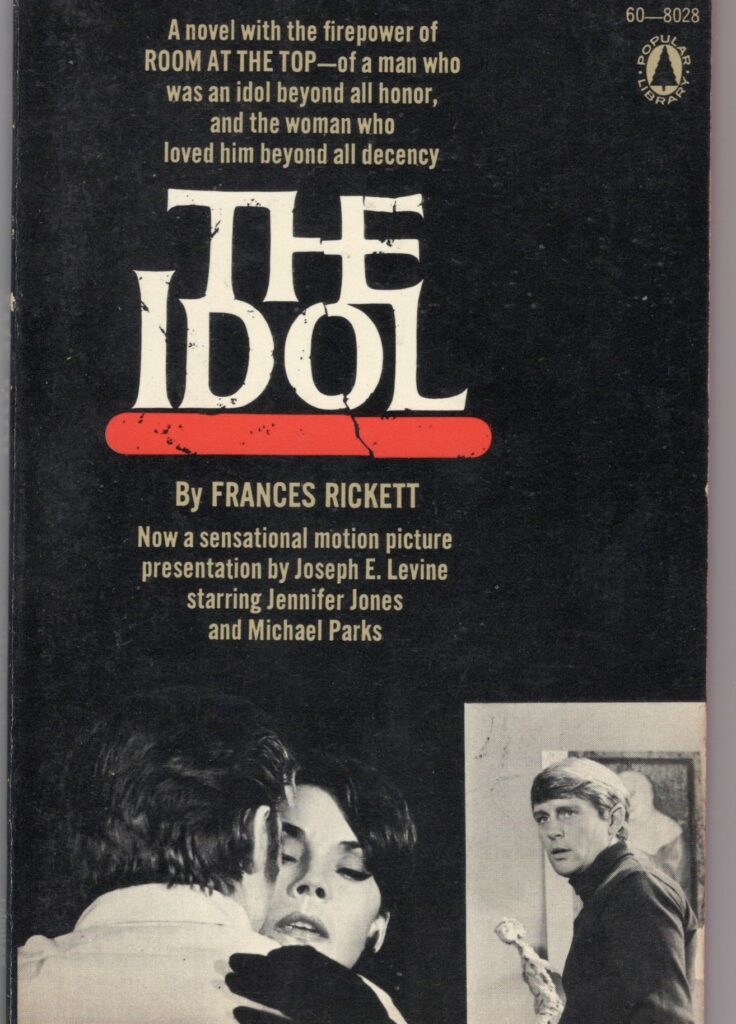
The Idol (Popular Library) I think I was the only one in the movie theater when I saw this 1966 film starring Michael Parks at the height of his James Dean-like cuteness. He plays an art student in London named Marco, whose best friend is Timothy (John Leyton), a medical student. Marco tries to get Timothy to movie into a flat with him which infuriates Timothy’s wealthy mother Carol (Jennifer Jones). But during the course of the movie, Carol softens up to Marco and he eventually seduces her. Believe me, it all ends in tragedy. This is all set during swinging 60s London. Directed by Daniel Petrie (A Raisin in the Sun), I rather enjoyed the movie but it just disappeared off the map after its dismal box office opening. That’s why I love having the paperback to prove it actually exists. Michael Parks turned into a really terrific character actor during his later years, working with directors such as Quentin Tarantino, Alexandre Rockwell and Kevin Smith. But for me, his TV series Then Came Bronson and the film- Bus Riley’s Back in Town will always hold a special place in my heart.
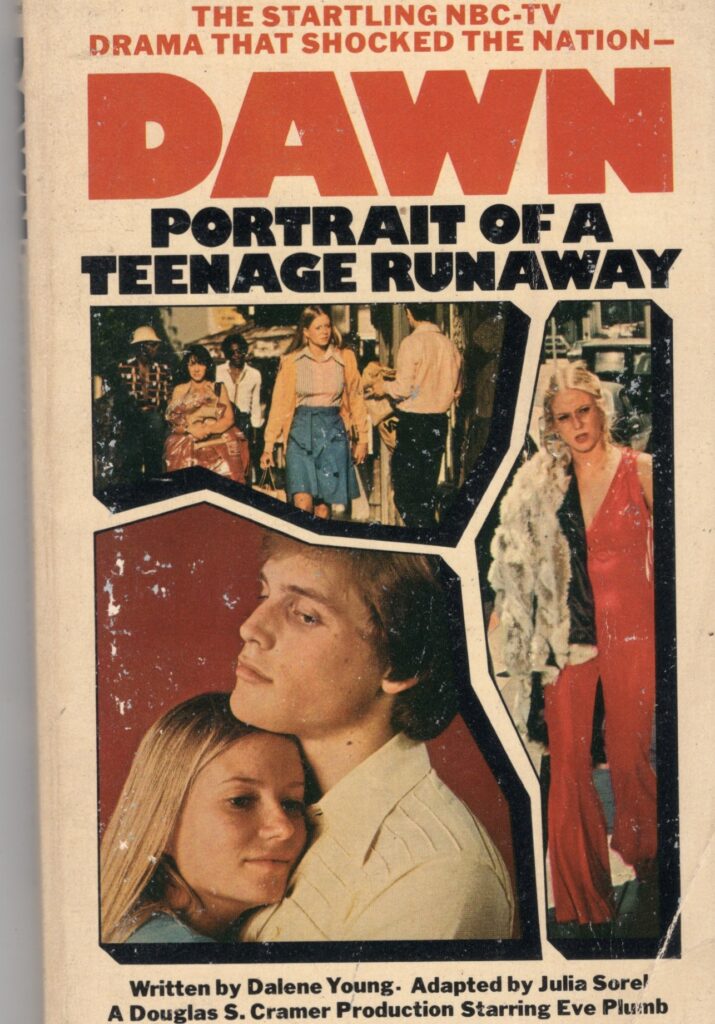
Dawn: Portrait of a Teenage Runaway (Ballantine Books) A wildly popular made-for-television movie that came out on NBC in 1976. It stars Eve Plumb as a 15-year-old runaway who shows up in Hollywood and ends up becoming a prostitute to support herself. She meets a sweet boy named Alexander (Leigh J. McCloskey), who asks her to move in with him. He’s also a runaway and a male prostitute, and tries to protect her from a street-smart pimp named Swan (Bo Hopkins). This sleazy TV movie was a runaway hit and even resulted in a sequel: Alexander: The Other Side of Dawn, with the same cast reprising their original roles. But I just love that it even spawned a paperback novelization by Julia Sorel.
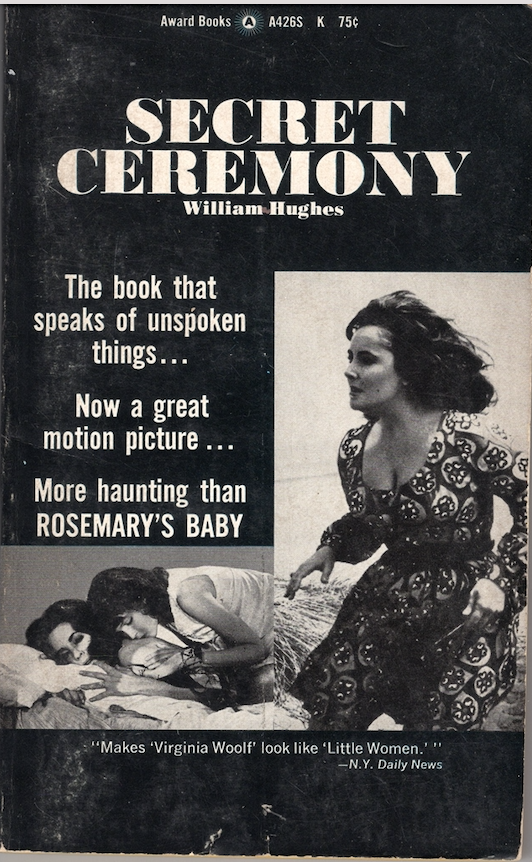
Secret Ceremony (Award Books) I love the NY Daily News review of this bonkers 1968 Joseph Losey melodrama starring Elizabeth Taylor and Mia Farrow: “A Greek tragedy with four-letter words…makes Virginia Woolf look like Little Women.” Joseph Losey was forced to leave America for London to find work during the McCarthy era. Some of his best work was working with Harold Pinter as screenwriter, such as The Servant (1963), Accident (1967) and The Go-Between (1971). But this is Losey at his most self-indulgent and weird, which, I guiltily admit, I am fine with. Elizabeth Taylor plays Leonora, a London prostitute who is accosted on a bus by a strange child-woman named Cenci (Mia Farrow). Leonora begrudgingly follows Cenci back to where she lives alone in an opulent mansion. They both assume roles as mother and daughter, fending off two greedy aunts and a sleazy step-father named Albert (Robert Mitchum). Inadvertently hilarious, this paperback is the screenplay by George Tabori based on an Argentine short story by Marco Devi.
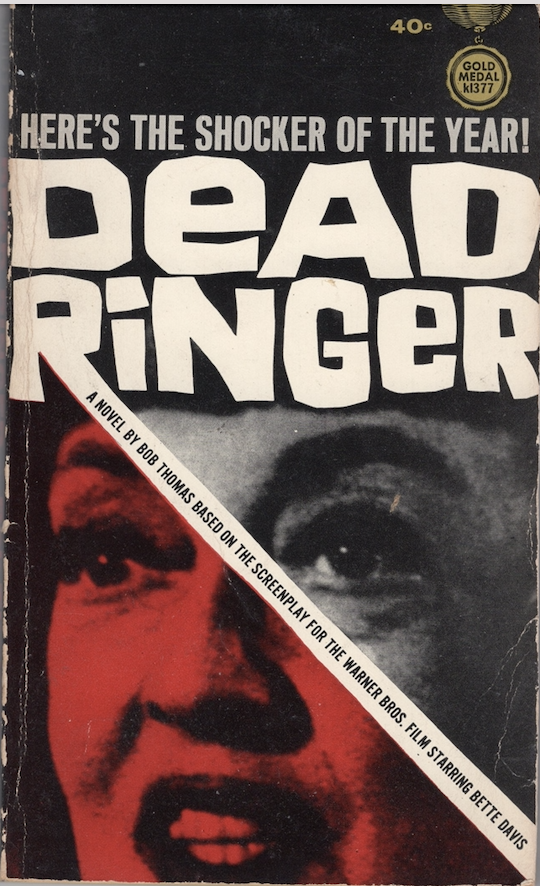
Dead Ringer (Gold Medal) A 1964 thriller starring Bette Davis in two juicy roles and directed by her Now Voyager co-star and good friend Paul Henreid. Davis stars as a woman who works in a cocktail lounge who murders her wealthy identical twin sister. She then decides to impersonate her twin, move into the mansion and hope to fool the staff and friends. Then Peter Lawford shows up as her sister’s lover Tony, threatening to ruin everything. This all ends in a deliciously ironic twist. The film got fairly good reviews and Davis has a good time with the role(s). The paperback by Bob Thomas is based on the film.
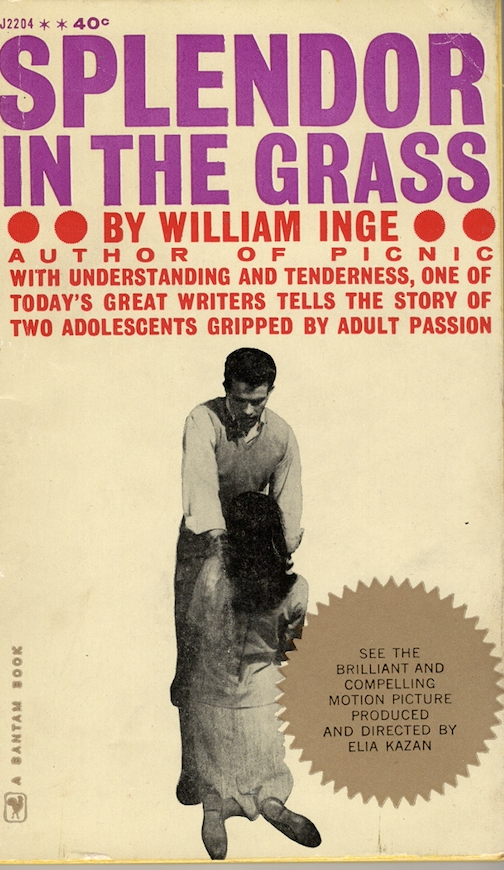
Splendor in the Grass (Bantam) This heartbreaking 1961 classic starring Warren Beatty (his sensational feature film debut) and a luminous Natalie Wood was sensitively directed by Elia Kazan from an original screenplay by William Inge (Picnic, Bus Stop). Set in Kansas in 1928, two high school sweethearts navigate the sexual repression and mores of the time, not to mention the smothering influences of their families. Bud Stamper (Beatty) is from a wealthy family, his father is a womanizing tycoon (played beautifully by Pat Hingle). Bud’s love is “Deanie” Loomis (Wood), a girl from a modest, working class family, and while they desperately try to have a chaste, loving relationship, the repression finally drives her around the bend into a full-blown nervous breakdown. Leave it to Inge to write that being horny can make you mental. The ending has haunted me for decades.
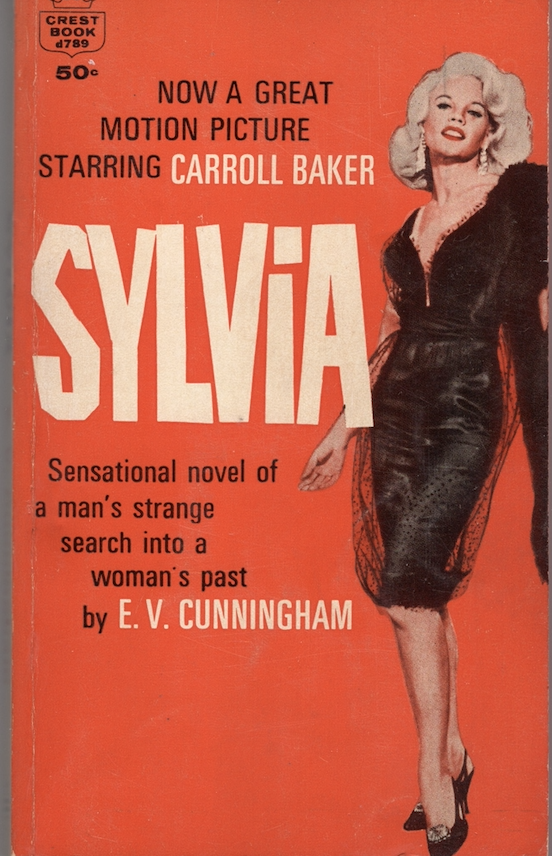
Sylvia (Crest Book) This was part of a group of films that attempted to turn the Actors Studio-trained star Carroll Baker (Baby Doll) into a blonde sexpot. Based on a book by E. V. Cunningham (actually blacklisted author Howard Fast– who refused to give names before the Committee of Un-American Activities in the 1950s and served prison time for contempt of court). Sylvia is the story of Alan Macklin (George Maharis), a private investigator summoned to the mansion of millionaire Frederic Summers (Peter Lawford), who hires Macklin to find out information on his mysterious fiancé Sylvia West (Carroll Baker). West lives comfortably, from smart investments, cultivates prize roses as a hobby and has written a book of poetry. But her past is an enigma. “I want to know who she is,“ Summers says to Macklin. “I want to know everything there is to know about Sylvia West. Everything a prospective husband has the right to know.” The movie is Macklin’s investigative journey through the sordid, often heartbreaking, background of this fascinating woman of mystery. Simply sublime.
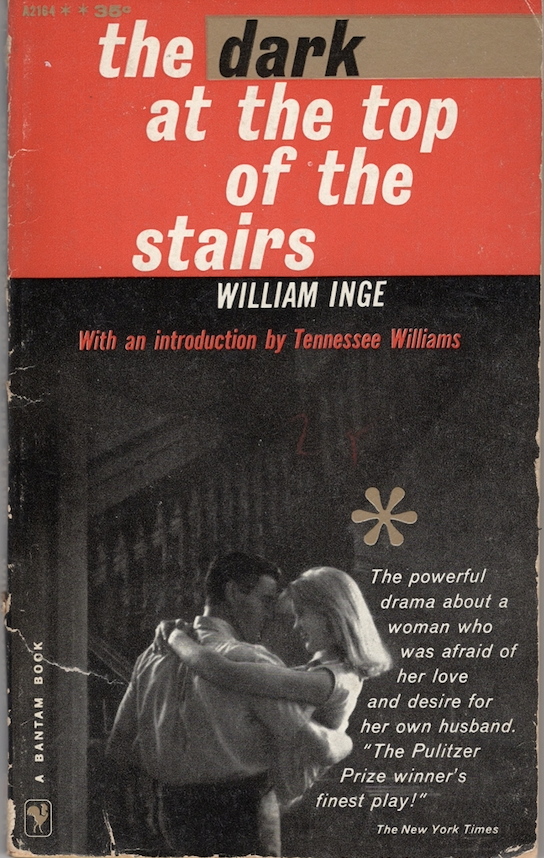
The Dark at the Top of the Stairs (Bantam) Pretty much forgotten 1957 William Inge (Bus Stop) play, directed on Broadway by Elia Kazan, which was nominated for five Tony awards. It was made into a film in 1960 and well-directed by Delbert Mann (Marty). Set during Prohibition in Oklahoma, Rubin (Robert Preston) is a traveling harness and saddle salesman, sexually frustrated at home by his frigid, penny-pinching wife Cora (Dorothy McGuire). But the local gossip is that Rubin is having an affair. Their sweet daughter Reenie (Shirley Knight) is aflutter with attending a dance and is set up with a handsome Jewish date (Lee Kinsolving), only to be met with anti-Semitic prejudice at the dance. Shirley Knight got an Oscar nomination and Lee Kinsolving a Golden Globe nomination for their fine work. This tragically never ever appeared on home video. It’s still not too late.
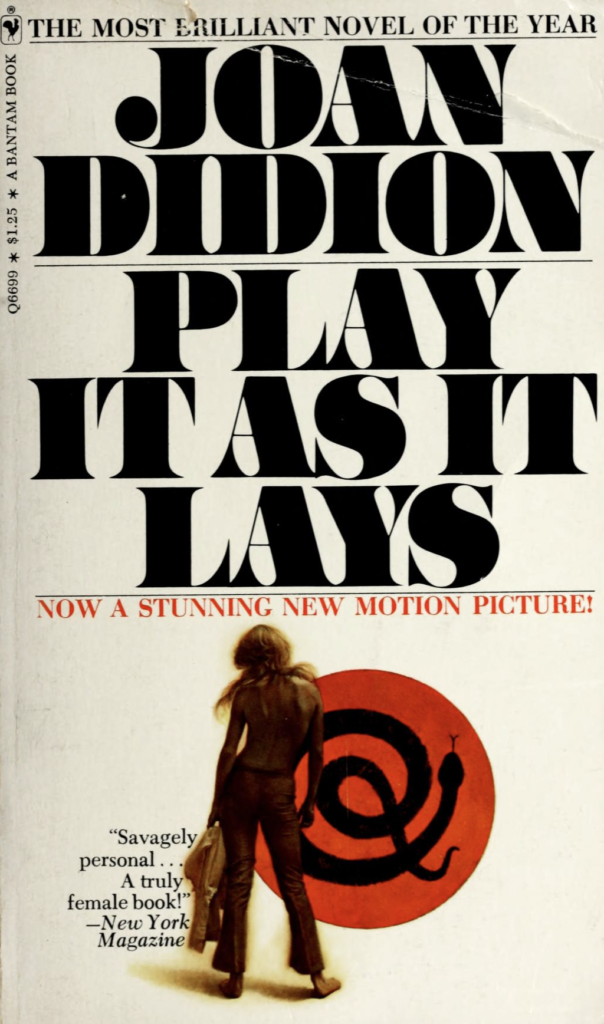
Play It as It Lays (Bantam) This 1972 movie, directed by Frank Perry and starring Tuesday Weld, based on Joan Didion’s unforgettable book, is a mess. Watching Tuesday Weld in anything is worth it, though. God- is she great. I remember being gobsmacked by her sex-kitten deadliness in Pretty Poison, and her wonderful quirky turns in Lord Love a Duck and The Cincinnati Kid. I am grateful to be able to watch any film that she’s in. Even this turd. Weld plays a former model who restlessly drives around L.A. in her yellow Corvette, and hangs out with her unhappy gay friend (a sensational Anthony Perkins). She goes to Las Vegas, gets busted with drugs in her car, and her friend swallows a handful of pills. Reading Didion, those passages of her drifting around in her car were thrilling. On film, it gets pretty boring. But luckily, Tuesday Weld never is.
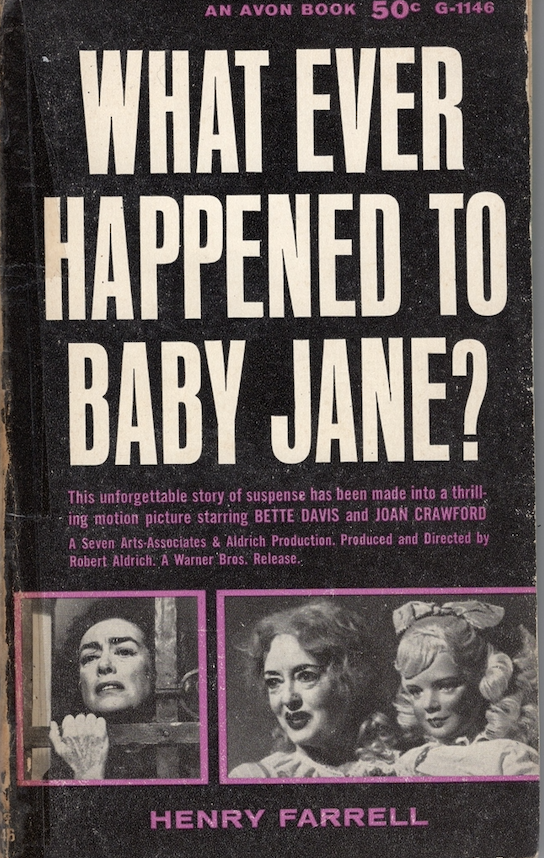
What Ever Happened to Baby Jane? (Avon) A great gothic modern horror tale set in Los Angeles about two aging sisters and former stars living in a crumbling mansion. Based on a novel by Henry Farrell, Joan Crawford wisely brought this property to director Robert Aldrich and actress Bette Davis and despite all the turmoil during the making of the film (between the two stars) the film was a box office sensation and spawned countless “horror hag” films. I became a big fan of Henry Farrell’s work after that with his screenplays for Hush…Hush, Sweet Charlotte, How Awful About Allen, and What’s the Matter with Helen?
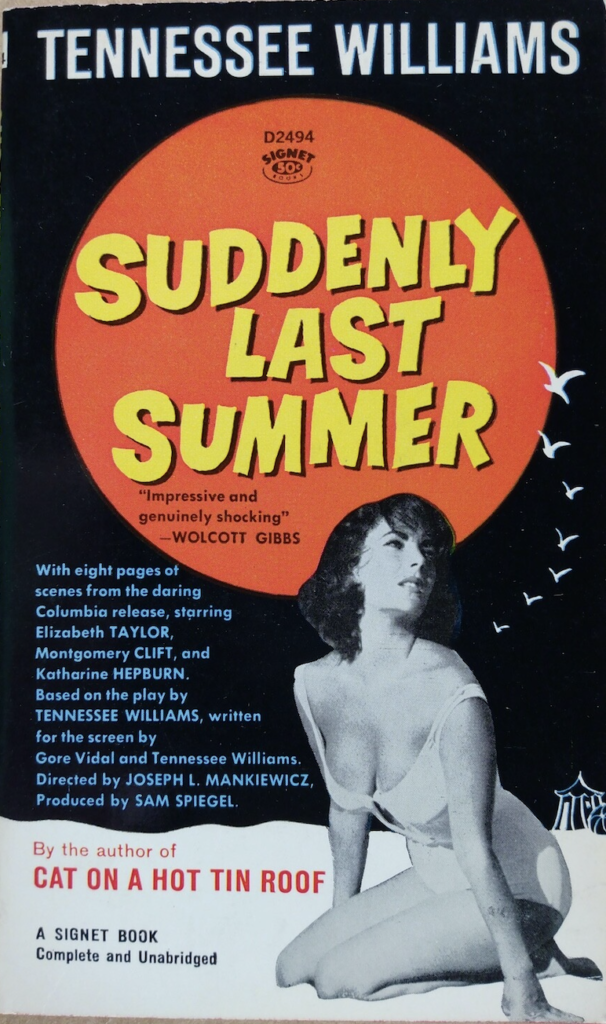
Suddenly Last Summer (Signet) Tennessee William’s outrageous play gets an all-star treatment and amazingly got released at the time considering the lurid subject matter- homosexuality, lobotomy, even cannibalism. Katharine Hepburn is sensational as the wealthy Violet Venable, whose beloved poet son Sebastian died in Mexico under mysterious circumstances. Sebastian’s widow (a gorgeous Elizabeth Taylor) has been institutionalized ever since his death, her brain blocking out what actually happened. Montgomery Clift plays the doctor trying to uncover the truth. Stylishly directed by Joseph L. Mankiewicz, with a sardonic screenplay by Gore Vidal and Tennessee Williams. I love leafing through this play from time to time and reveling in the ripe dialogue and florid imagery. In the words of Mrs. Venable: “My son, Sebastian and I constructed our days. Each day we would carve each day like a piece of sculpture, leaving behind us a trail of days like a gallery of sculpture until suddenly, last summer.” It just doesn’t get much better…
“The Other” Thomas Tryon
“Now a compulsive movie”
Fantastic article. As a cinephile, avid reader and pop culture junkie, I have always been fascinated by movie tie-ins. I would love to see more explorations of this subject, even if they aren’t in your collection.
Love this piece and now I have a list of more movies I need to watch!
Blue Denim and Mandingo (James Mason !!!!!!!) are the top of the list.
Thanks for such a swell ride.
Fabulous writing. And what a trip down memory lane. Thank you for that pleasure.